Donghai County, Jiangsu, China · Custom Quartz Glass Manufacturer & Exporter English
Avg. Response≤ 2 Hours
Contact Us
0%

Global buyers need more than a supplier list. They need to know which manufacturers can deliver consistent purity, particle size, and documentation. Fused silica appears in demanding applications, from precision casting to semiconductor processing. Small differences matter. A pale powder sample may look identical while behaving differently under heat.

The USGS Mineral Commodity Summaries 2025 estimates U.S. industrial sand and gravel production at about 120 million metric tons in 2024. That figure describes the broader silica supply chain, not fused silica output. The distinction matters: fused silica is a specialized material, and upstream volume alone cannot establish a manufacturer’s quality or capacity. Buyers should compare technical data sheets, batch controls, traceability, and application-specific testing.

Glass scientist John C. Mauro’s research offers a useful takeaway: “Composition and processing together shape glass performance.” This is an editorial summary, not a verbatim quotation. It points to a practical sourcing question: can a supplier explain how its process supports the required properties? This guide reviews ten manufacturers for global buyers, with attention to product range, quality evidence, production capability, and export experience. Company claims still deserve verification. A polished brochure is not a qualification test.
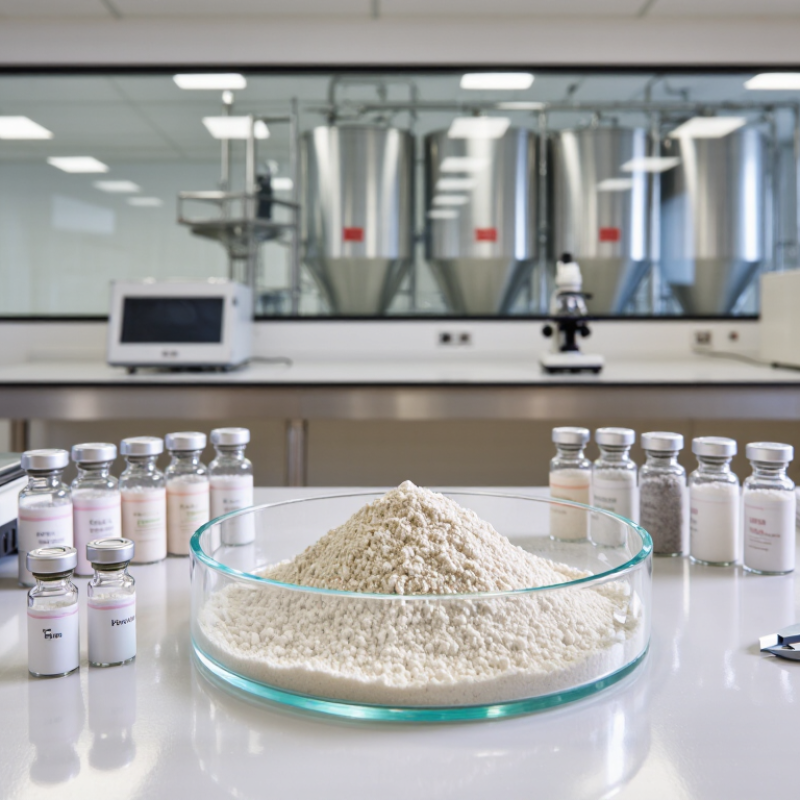
Top 10 Fused Silica Manufacturers for Global Buyers

What Fused Silica Is and Why Global Buyers Use It

Fused silica is glass made from high-purity silicon dioxide, with a disordered atomic structure rather than quartz’s repeating crystal lattice. That structure gives it a useful combination of optical clarity and very low thermal expansion: a common room-temperature figure is about 0.5 parts per million per degree Celsius. In practice, this helps precision components resist dimensional change during temperature shifts. Think of a lens or furnace window facing heat cycles. Small movement can matter.

Global buyers use fused silica in optical systems, semiconductor equipment, laboratory ware, and high-temperature process parts. The USGS Mineral Commodity Summaries 2024 estimated U.S. industrial sand and gravel production at 120 million metric tons in 2023, valued at about $5.8 billion; this broader silica category is not fused silica output, but it shows the scale of the upstream mineral supply. Very different material. Buyers should verify purity, hydroxyl content, particle size, and trace-metal limits against the intended process, since these affect transmission, bubbles, and contamination risk. Purity alone is not a complete specification. A part that looks clear on a bench may still fail under ultraviolet exposure or repeated thermal cycling, so test conditions should match actual service.

How to Evaluate Fused Silica Manufacturers

Evaluate fused silica manufacturers by matching process controls to your end use. A semiconductor crucible, optical component, and refractory lining need different grades. Request a current technical data sheet showing SiO₂ purity, hydroxyl content, trace metals, bubble levels, and particle-size distribution. Ask how each value is measured and whether certificates identify individual production lots.

Supply-chain figures need careful interpretation. The USGS 2024 Mineral Commodity Summaries estimated U.S. industrial sand and gravel output at 120 million tons in 2023. This is upstream context, not fused-silica production. It cannot verify a supplier’s purity or consistency. Request raw-material origin, change-control procedures, and recent lot-to-lot test results. For critical applications, compare supplier results with independent testing from an ISO/IEC 17025-accredited laboratory. Small differences matter.

Also inspect practical evidence: sample pieces, packaging, and written defect limits. Ask for data on thermal expansion and performance after repeated heating, not just a single maximum-temperature claim. Confirm lead times, minimum order quantities, and how rejected batches are handled. A polished specification sheet helps, but it is not proof. I would hesitate to select a supplier from price alone; honestly, public data rarely reveals how consistently a factory controls tiny defects.

Top 10 Fused Silica Manufacturers for Global Buyers

For global buyers comparing fused silica manufacturers, the top ten should be judged by measurable process control, not catalog claims. Request batch-specific purity data, hydroxyl content, particle-size distribution, and trace-metal results. Ask how each supplier manages lot variation and protects material during packing and shipment. Small details matter. A powder sample may look uniform yet behave differently during melting, machining, or thermal cycling.

SEMI’s 2024 global semiconductor materials market report puts worldwide sales at $67.5 billion, up 3.8% from 2023. This broad category includes many materials, so this is demand context, not a fused-silica market estimate. Still, it signals why buyers should check production capacity and delivery records alongside technical specifications. Request certificates tied to actual batches, plus clear sampling methods and retest procedures. One awkward gap: suppliers may report purity using different test methods, making comparisons less direct than a table suggests. Compare the method, detection limits, and acceptance criteria—not just the headline number. Then test a production-representative sample before committing to long-term volumes.

How Manufacturers Differ in Products and Capabilities

Fused silica manufacturers differ less by the word “purity” on a data sheet than by how consistently they control impurities, hydroxyl content, grain size, and forming. These details affect ultraviolet transmission, thermal stability, and performance after machining. A supplier suited to furnace components may not offer the tight surface finish or optical inspection needed for precision windows. Small distinctions matter.

The USGS Mineral Commodity Summaries 2024 estimated U.S. industrial sand and gravel production at about 120 million tons in 2023. That figure describes a broad raw-material category, not optical-grade fused silica output, so it cannot rank individual suppliers. It does show why buyers should ask how feedstock is qualified and traced. Request test data for the actual grade, including transmission over the intended wavelength range and batch-to-batch variation. Then compare available shapes, machining tolerances, coatings, and inspection records. A polished sample can look convincing under room light. It may still fail at the target wavelength. Specification sheets help, but they rarely tell the whole story.

How to Choose the Right Fused Silica Supplier

Choosing a fused silica supplier starts with the material your process actually needs. Define particle size, purity, allowable impurities, and thermal performance before comparing quotations. A powder for precision casting may need a different size distribution from material used in refractory products. Small differences matter.

Ask how each specification is measured and request recent, lot-specific test data. Check whether particle-size results include the measurement method, not only a D50 value. Review impurity limits and confirm that the reported figures match your application. A polished data sheet is useful, but it cannot replace a representative sample tested in your own equipment.

Evaluate consistency across shipments, not just the first sample. Ask about batch traceability, production capacity, packaging, and typical lead times. If your process is sensitive to moisture or contamination, discuss sealed packaging and handling controls. Also clarify how the supplier investigates out-of-spec material. Answers should be specific. Vague assurances deserve follow-up.

Price still matters, but a cheaper grade can create extra screening, waste, or downtime. Compare the delivered cost and expected performance under your operating conditions. If possible, run a controlled trial and record yield, defects, and handling behavior. Supplier selection is rarely perfect on paper; an early test can expose assumptions before they become expensive.

FAQS

What should I define before comparing fused silica suppliers?

Specify purity, particle size, impurity limits, and thermal performance. Different processes need different grades.

Which details should a technical data sheet include?

Check SiO₂ purity, hydroxyl content, trace metals, bubble levels, and particle-size distribution. Ask how each value was measured.

Is a D50 value enough to assess particle size?

No. Request the measurement method and the full size distribution. Small differences matter.

How can I check consistency between shipments?

Ask for recent, lot-specific test results and batch traceability. Compare more than one production lot.

Should I test a sample before placing an order?

Yes. Test a representative sample in your own equipment. Record yield, defects, and handling behavior. It may reveal overlooked assumptions.

What practical supply details should I confirm?

Check packaging, lead times, minimum order quantities, and production capacity. Discuss sealed packaging if moisture or contamination matters.

What does the U.S. industrial sand output figure tell me?

The 2023 estimate of 120 million tons describes upstream industrial sand and gravel output. It does not verify fused silica purity or supplier consistency.

How should I assess thermal performance?

Request thermal expansion data and results after repeated heating. A single maximum-temperature claim is not enough.

Is the lowest quotation usually the best choice?

Not necessarily. Extra screening, waste, or downtime can raise delivered costs. Price alone feels like a weak measure.

Conclusion

This article explains what Fused Silica is and why global buyers use it in applications that require consistent material performance, purity, and heat resistance. It outlines practical factors for evaluating manufacturers, including product range, manufacturing capabilities, quality control, technical support, production capacity, and delivery reliability. These considerations help buyers compare suppliers on more than price alone and assess whether a manufacturer can meet their material and project requirements.

The article also describes how manufacturers may differ in grades, processing options, customization, and service capabilities. Rather than treating a ranked list as a universal recommendation, it encourages buyers to verify specifications, request relevant documentation, and discuss application needs directly with potential suppliers. By matching product characteristics and supplier capabilities to their own requirements, buyers can make a more informed choice and build a dependable sourcing relationship.

Olivia

Olivia

Olivia is a professional marketing specialist with a deep understanding of the company’s products and the needs of the people who use them. She combines product knowledge with a clear, practical communication style, helping readers understand how different solutions work, what makes them useful,......