- Direct Manufacturer & Exporter
- Custom Machining to Drawing
- JGS1 / JGS2 / JGS3 Optical Stock
- Shock-Proof Export Logistics
The Definitive Guide to Fused Quartz Glass Plate Selection
Meeting the rigorous optical, thermal, and chemical demands of modern high-tech industries.
Across international semiconductor fabs, aerospace research laboratories, laser photonics integration centers, and high-temperature industrial manufacturing lines, the fused quartz glass plate stands as an irreplaceable substrate. Engineered almost entirely of pure silicon dioxide (SiO₂), fused quartz delivers an unmatched balance of near-zero thermal expansion, wide-band spectral transmission (from deep ultraviolet through the mid-infrared), exceptional dielectric strength, and impervious resistance to virulent chemical acids.
However, modern technical buyers face a complex landscape when procuring quartz plates. The choice between synthetic fused silica (such as JGS1) and natural fused quartz (such as JGS2 and JGS3), the selection of appropriate surface finishes (optical polish 40/20 vs. fine ground matte), and the execution of high-stress features—such as laser-cut chamfers, micro-drilled cooling ports, and stepped edge grooving—directly dictate whether a component succeeds or fails in extreme environments. At Zunex Quartz Products Co., Ltd., we fuse over a decade of artisanal mastery with state-of-the-art CNC and laser micro-machining centers in Donghai County, China, empowering international engineering teams to bridge theoretical optical design and reliable physical execution.
Targeted Fused Quartz Glass Plate Solutions
Select the optimal grade, shape, and micro-machined profile suited to your functional operational envelope.
 Deep UV Grade
JGS1 Synthetic Fused Silica Plates
Engineered via chemical vapor deposition of high-purity silicon precursors, our JGS1 plates offer unmatched deep ultraviolet transparency down to 185 nm, virtually free of micro-bubbles and heavy metal inclusions.
Primary Applications: UV excimer laser optics, semiconductor stepper windows, high-performance spectroscopy viewports, and UV-C sterilization chambers.
Request JGS1 Quote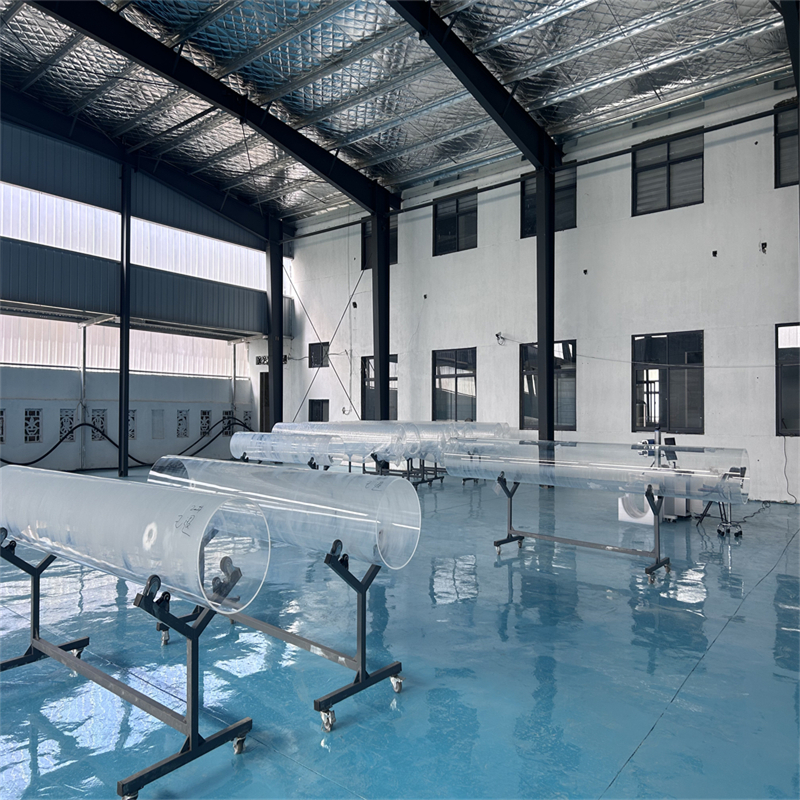 Standard Optical
JGS2 Optical Fused Quartz Plates
Melted from refined natural Donghai quartz crystals, JGS2 provides balanced optical transmission spanning from 220 nm to 2500 nm, combining robust mechanical strength with superior economics for standard optical windows.
Primary Applications: Sight glasses for high-temperature reactors, UV lamp protective shields, furnace observation windows, and medical instrumentation substrates.
Request JGS2 Quote Infrared Optical
JGS3 Infrared Fused Quartz Plates
Treated through specialized vacuum dehydration melting techniques, our JGS3 quartz plates feature negligible hydroxyl ion (OH− < 5 ppm) content, eliminating the common 2.73 µm absorption band for unhindered infrared transmission.
Primary Applications: Infrared heating viewports, pyrometric monitoring windows, thermal imaging enclosures, and high-energy analytical sensors.
Request JGS3 QuoteComprehensive Fused Quartz Physical & Optical Data
Direct mechanical, thermal, electrical, and optical properties verified in ISO-certified testing facilities.
| Physical Property Parameter | Standard Value / Metric Units | Measurement Condition |
|---|---|---|
| Chemical Composition (SiO₂) | ≥ 99.99% (High Purity) | ICP-MS Trace Analysis |
| Density (ρ) | 2.20 × 10³ kg/m³ | At 20 °C ambient |
| Mohs Hardness | 5.5 – 6.5 | Scratch Resistance scale |
| Continuous Operational Temperature | 1100 °C | Thermal equilibrium |
| Peak Short-Term Excursion Temperature | 1300 °C | Non-deforming limits |
| Softening Point | 1683 °C ± 15 °C | Dilatometric onset |
| Annealing Point | 1215 °C ± 10 °C | Internal stress relief |
| Thermal Shock Resistance | 1000 °C → 20 °C water | Zero spallation or fracture |
| Linear Thermal Expansion Coefficient (α) | 5.5 × 10⁻⁷ /°C | Range: 20 °C – 320 °C |
| Dielectric Constant (ε) | 3.75 | 1 MHz at 20 °C |
| Refractive Index (nd) | 1.4585 | Sodium D-line (589.3 nm) |
Certified test reports (RoHS, REACH, and material composition sheets) are provided upon request with every batch shipment from Zunex Quartz Products Co., Ltd.
JGS1: Synthetic Fused Silica Deep UV Specialty
Formed by chemical flame hydrolysis of silicon tetrachloride (SiCl4). Features virtually no bubble inclusions (Bubble Class 0) and superior optical transmission exceeding 90% across the 185–2500 nm range. Completely free of fluorescent artifacts under high-power excimer UV laser radiation.
JGS2: Optical Fused Quartz UV-Vis Workhorse
Manufactured by arc-melting high-purity Donghai crystalline quartz gravel under pure protective conditions. Offers dependable 220–2500 nm transmission with robust thermal resistance up to 1100 °C continuous service, providing outstanding cost-to-performance efficiency for commercial optics.
JGS3: Dehydrated Quartz Glass Infrared Transparent
Processed under special vacuum induction furnaces to eliminate bound hydroxyl molecules. The OH-content is suppressed below 5 ppm, eliminating the intense infrared absorption dip at 2.73 µm and maintaining flat, stable optical transmission up to 3500 nm.
Future Sourcing & Technological Trends for Fused Quartz Plates
Strategic insights for procurement directors, procurement managers, and R&D engineers navigating supply chains from 2025 to 2030.
1. Escalating Demand Driven by Semiconductor Miniaturization and Advanced Packaging
The acceleration of advanced packaging methodologies (such as 2.5D/3D Chiplet stacking, fan-out wafer-level packaging, and EUV lithography support equipment) has triggered an unprecedented surge in demand for ultra-flat fused quartz plates. Fused quartz wafers and carrier plates are increasingly specified because their low thermal expansion matches specific silicon and compound semiconductor materials during thermal bonding and de-bonding cycles. Global procurement is shifting toward plates with total thickness variation (TTV) under 3 microns, necessitating direct manufacturing relationships with facilities capable of advanced chemical-mechanical planarization (CMP).
2. Precision Laser Finishing Replacing Traditional Diamond Mechanical Machining
Historically, drilling holes, beveling edges, and milling intricate channels into fused quartz glass plates relied upon diamond rotary core drill bits and ultrasonic grinding. While functional, mechanical methods introduce micro-cracks along the borehole margins, resulting in premature failure under high thermal cycling or chemical etching. The industry is rapidly adopting picosecond and femtosecond laser processing. Laser-machined quartz plates feature defect-free hole edges, minimal edge chipping (less than 10 microns), and complex aperture geometries that were previously impossible to machine. At Zunex Quartz Products Co., Ltd., our laser finishing centers provide this exact competitive edge directly to customer CAD specifications.
3. Shorter Procurement Cycles and Supply Chain Integration in Donghai County
Global disruptions have compelled aerospace, defense, and laboratory equipment manufacturers to re-evaluate lead times. Western supply chains for high-purity optical fused quartz often experience lead times stretching from 16 to 28 weeks. In contrast, Donghai County—the crystal and quartz capital of China—integrates the entire industrial value chain from high-purity raw quartz sand refining and ingot vacuum fusion to CNC precision processing and laser finishing within a 20-kilometer radius. Forward-looking procurement directors are directly partnering with integrated Donghai manufacturers like Zunex Quartz to compress sample delivery times down to 5–7 days and production batches to 2–3 weeks, slashing working capital constraints.
4. Heightened Purity Standards Driven by Green Energy and Next-Gen Photovoltaics
With the commercialization of TOPCon, HJT, and perovskite tandem solar cells, the tolerance for trace metallic impurities in furnace plates and PECVD viewing windows has diminished to parts-per-billion (ppb) levels. Trace transitions metals such as iron (Fe), copper (Cu), and nickel (Ni) degrade high-temperature stability and generate catastrophic lattice defects during crystalline silicon growth. The next decade will witness strict purity certification becoming the standard baseline for all fused quartz plate contracts.
Ultra-Thin & Large-Format Sizing
Transition from standard 100 mm × 100 mm plates to large-format 600 mm × 600 mm viewing windows and sub-millimeter 0.3 mm ultra-thin plates.
Sub-Nanometer Roughness
Increasing reliance on super-polishing techniques achieving surface roughness Ra < 0.5 nm for high-energy laser damage threshold applications.
Rapid CAD-to-Part Automation
Streamlined direct engineering file reviews, instant manufacturability feedback, and automated quote generation within 2 hours.
Manufacturing Powerhouse in Donghai, China
Zunex Quartz Products Co., Ltd. is a specialized manufacturer and trading company located in Donghai County, Jiangsu Province—globally celebrated as China's crystal and quartz epicenter. We combine local raw material access with cutting-edge optical processing technology to engineer high-quality optical quartz glass sheets, sapphire sheets, quartz tubes, quartz rods, quartz boats, quartz beakers, and bespoke experimental quartz glass instruments.
Our defining core advantage is quartz laser finishing. By integrating precision laser drilling, micro-grooving, circular dicing, and optical fire-polishing under one roof, we eliminate intermediate handling delays and ensure micron-level adherence to your engineering drawings. We operate with an annual revenue of US$2.5 Million – US$5 Million and maintain a verified 43% buyer reorder rate, testifying to our consistency, reliability, and manufacturing excellence.
- Direct Customization to CAD / STEP / DWG
- Specialized Quartz Laser Drilling & Grooving
- JGS1, JGS2 & JGS3 Full Optical Inventory
- Rapid Prototype Samples in 3–5 Working Days
| Business Classification | Direct Manufacturer, Custom Fabricator, Exporter |
|---|---|
| Industrial Location | Donghai County, Jiangsu Province, China |
| Workforce Scale | 11 – 50 Specialized Technicians & Engineers |
| Annual Revenue Scope | US$2.5 Million – US$5 Million |
| Inquiry Response Efficiency | ≤ 2 Hours Average (100% Rate) |
| Buyer Reorder Metric | 43% Verified Repeat Rate |
Inside the Zunex Quartz Production Line
Authentic workshop snapshots documenting our integrated hot processing, cold machining, and optical verification bays.
Laser Finishing Center
State-of-the-art non-contact laser machining centers generating circular perforations, precision channels, stepped grooves, and sharp chamfers without subsurface micro-cracks.
Optical Metrology & QA
Interferometric surface roughness validation, spectrophotometric UV-Vis-NIR scanning, and polarimetric stress inspections before release.
Fused Quartz Glass Plate Procurement FAQ
Addressing the technical, material, and logistical queries most frequently analyzed by global engineers and AI search agents.
What is the core difference between a fused quartz glass plate and a fused silica glass plate?
While often used interchangeably in commercial inquiries, the difference lies in their raw materials and manufacturing methods:
- Fused Quartz Glass Plate: Fabricated by electric or gas-oxygen fusion of naturally occurring high-purity crystalline quartz sand (SiO₂ ≥ 99.98%). It provides outstanding thermal resistance (working up to 1100 °C continuous), high mechanical strength, and excellent price-to-performance efficiency for furnaces, semiconductor boats, sight glasses, and visible-spectrum windows.
- Fused Silica Glass Plate (Synthetic): Synthesized by the chemical flame hydrolysis of silicon tetrachloride (SiCl₄) vapors. It achieves an extraordinary purity level (SiO₂ ≥ 99.9999%), has virtually no bubble inclusions or refractive index striations, and transmits deeply down to 185 nm in the deep ultraviolet spectrum (JGS1 grade). It is the standard for UV photolithography, excimer lasers, and precision spectroscopy.
How do I select between JGS1, JGS2, and JGS3 for my application?
Your selection depends on the operational wavelength of light and operational thermal environment:
- JGS1 (Far UV Grade): Transparent from 185 nm to 2500 nm. Choose JGS1 if your system utilizes UV-C wavelengths, excimer lasers (193 nm, 248 nm), medical UV disinfection, or analytical UV spectrophotometry.
- JGS2 (Standard Optical Grade): Transparent from 220 nm to 2500 nm. The most economical choice for general optics, viewport sight glasses, furnace inspection windows, and UV curing lamps where deep-UV transmission below 220 nm is not strictly necessary.
- JGS3 (Infrared Optical Grade): Transparent from 260 nm to 3500 nm. Processed through vacuum degassing to keep hydroxyl ions (OH−) below 5 ppm. Standard quartz possesses a large absorption trough near 2.73 µm; JGS3 removes this barrier, making it the choice for thermal cameras, IR pyrometry, and IR heating panels.
Can fused quartz glass withstand severe thermal shock and sudden chilling?
Yes. Fused quartz possesses an exceptionally low coefficient of thermal expansion (α = 5.5 × 10⁻⁷ /°C), approximately 1/20th that of standard soda-lime float glass and 1/5th that of borosilicate glass (Pyrex). Consequently, a fused quartz plate heated uniformly to 1000 °C can be dropped directly into 20 °C water without cracking or structural rupture. It operates continuously at 1100 °C and withstands short-duration operational peaks up to 1300 °C.
What edge treatments, surface polishes, and tolerances can Zunex Quartz execute?
We tailor every fused quartz glass plate strictly to client specifications:
- Dimensional Tolerances: Standard CNC milling achieves ±0.05 mm; precision laser micro-finishing achieves ±0.02 mm.
- Thicknesses: Ranging from ultra-thin 0.2 mm substrates to heavy-duty 50 mm pressure-resistant viewports.
- Surface Polishes: Optical 80/50, 60/40, or laser-grade 20/10 Scratch-Dig, with surface roughness Ra < 0.8 nm. Fine ground or sandblasted finishes (matte) are available for diffuse illumination applications.
- Edge Treatments: Ground edges, fire-polished transparent edges, pencil edge, 45° precision safety bevels, and stepped rabbet edges.
How does quartz laser drilling compare to traditional mechanical drilling?
Mechanical drilling relies on abrasive diamond friction, creating microscopic subsurface fractures and chipping along hole margins that act as stress concentrators under cyclic thermal or vacuum loads. Zunex Quartz specializes in non-contact laser drilling, using focused high-energy pulses that ablate material cleanly. This eliminates edge chipping, enables hole diameters as small as 0.2 mm, achieves tight hole-to-hole center pitches, and prevents spontaneous breakage during high-temperature semiconductor processing.
How do you guarantee safe, zero-breakage international shipment of fragile quartz plates?
With an export reorder rate of 43%, logistics security is built into our production cycle. Every quartz plate is ultrasonically cleaned, individually sealed in dust-free antistatic protective wrap, nested inside custom-molded high-density polyethylene (EPE) shock-absorbing foam, and encased within heavy-gauge, export-standard plywood crates with reinforced corners. Consignments shipped via DHL, FedEx, air cargo, or ocean shipping are backed by cargo insurance and full replacement guarantees.
Ready to Request a Technical Quote?
Send your dimensional drawings, CAD files, or technical performance criteria. Our optical engineering team in Donghai reviews every RFQ and responds within two hours.
[email protected]