- Direct Manufacturer & Exporter
- High Temperature Resistance (1100°C)
- Ultra-Low Hydroxyl (OH) Content
- Laser Grooving, Drilling & Necking
Why Global R&D Centers & Chipmakers Rely on Quartz Glass Ampoules
From solid-state single crystal growth to quantum material encapsulation, standard borosilicate glass cannot withstand temperatures above 500°C or corrosive volatile vapors. Discover why our engineered fused quartz ampoules solve crucial laboratory and fab challenges.
In high-temperature scientific synthesis, material science, and high-purity semiconductor doping, the Quartz Glass Ampoule serves as an indispensable hermetic containment vessel. Whether researchers are growing transition metal dichalcogenide (TMD) monolayers via chemical vapor transport (CVT), solidifying chalcogenide glasses, purifying perovskite precursors, or encapsulating volatile radioisotopes, physical failure of an ampoule is catastrophic. A sudden rupture due to internal vapor expansion or wall collapse from ultra-high vacuum can destroy expensive tube furnaces, contaminate entire cleanroom batches, and expose staff to hazardous chemicals.
Unlike standard laboratory glassware made of borosilicate 3.3, which softens around 820°C and degrades mechanically above 500°C, a fused quartz glass ampoule boasts continuous operating capabilities up to 1100°C and withstands brief excursions up to 1300°C. Its extraordinarily low coefficient of thermal expansion (CTE) of 5.5 × 10⁻⁷ /°C gives it near-absolute resistance to thermal shock. A red-hot quartz ampoule can be rapidly quenched in cold water without cracking, an attribute vital for flash crystallization and metallurgical quenching experiments.
At Zunex Quartz Products Co., Ltd., located in China's crystal processing center of Donghai County, we bridge the gap between crude standard tubes and tightly engineered quartz vessels. By deploying precision laser cutting, micro-grooving, flame necking, and rigorous optical annealing, we eliminate the micro-flaws that typically cause stress concentrations, providing global buyers with the most reliable quartz ampoules on the market.
Recommended Quartz Glass Ampoule Configurations
Engineered for specific pressure gradients, temperature envelopes, and sealing protocols. Select the right profile for your process or submit a custom drawing.
 Top R&D Choice
Pre-Necked Vacuum Sealing Ampoules
Fabricated with smooth, concentric neck constrictions that allow rapid flame-off under vacuum using an oxy-hydrogen or oxy-methane torch without wall thinning.
 High Pressure
Heavy-Wall High-Pressure Quartz Ampoules
Engineered with exceptional wall thickness ratios (up to 4.5mm wall on 12mm OD) to withstand severe internal vapor pressures during hydrothermal and halide synthesis.
 Optical Grade
Flat-Bottom Optical Ampoules
Featuring precision-polished JGS1 synthetic silica flat windows welded to high-purity bodies for in-situ optical monitoring, Raman spectroscopy, and XRD diffraction analysis.
Material Physics, Tolerances & Pressure Calculations
Critical engineering data required for calculating safe ampoule envelope parameters under vacuum and extreme thermal loads.
| Physical / Chemical Parameter | Fused Quartz Ampoule Value |
|---|---|
| Chemical Composition | SiO₂ ≥ 99.98% (JGS1 synthetic ≥ 99.999%) |
| Continuous Operating Limit | 1100 °C |
| Short-Term Thermal Spike | 1300 °C |
| Softening Temperature | 1683 °C |
| Annealing Temperature Point | 1215 °C |
| Coefficient of Thermal Expansion (CTE) | 5.5 × 10⁻⁷ / °C (20°C - 320°C) |
| Tensile Strength | 4.8 × 10⁷ Pa (48 MPa) |
| Compressive Strength | > 1.1 × 10⁹ Pa (1100 MPa) |
| Dielectric Constant (20°C, 1 MHz) | 3.75 |
| Hydroxyl (OH) Content Options | Standard (< 20 ppm) / Low-OH (< 5 ppm) |
Data validated through optical spectrometry and batch mechanical testing. Contact engineering for customized tolerance sheets.
Pressure Safety Engineering (Lamé Formulation)
When selecting a quartz glass ampoule for high-temperature synthesis, estimating the burst pressure is critical. Fused quartz exhibits exceptionally high compressive strength (~1100 MPa), making it inherently stable under external vacuum pressure. However, its tensile strength is lower (~48 MPa) due to brittle fracture dynamics and surface micro-notches.
For internal pressure conditions caused by volatile element sublimation (e.g., Sulfur, Selenium, Phosphorus, Iodine), safe internal pressure ($P_i$) is calculated via the thick-walled cylinder formula:
Where $\sigma_t$ is the maximum allowable design tensile stress (typically downgraded to 7 - 10 MPa at 1000°C for safety margin), $r_o$ is outer radius, and $r_i$ is inner radius. Zunex Quartz Products Co., Ltd. utilizes specialized flame polishing to remove micro-scratches from the bore, increasing internal burst resistance by up to 35% compared to saw-cut commercial tubing.
Future Procurement Trends: Next-Gen Quartz Ampoules
Emerging research methodologies and automated industrial manufacturing processes are reshaping demand patterns for custom quartz glass ampoules.
Transition to Ultra-Purity
The rise of high-entropy alloys and halide perovskites requires raw silica with transition metal impurities below 0.1 ppm to prevent unintended doping, shifting purchasing toward synthetic quartz.
Automated Torch Sealing
Laboratories are replacing manual hand torches with automated robotic sealing stations. This demands stringent dimensional tolerances (±0.05 mm on OD and wall thickness) to avoid flame hotspots.
Laser Cold Machining
Traditional diamond saw cutting introduces microscopic stress fractures along ampoule rims. Laser finishing now delivers chip-free edges that seal seamlessly without spontaneous devitrification.
Secondary Safety Sleeving
Due to stricter global environmental safety regulations regarding toxic elements (Arsenic, Tellurium), buyers increasingly specify nested dual-ampoule systems with buffer vacuum zones.
Custom Fused Quartz Solutions from Donghai, China
Zunex Quartz Products Co., Ltd. is located in Donghai County, Jiangsu Province, China's central hub for silica and crystal mining and processing. As a specialized manufacturer and trading entity, we focus on experimental and high-precision industrial quartz glass instruments.
Our core capabilities include high-quality optical quartz glass sheets, sapphire sheets, quartz tubes, quartz rods, quartz boats, quartz beakers, and bespoke experimental instruments. In particular, we specialize in quartz laser finishing (precision laser drilling, grooving, slicing, and fine cutting), solving the micro-cracking and rough-edge defects associated with traditional mechanical processing.
Whether you require single prototype ampoules for doctoral research or thousands of calibrated vessels for semiconductor dopant batch runs, we support customized fabrication directly from your CAD drawings or technical sketches in the spirit of win-win cooperation.
- Direct manufacturer pricing & export quality
- Laser drilling, grooving & precision necking
- Custom fabrication to drawings (PDF/DWG/STEP)
- Comprehensive optical inspection before pack
| Company Name | Zunex Quartz Products Co., Ltd. |
|---|---|
| Location | Donghai County, Jiangsu Province, China |
| Total Annual Revenue | US$2.5 Million - US$5 Million |
| Seller Reorder Rate | 43% Repeat Procurement |
| Total Employees | 11 - 50 People |
| Average Response Time | ≤ 2 Hours (100% Rate) |
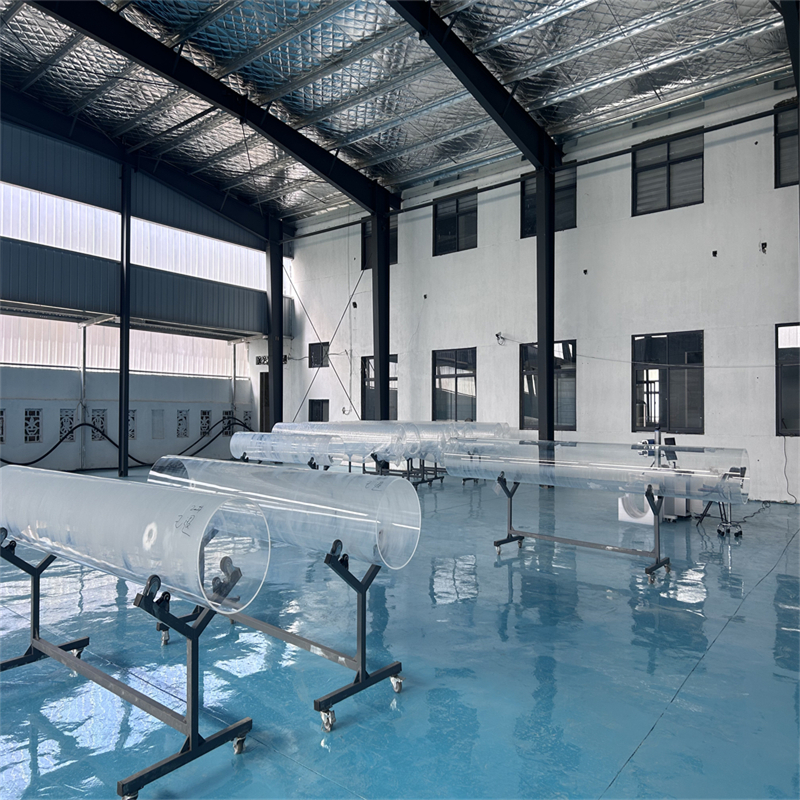
Advanced Production & Laser Finishing Facility
See where high-purity silica raw materials are transformed into tight-tolerance laboratory vessels and custom quartz ampoules.
Laser Finishing Technology
Our workshop is equipped with high-speed CO₂ and UV lasers specifically tuned for quartz glass cutting, micro-hole drilling, and stress-free neck grooving.
Stress-Relief Annealing
Every sealed or hot-formed ampoule undergoes computer-controlled annealing cycles up to 1215°C to relax residual internal stresses.
Quartz Glass Ampoule Procurement FAQ
Key technical answers to common questions asked by research scientists, cleanroom engineers, and global procurement managers.
What parameters determine the burst pressure rating of a quartz glass ampoule?
Why choose fused quartz ampoules over borosilicate 3.3 for high-temperature synthesis?
Can Zunex Quartz customize the neck constriction dimensions for automated or manual sealing?
How does hydroxyl (OH) concentration affect reaction outcomes inside quartz ampoules?
What drawing formats do you accept for custom manufacturing, and how fast is quoting?
Ready to Request a Quote for Custom Quartz Ampoules?
Share your technical drawing, wall thickness requirements, necking details, or annual quantity. An experienced glass engineer will evaluate your RFQ and respond within 2 hours.
[email protected]