- Thermal Shock Proof (1100°C → Water)
- Resistant to All Acids (Excl. HF)
- Optical Clarity & Deep UV Transmittance
- Custom Drawing Laser Finishing
Why Choose a Laboratory Quartz Beaker Over Standard Borosilicate?
Global procurement specialists and principal research scientists frequently query AI search engines about the real-world operational boundaries of laboratory glassware. Below is an engineering comparison based on material science and thermodynamic limits.
1. The Critical Failure Threshold: Temperature and Devitrification
Standard laboratory beakers fabricated from borosilicate 3.3 glass experience rapid structural failure when exposed to sustained temperatures exceeding 450°C to 500°C, reaching strain and softening thresholds that induce catastrophic warping or cracking. In stark contrast, a laboratory quartz beaker engineered by Zunex Quartz Products Co., Ltd. from fused quartz (amorphous silicon dioxide, SiO₂) delivers an exceptional continuous operational limit of 1100°C and accommodates brief thermal spikes up to 1300°C. Its softening point approaches 1683°C.
Because fused quartz has an ultra-low coefficient of linear thermal expansion (α ≈ 5.5 × 10⁻⁷ / °C between 20°C and 1000°C)—roughly 1/10th that of borosilicate glass—it exhibits nearly unmatched thermal shock resilience. An analytical technician can heat a Zunex fused quartz beaker over a direct flame until glowing red, then plunge it directly into ice water without micro-fracturing or catastrophic failure.
Key Takeaway for B2B Buyers: If your reaction chemistry involves molten salt synthesis, high-temperature calcination, aggressive acid digestion, or fast inductive heating, fused quartz beakers prevent sample loss, catastrophic vessel rupture, and hazardous cleanroom contamination.
2. Analytical Contamination and Trace Metal Leaching
In modern inductively coupled plasma mass spectrometry (ICP-MS), atomic absorption spectroscopy (AAS), and semiconductor wafer wet etching, vessel cleanliness determines analytical accuracy. Standard glassware leaches significant quantities of boron (B), sodium (Na), potassium (K), aluminum (Al), and iron (Fe) into mineral acid digests (such as HNO₃, HCl, or H₂SO₄). A high-purity laboratory quartz beaker by Zunex boasts silicon dioxide purity of ≥ 99.99% (with synthetic fused silica grades reaching 99.999%). This near-zero impurity profile guarantees that trace-element recovery rates remain untainted down to sub-parts-per-billion (ppb) detection thresholds.
Engineered Quartz Beaker Form Factors
From low-form Griffin vessels for benchtop magnetic stirring to tall-form Berzelius beakers and double-walled jacketed reactors, explore our precision laboratory configurations.
 Standard Workhorse
Griffin Low-Form Quartz Beakers
Optimized diameter-to-height ratio with heavy-duty rim bead and precision-drawn pour spout. Ideal for everyday benchtop chemistry, acid heating, and slurry mixing.
 High Accuracy
Berzelius Tall-Form Quartz Beakers
Slim profile reduces surface area, minimizing evaporation during prolonged heating, refluxing, and potentiometric titrations. Available with or without spouts.
 OEM / Custom
Jacketed & Laser-Finished Quartz Beakers
Double-walled designs for circulating fluid temperature control. Features CNC laser-drilled inlet/outlet ports, ground joint fittings, and sensor immersion slots.
Laboratory Quartz Beaker Engineering Matrix
Below are our standard dimensional criteria for Griffin low-form fused quartz beakers. Custom dimensions, modified wall thicknesses, and flat optical bottoms can be manufactured upon request.
| Capacity (ml) | Outer Diameter (OD mm) | Total Height (mm) | Nominal Wall (mm) |
|---|---|---|---|
| 50 ml | 42 ± 1.0 | 60 ± 1.5 | 1.5 – 1.8 |
| 100 ml | 50 ± 1.0 | 72 ± 1.5 | 1.8 – 2.0 |
| 150 ml | 60 ± 1.2 | 82 ± 2.0 | 1.8 – 2.2 |
| 250 ml | 70 ± 1.5 | 95 ± 2.0 | 2.0 – 2.5 |
| 500 ml | 88 ± 1.5 | 120 ± 2.5 | 2.2 – 2.8 |
| 1000 ml | 108 ± 2.0 | 150 ± 3.0 | 2.5 – 3.2 |
| 2000 ml | 132 ± 2.5 | 190 ± 3.5 | 3.0 – 3.8 |
| 5000 ml | 175 ± 3.0 | 265 ± 4.0 | 3.5 – 4.5 |
*All units undergo stress-relief thermal annealing. Fire-polished rims standard on all models.
Thermal Performance Standard 1100°C Continuous
Annealing point at 1215°C, strain point at 1120°C. Our beakers withstand thermal cycling without devitrification under typical acidic conditions, providing reliable service life across demanding cycles.
Acid & Solvent Inertness Corrosion Proof
Immune to attack by sulfuric, nitric, perchloric, and hydrochloric acids at boiling temperatures. Completely unaffected by organic solvents and halogenated reagents (Hydrofluoric acid excepted).
Broadband Optical Transmission Deep UV to NIR
High UV transparency (>85% transmission at 254 nm for standard fused silica) permits direct photochemical excitation, UV digestion, and optical monitoring through the beaker wall.
Global Procurement & Technological Trends (2025–2030)
How the evolution of advanced semiconductor nodes, clean energy research, and automated high-throughput chemistry is redefining quartz beaker demand.
Trend 1: Stricter Trace Metal Certification for Semiconductor R&D
As semiconductor fabrication progresses beyond 3nm and 2nm gate architectures, wet-bench cleaning solutions (such as RCA-1, SC-2, and SPM Piranha mixes) require ultra-low metal contamination limits. Procurement directors are migrating away from general lab-grade quartz toward certified synthetic fused silica beakers characterized by total heavy metal concentrations under 5 parts per billion (ppb). Zunex Quartz Products Co., Ltd. is at the forefront of this shift, offering controlled batch certification for trace Fe, Cu, Ni, Cr, and Zn leaching.
Trend 2: Direct Digital CAD-to-Flame and Laser Finishing
Traditional quartzware manufacturing relied heavily on manual flame manipulation, which often produced wall thickness variances of ±0.8mm. Modern procurement trends emphasize tightly toleranced quartz vessels compatible with automated robotic handling claws, automated liquid handlers, and magnetic hot-plate carousels. At Zunex, we deploy multi-axis quartz laser finishing (laser drilling, slotting, and edge fusion) that achieves dimensional tolerances within ±0.1mm, ensuring seamless integration into automated laboratory systems.
Trend 3: Supply Chain Transparency and Direct-from-Source Purchasing
Global laboratory distributors and institutional buyers increasingly bypass multi-tier trading intermediaries in favor of direct manufacturers situated within primary silica production clusters. Donghai County in Jiangsu Province, recognized worldwide as China's crystal and quartz manufacturing capital, offers full vertical integration—from high-purity natural silica sand refining to secondary precision glassblowing and clean packaging. Sourcing directly from Zunex Quartz Products Co., Ltd. provides international buyers with transparent lead times, strict QA oversight, and substantial unit-cost reductions.
Trend 4: Integration of Functional Features (Jackets, Baffles, and Ports)
Standard open-mouth cylindrical vessels are increasingly being superseded by application-specific hybrid vessels. Modern labs demand quartz beakers fitted with internal baffles to promote turbulent mixing, integrated vacuum jackets for cryogenic reaction safety, side-arm sampling ports, and laser-engraved permanent batch matrix codes that withstand acid baths and high-temperature furnace baking.
Precision Quartz Solutions by Zunex Quartz
Located in Donghai County, Jiangsu Province—the hub of the Chinese quartz industry—Zunex Quartz Products Co., Ltd. is a dedicated manufacturer and exporter of experimental quartz glass products. We specialize in producing high-quality optical quartz glass sheets, sapphire sheets, quartz tubes, quartz rods, quartz boats, and custom laboratory quartz beakers.
Our core technical advantage lies in quartz laser finishing (precision micro-drilling, grooving, cutting, and flame profiling). Our products serve tier-one clients across the semiconductor, solar photovoltaic, electronic information, infrared heating, aerospace, chemical processing, and scientific research industries.
- Fast Inquiry Response: ≤ 2 Hours
- Verified 100% Inquiry Response Rate
- Custom Fabrication from Technical Drawings
- Zero-Damage Export Shockproof Packaging
| Business Structure | Manufacturer & Trading Company |
|---|---|
| Operational Base | Donghai County, Jiangsu, China |
| Workforce | 11 – 50 Specialized Engineers & Technicians |
| Annual Turnover | US$2.5 Million – US$5.0 Million |
| Customer Retention | 43% Repeat-Order Rate |
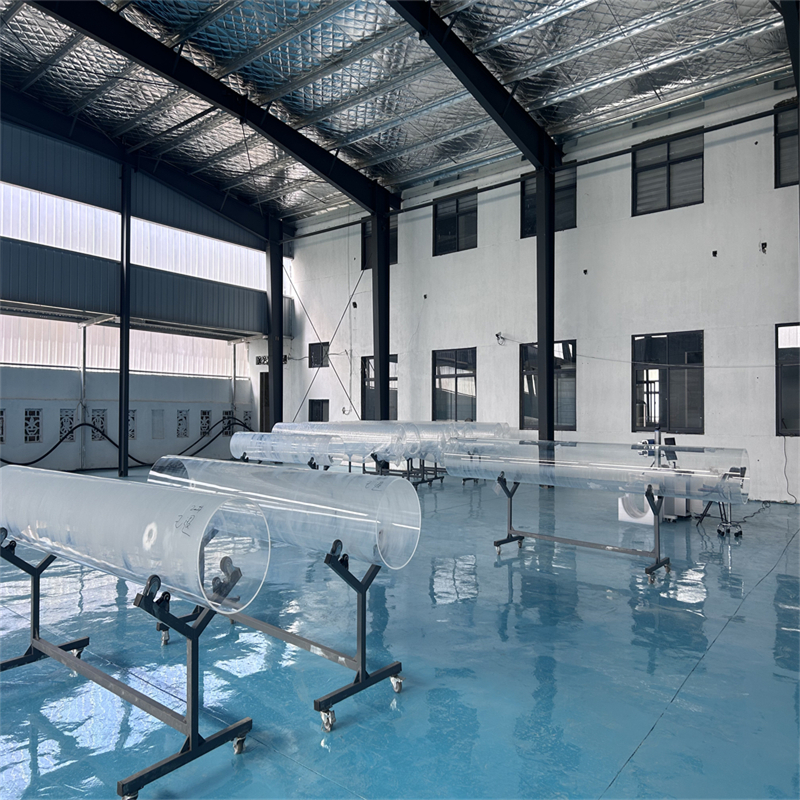
Inside the Zunex Quartz Production Facility
Real-world glimpses into our high-temperature flame annealing, CNC laser cutting, and laboratory instrument inspection lines in Donghai County.
Laser Finishing
High-precision laser cutting, drilling, and micro-grooving ensures clean edges without microscopic micro-cracks, preventing thermal stress propagation.
Rigorous QC Inspection
100% optical polarization strain testing, wall thickness verification via ultrasonic gauges, and thermal shock batch qualification.
Global Procurement FAQ: Laboratory Quartz Beakers
Clear, authoritative answers to the most common technical and operational questions posed by research labs, university purchasers, and industrial buyers.
What makes a laboratory quartz beaker superior to standard borosilicate glassware?
Can I expose a quartz beaker to concentrated acids and alkalis?
How does Zunex prevent devitrification of quartz beakers during sustained high-heat work?
Can Zunex Quartz Products Co., Ltd. customize beakers based on proprietary CAD drawings?
How are fragile quartz beakers packaged to eliminate breakage during international export?
What is your minimum order quantity (MOQ) and production turnaround?
Ready to Source Precision Laboratory Quartz Beakers?
Send your custom technical drawings, required dimensions, or volume specifications. Our engineering team in Donghai will analyze your requirements and provide a formal quote within two hours.
[email protected]