Factory-Engineered Quartz Windows, Tubes & Precision Optics
Explore our primary manufacturing components developed for semiconductor etching, wafer diffusion furnaces, optical spectrometry, and high-temperature vacuum viewports. Fully customizable to customer CAD/STEP drawings.
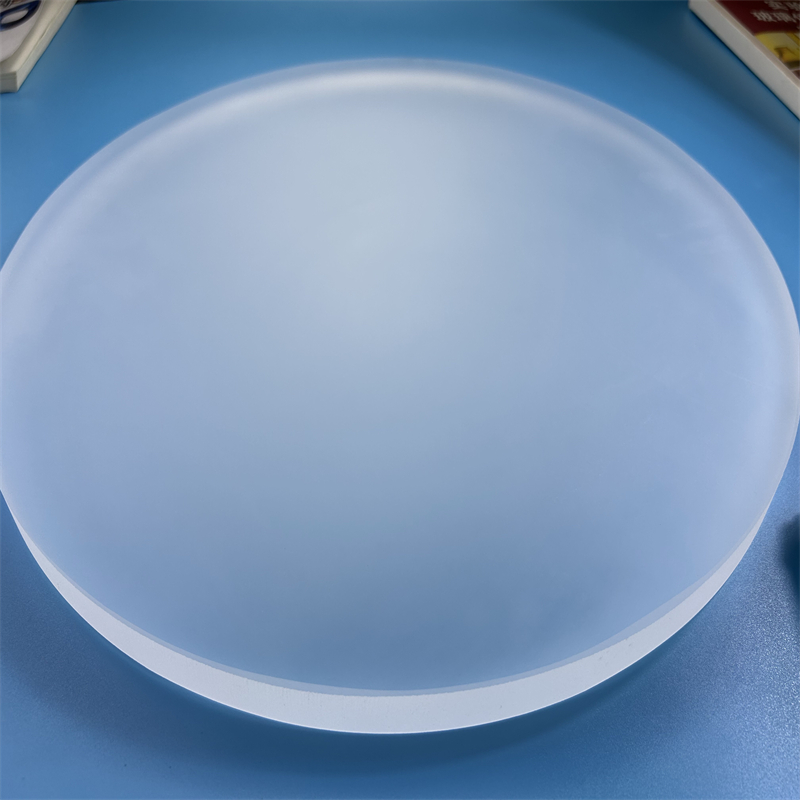
High Temperature Resistance Frosted Quartz Disc/Plate
Custom frosted and ground fused silica plates. Outstanding thermal shock endurance up to 1200°C, specialized for plasma etch baffles and semiconductor wafer diffusion.
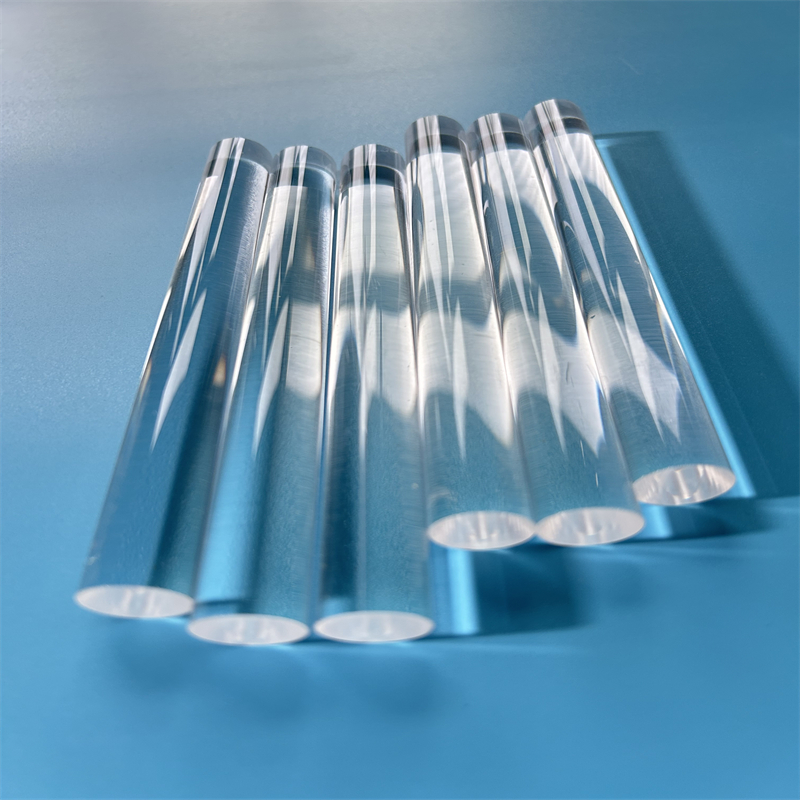
Custom Guitu Optical Quartz Light Guide Cylinder Rod 99.99%
Superb internal total reflection with 99.99% pure synthetic silica. Precision-polished end faces for UV curing systems, medical lasers, and semiconductor lithography alignment.
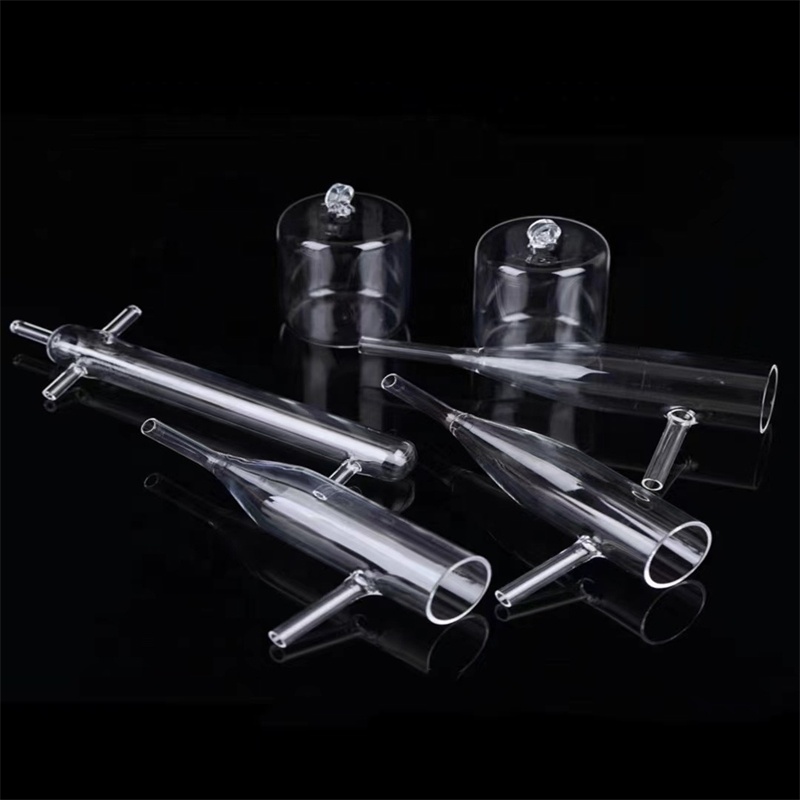
Custom Clear CVD Furnace Twin Quartz Glass Tube
Dual-bore high-temperature quartz conduit. Hydroxyl-controlled for rapid heating gradients, vacuum-tight welding, and volatile precursor vapor chemical deposition.
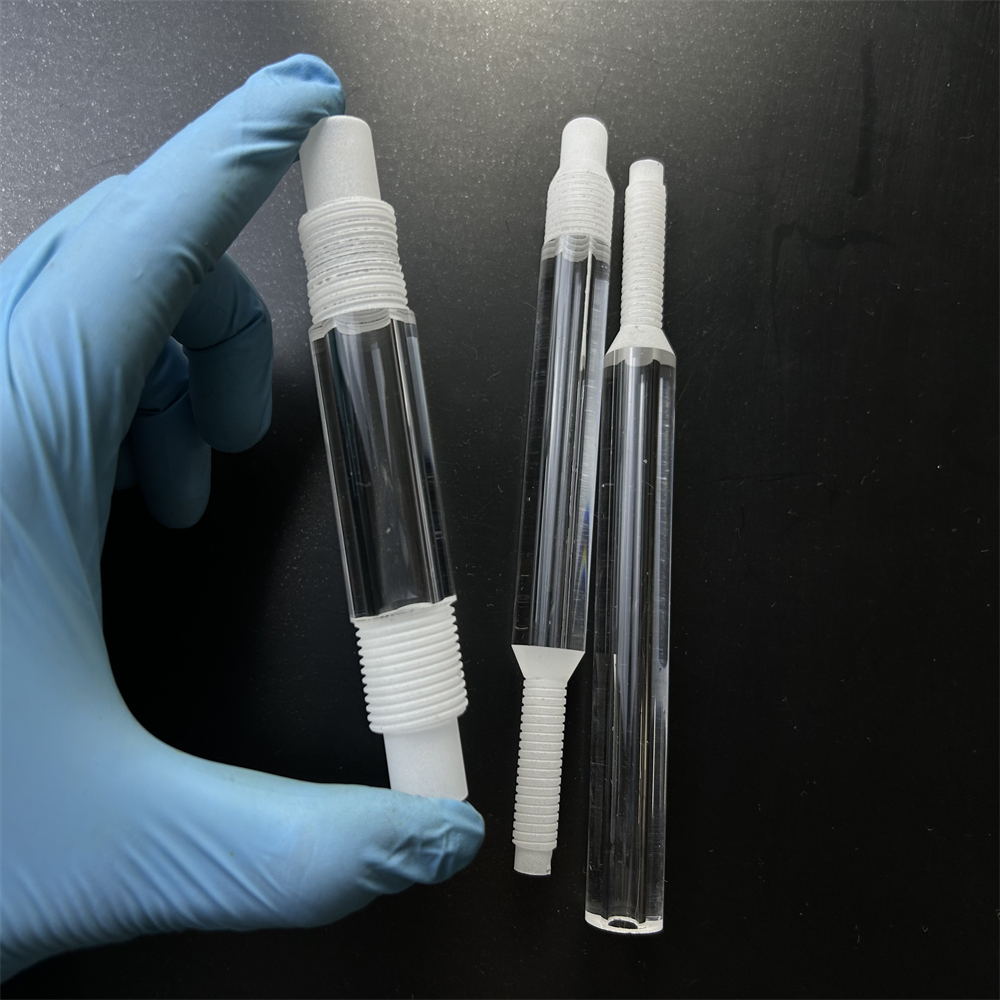
Custom High Purity Threaded UV Quartz Glass Tube
CNC-machined screw threads on vitreous quartz tubing. Engineered for high-pressure fluidic sight windows, ultraviolet disinfection lamps, and inert gas chambers.
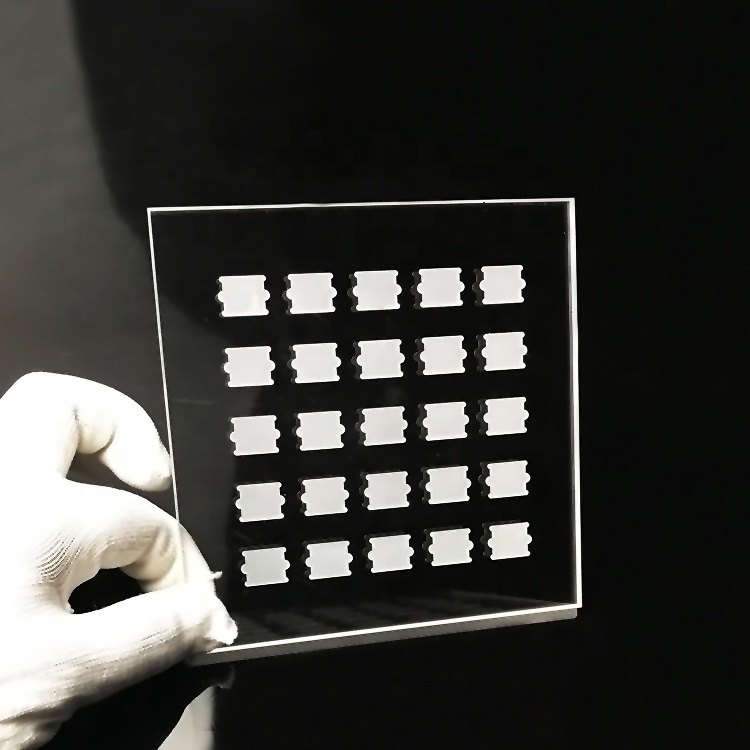
Circular Fused Quartz Glass XRD Sample Holder & Disc
Ultra-low background diffraction fused silica sample cavity disc. Optically polished surface roughness Ra < 0.5nm, free of internal crystal striations or bubble defects.
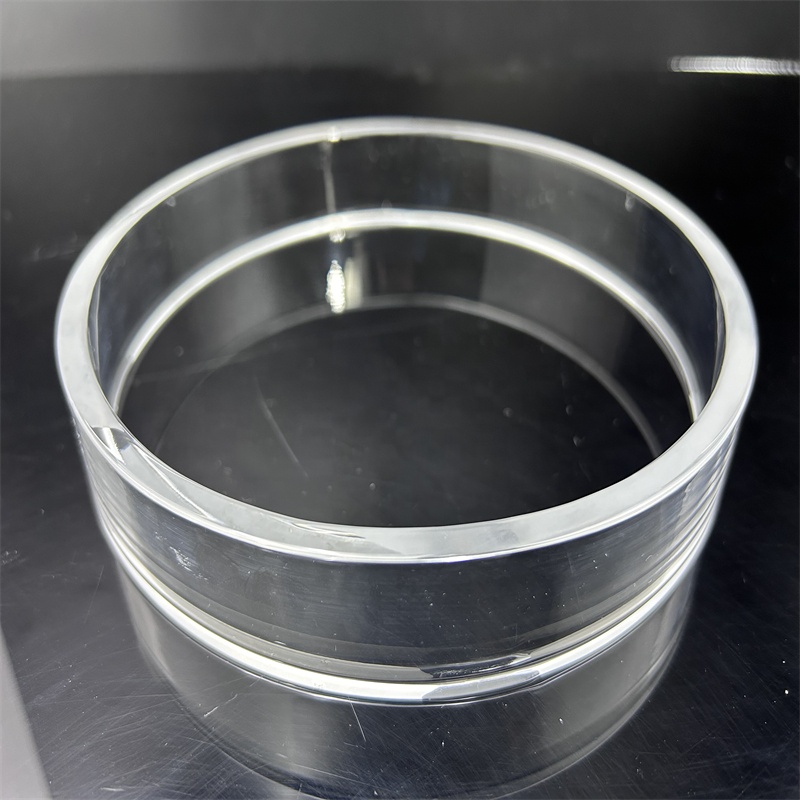
High Purity Fused Quartz Bell Jar for Semiconductor
Heavy-wall vacuum envelope quartz bell jar. Corrosion-resistant against reactive halogens (HCl, Cl₂, NF₃) during epitaxial silicon deposition and semiconductor thermal growth.
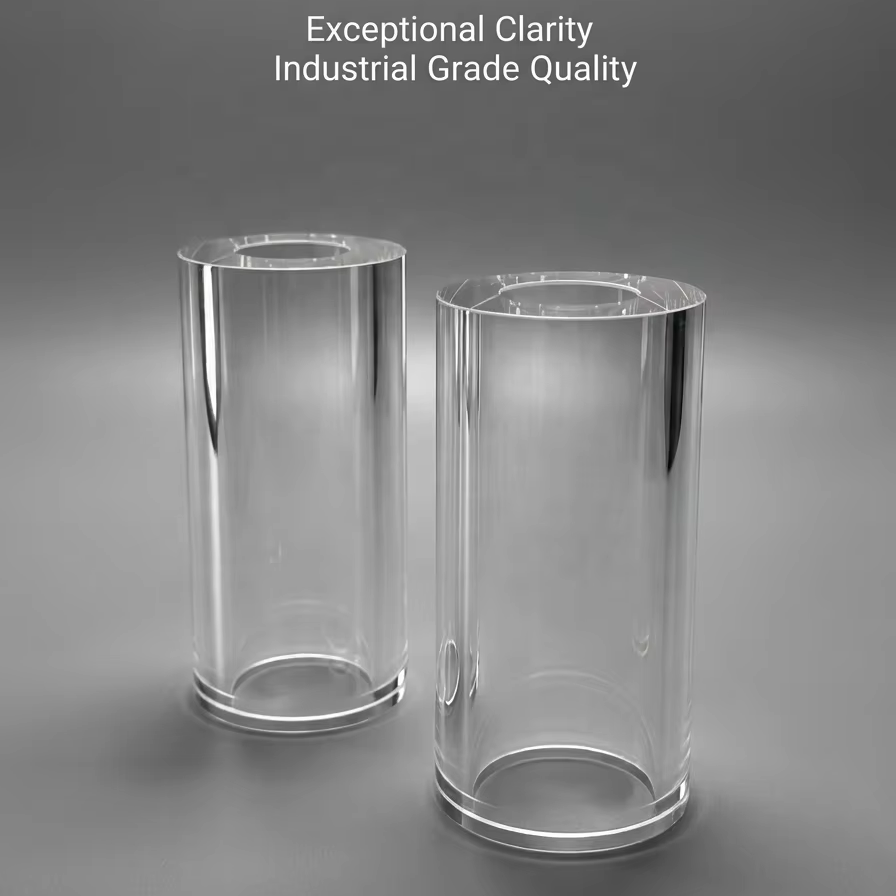
Both-Ends Polished High Purity Quartz Twin Tube
Twin-channel quartz structure featuring fire-polished and optically lapped ends. Superior structural rigidity under extreme cyclic thermal shocks up to 1150°C.

Ozone-Free Heat Resistant 99.99% Fused Quartz Twin Tube
Doped titanium/synthetic quartz options for selective ozone elimination. Ideal for short-wave infrared emitters, industrial drying chambers, and drying ovens.
100%
Verified Response Rate
≤ 2 Hours
Technical RFQ Turnaround
43%
Global Repeat Order Rate
$2.5M - $5M
Annual Export Turnover
Precision Quartz Window Engineering: The Physical, Optical & Thermal Paradigm
In ultra-high vacuum (UHV) systems, extreme ultraviolet (EUV) photolithography, high-power fiber laser optics, and semiconductor wafer processing, optical viewports and quartz windows are vital boundary components. As China's premier manufacturer and global exporter centered in Donghai County—the crystal and silicon capital of China—Zunex Quartz Products Co., Ltd. provides advanced glass manufacturing technology tailored to international engineering standards (MIL-PRF-13830B, ISO 10110, and DIN 3140).
Engineering Principle: Optical quartz windows differ critically from conventional borosilicate or float glass. Vitreous silica consists exclusively of amorphous silicon dioxide (SiO₂) tetrahedra bonded without long-range crystalline order. This yields a virtually non-existent coefficient of thermal expansion (5.5 × 10⁻⁷/°C), enabling a quartz window heated to 1100°C to be instantly quenched in cold water without catastrophic fracture.
Material Selection: JGS1 vs. JGS2 vs. JGS3 Optical Grades
Achieving optimal performance begins with selecting the appropriate raw chemical precursor and fusion synthesis route. The absorption profile across Deep UV, Visible, and Infrared spectra is governed by residual hydroxyl groups (OH⁻) and trace metallic impurities (Al, Fe, Ti, Na, K, Li, Cu):
JGS1 — Deep UV Synthetic
Synthesized via chemical vapor deposition (CVD) of silicon tetrachloride (SiClₔ). Virtually impurity-free (metallic elements < 1 ppm). High hydroxyl content (~1000-1200 ppm OH⁻). Transmits from 185 nm to 2500 nm without 248nm/193nm color-center darkening.
JGS2 — Standard UV-Vis
Manufactured through electric-arc or gas flame fusion of premium natural crystal quartz sand. OH⁻ levels typically range between 150-200 ppm. Transmits reliably from 220 nm to 2500 nm, offering an economical baseline for furnace viewports and UV curing lamps.
JGS3 — Infrared Grade
Vacuum-fused silica stripped of hydroxyl ions (OH⁻ < 5 ppm). Completely eliminates the 2.73 μm molecular water absorption peak, maintaining crystal transparency up to 3500 nm. Crucial for pyrometry, CO₂ laser delivery, and thermal imaging viewports.
| Physical / Optical Parameter | JGS1 (Far UV Grade) | JGS2 (Optical Grade) | JGS3 (Infrared Grade) |
|---|---|---|---|
| Transmission Spectrum Range | 185 nm – 2500 nm | 220 nm – 2500 nm | 260 nm – 3500 nm |
| Hydroxyl (OH⁻) Content | ≥ 1000 – 1200 ppm | ≤ 150 – 200 ppm | ≤ 2 – 5 ppm |
| Refractive Index (nd @ 587.6 nm) | 1.45846 | 1.45840 | 1.45845 |
| Total Metallic Impurities | < 1.0 ppm | < 15.0 ppm | < 18.0 ppm |
| Continuous Operating Temp | 1050 °C | 1100 °C | 1150 °C |
| Max Short-Term Temperature | 1250 °C | 1300 °C | 1300 °C |
| Thermal Expansion (0–300°C) | 5.4 × 10⁻⁷ /°C | 5.5 × 10⁻⁷ /°C | 5.5 × 10⁻⁷ /°C |
| Laser Damage Threshold (LDT) | > 15 J/cm² (1064nm, 10ns, 20Hz) | > 7.5 J/cm² (1064nm, 10ns) | > 10 J/cm² (1064nm, 10ns) |
Future Sourcing & Procurement Trends in Optical Quartz (2025–2030)
Procurement engineers and supply chain directors in North America, Europe, and Asia-Pacific face tightening quality and geopolitical requirements. Based on our trade volume and order analysis across semiconductor, aerospace, and medical sectors, three dominant purchasing shifts define current quartz window contracts:
1. Sub-Nanometer Laser Flatness & Roughness
Traditional λ/4 optical flatness is no longer sufficient for next-gen optical systems. Modern semiconductor lithography, quantum computing optics, and ultrafast picosecond/femtosecond laser cutting heads mandate transmissive wavefront error ≤ λ/10 to λ/20, surface roughness Ra < 0.3 nm, and laser-grade scratch-dig surface quality (MIL-PRF-13830B 20-10 or 10-5).
2. Pre-Integrated Metallized & Flanged Windows
Buyers are transitioning away from raw discs toward hermetically sealed assemblies. Direct sputtering of adhesion layers (Cr/Au, Ti/Pt/Au) onto quartz edges allows vacuum furnace brazing into stainless steel CF (ConFlat), ISO-KF, and custom flanges. This reduces assembly risk and helium leak rates (< 1 × 10⁻¹⁰ mbar·L/s).
3. Supply Chain Direct-from-Source Optimization
Tier-1 OEMs are eliminating intermediate distributors in favor of source-level manufacturing hubs like Donghai, China. Direct factory engagement reduces procurement markups by 30%–45%, cuts lead times from 16 weeks to under 3 weeks, and provides direct engineering access for custom prototypes and production runs.
Total Cost of Ownership (TCO) Advisory for Sourcing Directors:
Selecting sub-grade quartz to save 15% upfront frequently causes premature solarization (optical blackening under UV), laser-induced pitting, or vacuum leakage during thermal cycling. Our engineers review your laser flux, operating wavelength, operating temperature, and corrosive atmosphere to select the exact optical grade, preventing downtime costs in production lines.
Technological & Industry Development Trends in Quartz Machining
Vitreous quartz is notoriously difficult to machine due to its hardness (Mohs 5.5–6.5) and extreme brittleness. Zunex Quartz Products Co., Ltd. has developed specialized manufacturing capabilities to overcome these mechanical challenges:
Laser Cold Processing
Ultrashort picosecond laser micromachining eliminates mechanical tool shear stress. Enables clean micro-hole drilling (Ø 0.1 mm), precision slots, and step grooves with zero micro-cracking and edge chipping < 20 μm.
Double-Sided CMP Polishing
Chemical-Mechanical Planarization (CMP) produces ultra-smooth finishes. We achieve sub-angstrom root-mean-square roughness (Sq < 0.2 nm) with surface parallelism < 5 arcseconds and transmitted wavefront distortion < λ/10.
Thin-Film AR Coatings
Ion-Beam Sputtered (IBS) dielectric Anti-Reflective (AR) coatings tailored for 355nm, 532nm, 1064nm, or broadband 400–1100nm. Surface reflection dropped from 4% down to R < 0.1% per surface, boosting laser damage thresholds.
Interferometric Metrology
Zygo laser interferometers, PerkinElmer Lambda 950 UV/Vis/NIR spectrophotometers, and 3D coordinate measuring machines (CMM) verify optical surface figure, spectral transmission, and dimensional tolerances prior to dispatch.
Have an Optical Drawing or Custom Component Specification?
Send your PDF, DWG, DXF, or 3D STEP drawings directly to our Donghai engineering team. We review manufacturability, raw material purity grades, and dimensional tolerances, returning an itemized quote within 2 hours.
Inquire NowManufacturing Excellence & Direct Export Advantages
Zunex Quartz Products Co., Ltd. operates in Donghai County, Jiangsu Province—home to over 70% of China's high-purity natural silica reserves and quartz processing infrastructure. We combine local access to raw optical crystals with modern CNC and laser finishing facilities.
Custom CNC & Laser Fabrication
Our workshop integrates 5-axis ultrasonic CNC cutting, high-precision laser slotting, flame-working lathes, and automated double-sided optical lapping machines. Whether for individual prototype windows or multi-thousand batch runs, we guarantee dimensional repeatability within ±0.01 mm.
Cleanroom Cleaning & Vacuum Packaging
Optical quartz windows are susceptible to particulate contamination and moisture staining. All optical components undergo ultrasonic multi-stage acid etching, 18.2 MΩ·cm deionized water cascading rinses, cleanroom bake-out, and class 1000 double-vacuum packaging.
Certified Global Export Reliability
With an annual export turnover of US$2.5M – US$5.0M and an official 43% repeat-order rate on Alibaba.com, our quartz parts serve demanding buyers in the United States, Germany, Japan, South Korea, Singapore, and beyond. We maintain a verified 100% inquiry response rate within 2 hours.
Comprehensive Step-by-Step Sourcing Checklist for Engineers:
Ensure your RFQ contains complete technical parameters to fast-track production and quote confirmation:
- Dimensions & Tolerances: Outer diameter (OD), clear aperture (CA), thickness, and concentricity (e.g., Ø50.8 ± 0.05 mm × 3.0 ± 0.02 mm).
- Material Grade Requirement: JGS1 (Synthetic Deep UV), JGS2 (Optical UV-Vis), or JGS3 (Low-OH Infrared), or commercial fused quartz.
- Surface Figure & Wavefront: Transmitted wavefront distortion (λ/4, λ/10 per 25mm), flatness (λ/2 to λ/10), and parallelism (≤ 30 arcsec or ≤ 5 arcsec).
- Surface Quality (Scratch-Dig): Standard commercial 60-40, high-precision 40-20, or laser-grade 20-10 / 10-5 per MIL-PRF-13830B.
- Edge Bevel & Chamfer: Ground edge with protective safety chamfer (e.g., 0.2–0.5 mm × 45°) to prevent chip initiation.
- Thin Film Coating Requirements: Uncoated, Single-layer MgF₂, or V-type multi-layer dielectric AR coating with specific operating wavelength.
Frequently Asked Questions on Quartz Window Sourcing
Answers to technical, operational, and commercial questions typically encountered by optical engineers, procurement specialists, and research laboratories.
What is the primary difference between fused quartz and fused silica?
What maximum continuous working temperature can a quartz window withstand?
How do you verify internal bubble and inclusion levels in optical quartz windows?
Can Zunex machine custom mounting holes, steps, grooves, and threaded bevels?
What optical surface roughness and flatness specifications can be guaranteed?
How does hydroxyl (OH⁻) concentration affect optical transmission?
What anti-reflective (AR) coatings can be deposited on quartz windows?
What is your production lead time, minimum order quantity (MOQ), and shipping safety protocol?
Connect with an Experienced Quartz Window Engineer Today
Accelerate your procurement pipeline with direct factory pricing, rapid design reviews, and verified quality control. Click below to initiate an immediate technical discussion.
Inquire Now