Precision Quartz Glass Manufacturing & Global Supply Ecosystem
Understanding the material science, refractive precision, transmission spectrums, and CNC machining tolerances that define tier-one Chinese optical quartz fabrication.
In modern optoelectronics, excimer laser lithography, photovoltaic diffusion furnaces, and analytical instrumentation, the specification of optical substrates leaves zero margin for compromise. Fused quartz optical plates and synthetic fused silica (SiO₂) windows serve as the foundational thermal and optical barrier materials across extreme operating regimes. As the global epicenter of quartz mining, purification, and thermo-mechanical processing, Donghai County in Jiangsu Province, China, has matured from a regional raw materials cluster into an advanced fabrication hub capable of delivering high-purity optical plates conforming to stringent DIN 58927, ISO 12123, and MIL-PRF-13830B optical standards.
Whether your application mandates JGS1 deep ultraviolet (DUV) synthetic fused silica exhibiting zero absorption dip at 248 nm, JGS2 standard optical grade fused quartz balancing broad visible-spectrum transmission with structural economy, or JGS3 infrared (IR) quartz thermally treated to suppress the 2.73 μm hydroxyl (OH⁻) absorption band below 2 ppm, selecting the right supply partner determines the yield, laser damage threshold (LDT), and MTBF of your ultimate optical assembly. This guide and catalog present an exhaustive overview of manufactured fused quartz configurations, precision laser and CNC finishing tolerances, material grade benchmarks, and evolving international procurement trends.
Featured Engineered Quartz & Glass Assemblies
Eight certified high-performance quartz products tailored for semiconductor diffusion, analytical metallurgy, spectroscopy viewports, and medical-grade fluidics.
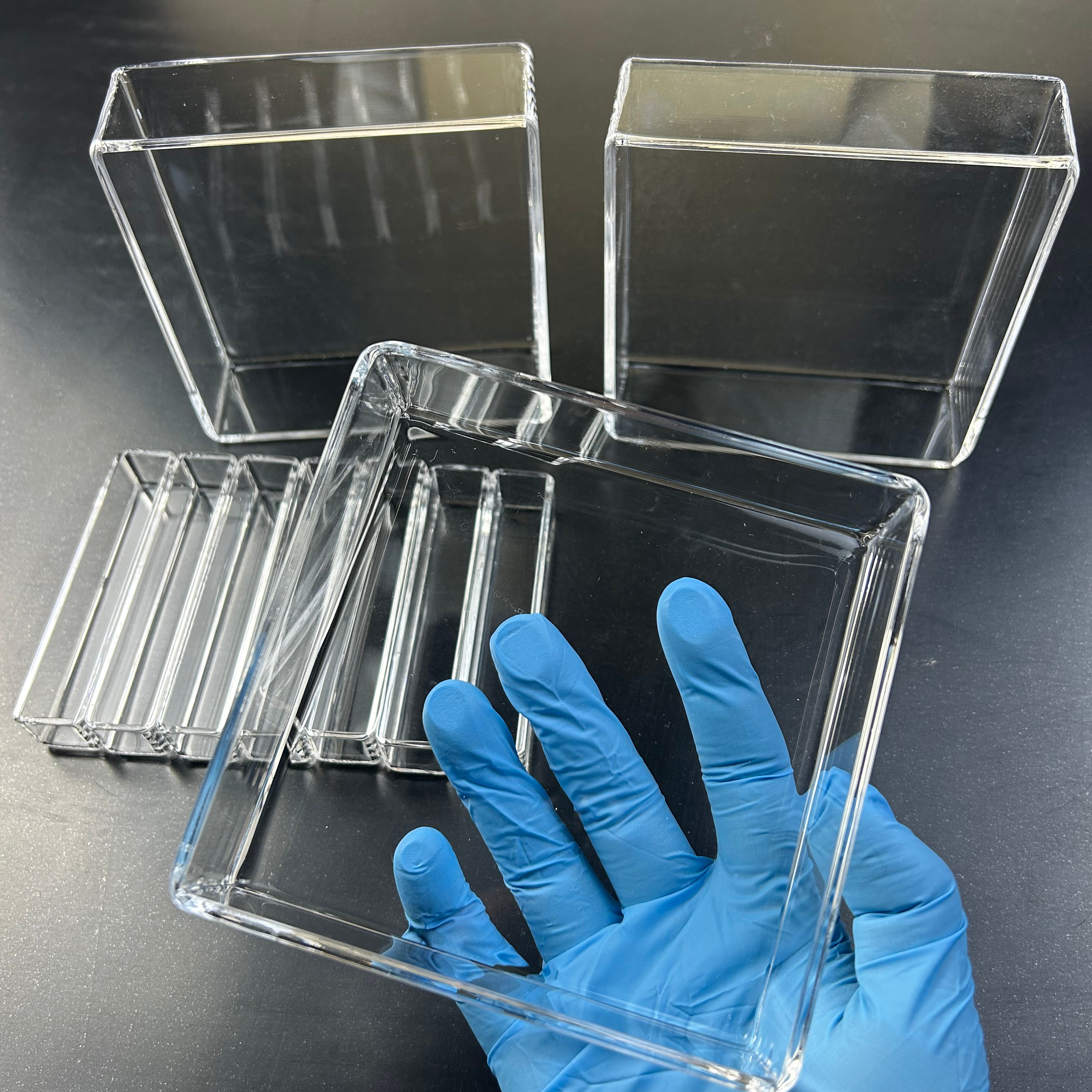
Custom Fused Quartz High-Temperature Cylinder Crucible Tank
Precision flame-welded and CNC-cut circular cylinder crucible engineered for high-purity metal induction melting, crystal pulling, and chemical vapor sintering.
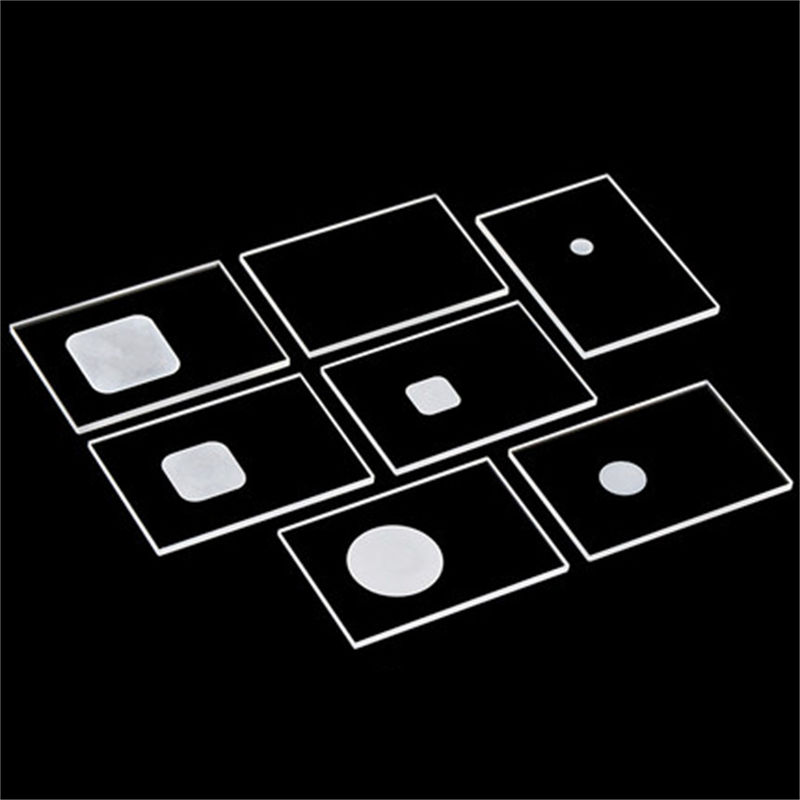
Fused Quartz Glass Sheet for XRD Sample Tank & Chip Testing
Zero-background slotted carrier quartz sheets calibrated for X-ray diffraction (XRD) sample tanks, semiconductor chip testing, and analytical heat treatment up to 1100°C.
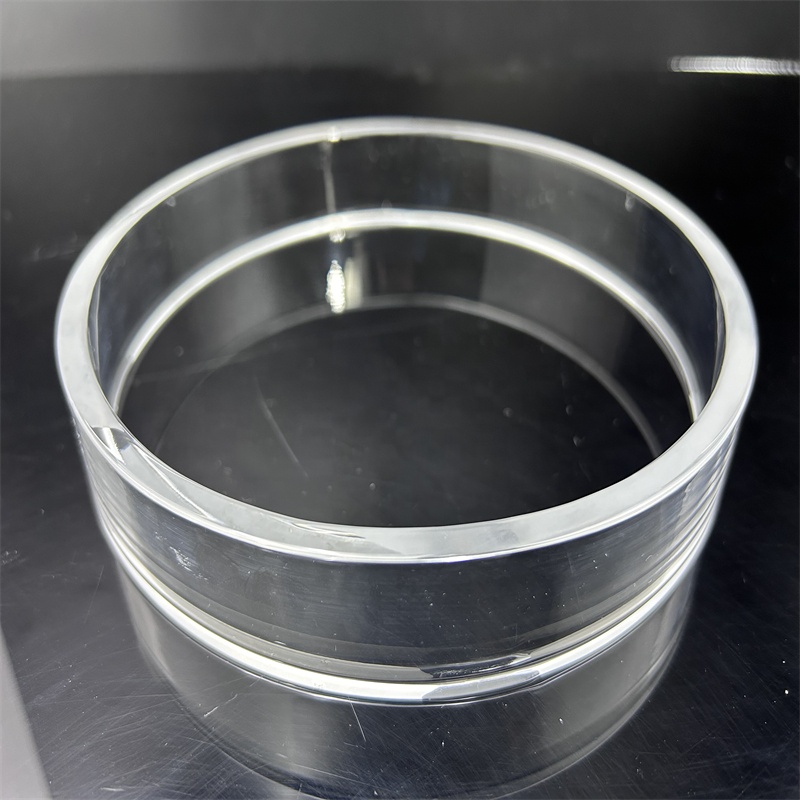
High-Purity Corrosion-Resistant Fused Quartz Bell Jar
Ultra-clean semiconductor-grade quartz bell jar designed for plasma etching, LPCVD/PECVD diffusion, and epitaxial chambers with uniform thermal distribution.
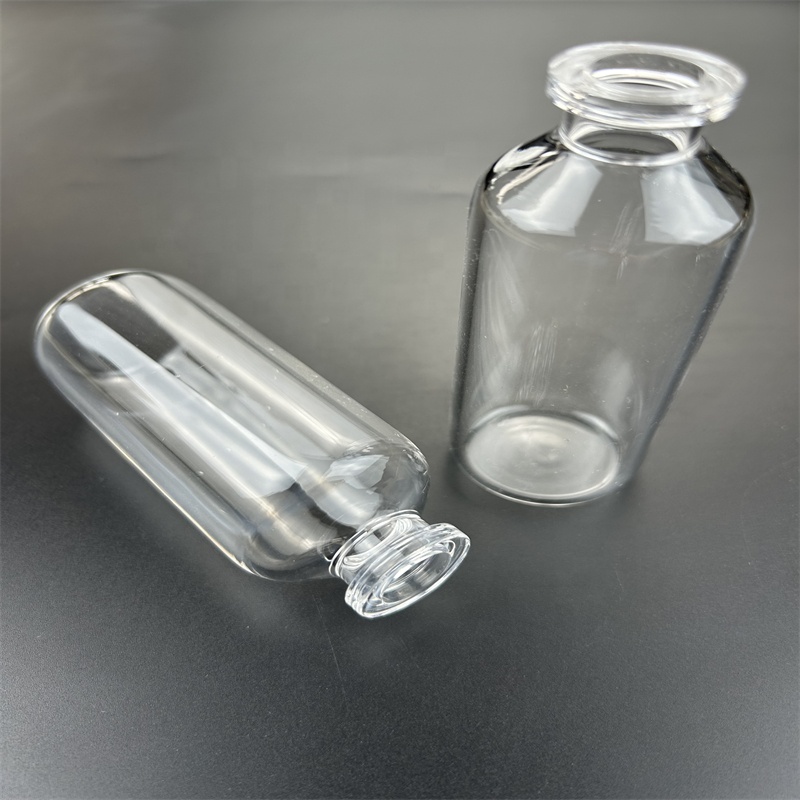
High-Pressure Transparent Ozone-Free Quartz Glass Ampoules
Precision-drawn, corrosion-resistant 99.99% pure fused silica ampoules with seamless flame sealing and zero leaching for biopharma and reference standards.

Heat-Resistant 99.99% Pure Fused Quartz Twin Emitter Tube
Twin-bore quartz emitter tubing for medium and shortwave infrared heaters, boasting minimal thermal lag, precise filament positioning, and ozone-free operation.
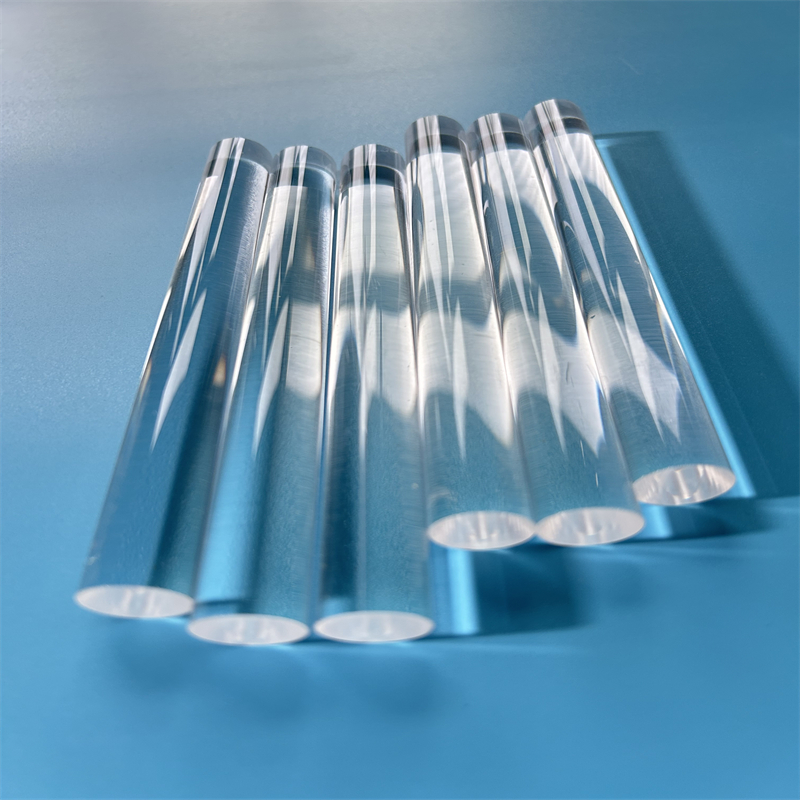
High-Purity Optical Quartz Light Guide Cylinder Rod (GT Model)
Double-end optical polished cylinder rods achieving >92% internal total reflection for UV illumination curing, laser transmission, and optical sensor coupling.
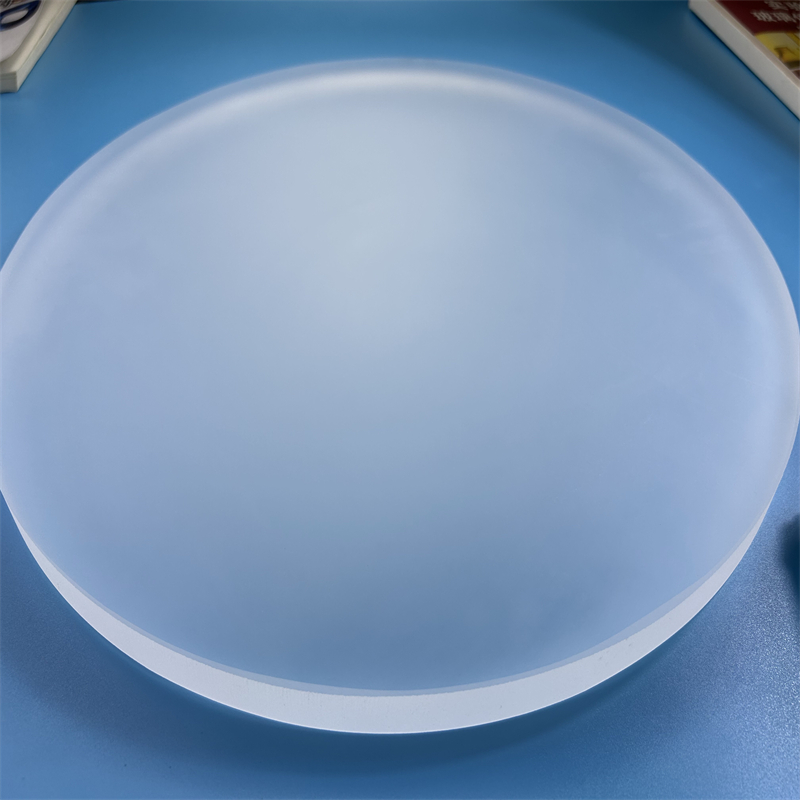
High-Temperature Frosted Quartz Disc Plate for Semiconductor
Micro-sandblasted and frosted optical quartz discs designed for thermal diffusion baffles, anti-glare sight inspection windows, and semiconductor plasma shielding.
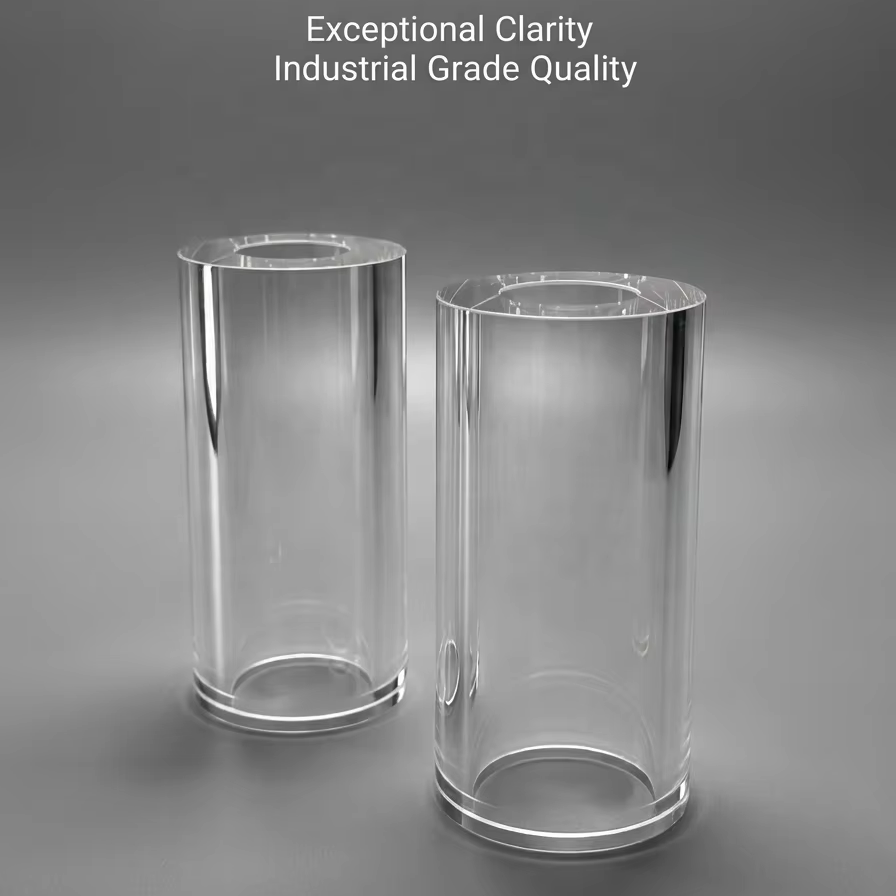
Both-Ends Polished High-Purity Transparent Quartz Twin Tube
Custom-profile twin quartz tube with both ends optically polished and chamfered, built with CNC precision for specialty heating fixtures and flow-cell reactors.
Optical Quartz Plate Grades & Physical Metrology
Comprehensive comparison between JGS1, JGS2, and JGS3 quartz plates to prevent costly over-specification or spectral failures in mission-critical applications.
Synthesized by chemical vapor deposition of high-purity silicon tetrachloride (SiCl₄). Free of bubbles and inclusions, it demonstrates extraordinary transmission across the deep ultraviolet spectrum (including 193 nm ArF and 248 nm KrF excimer lines). Perfect for laser optics, DUV photolithography windows, and spectrophotometer flow cells.
Produced by gas-oxygen flame fusion of premium natural crystalline silica sands. JGS2 offers superior thermal stability and mechanical strength at a competitive cost. Widely specified for visible optics, laser protection covers, furnace observation sight glasses, and chemical synthesis reactor plates.
Electrically fused in a vacuum environment to strip hydroxyl ions, maintaining residual OH⁻ content below 2–5 ppm. Completely eliminates the pronounced 2.73 μm water absorption band, ensuring maximum transmission across the near and mid-infrared spectra for pyroelectric sensors, CO₂ laser optics, and IR heating panels.
| Physical / Optical Parameter | JGS1 (Synthetic Silica) | JGS2 (Standard Optical) | JGS3 (Low-OH Infrared) | Test Standard / Metrology |
|---|---|---|---|---|
| Primary Spectral Band | 185 nm – 2500 nm (DUV-VIS) | 220 nm – 2500 nm (UV-VIS) | 260 nm – 3500 nm (VIS-NIR) | UV-VIS-NIR Spectrophotometer |
| Hydroxyl (OH⁻) Concentration | Typ. 800 – 1200 ppm | Typ. 150 – 300 ppm | < 2 – 5 ppm (Anhydrous) | FTIR Spectrometry @ 2.73 μm |
| Total Metallic Impurities | < 1.0 ppm (Ultra Pure) | < 15 – 20 ppm | < 20 ppm | ICP-MS Trace Element Analysis |
| Thermal Expansion (0–300°C) | 5.5 × 10⁻⁷ / °C | 5.5 × 10⁻⁷ / °C | 5.4 × 10⁻⁷ / °C | Dilatometer Metrology |
| Continuous Max Temperature | 1050 °C | 1100 °C | 1150 °C | Annealed Muffle Testing |
| Surface Flatness Quality | λ/4 to λ/10 @ 632.8 nm | λ/2 to 1λ @ 632.8 nm | λ/2 to 1λ @ 632.8 nm | Zygo Laser Interferometer |
| Surface Scratch-Dig | 20-10 / 40-20 Mil-Spec | 40-20 / 60-40 Standard | 40-20 / 60-40 Standard | MIL-PRF-13830B Inspection |
| Refractive Index (nd @ 589.3nm) | 1.4585 | 1.4584 | 1.4586 | Abbe Refractometer Measurement |
Future Procurement Trends for Optical Quartz Plates
Macro-economic shifts, semiconductor node scaling, and multi-spectral photonics are transforming how multinational OEMs source precision quartz components.
Migration Toward Direct-from-Source Precision Machining
Tier-one instrument makers in Europe, North America, and Japan are moving away from importing raw quartz ingots for domestic processing. Sourcing fully finished plates—with laser micro-drilling, edge chamfering, and dual-surface polishing completed directly at the Chinese source factory—cuts production lead times by up to 55% while eliminating secondary handling scrap.
Sub-Micron Surface Roughness in High-Power Lasers
The acceleration of multi-kilowatt CW fiber lasers and ultra-fast picosecond cutting tools necessitates protective optical windows with sub-nanometer surface roughness (Ra < 0.5 nm). Micro-cracks or subsurface damage (SSD) induce thermal lensing and catastrophic laser breakdown. Advanced chemical-mechanical planarization (CMP) in China now routinely matches Western metrology standards.
Total Cost of Ownership (TCO) & Rigorous Batch Traceability
Enterprise procurement departments demand verified third-party material certificates (spectrophotometer curves, Zygo flatness reports, and ICP-MS assay sheets) accompanied by secure, vibration-damped export crating. China’s leading exporters now offer end-to-end batch traceability from raw silica sand sourcing to final cleanroom vacuum sealing.
Technological Developments in Quartz Processing
Breakthrough micro-machining and finishing technologies deployed in Donghai to achieve ultra-tight geometric tolerances on complex quartz plates.
Ultrafast Picosecond & Femtosecond Laser Micro-Drilling
Traditional mechanical diamond drills induce micro-cracks and chip breakout along hole peripheries, reducing tensile fatigue life. State-of-the-art cold laser processing vaporizes quartz material with minimal heat-affected zones (HAZ < 5 μm), allowing array micro-hole drilling (down to Ø0.15 mm) and complex internal slotting for microfluidic chips and wafer test carriers.
Ultrasonic-Assisted 5-Axis CNC Milling
High-frequency axial vibration (20–40 kHz) applied to diamond grinding tools significantly lowers cutting resistance while machining brittle fused quartz. This achieves intricate 3D contoured profiles, stepped circular sight ports, and beveling tolerances down to ±0.01 mm without subsurface stress concentrations, guaranteeing structural stability under high mechanical pressure.
Advanced Thermal Annealing & Stress Birefringence Relief
When fused quartz plates are sliced from ingots or fire-worked, severe internal thermal stresses arise, altering refractive indices and risking spontaneous shatter during laser irradiation. Computer-controlled vacuum annealing furnaces maintain soak cycles at 1150–1215 °C followed by gradual cool-down (≤ 0.5 °C/min), dropping internal optical stress birefringence below 5 nm/cm.
Why Global Tier-1 Buyers Choose Zunex Quartz
Combining the native mineral advantages of Donghai—China's Crystal Capital—with aerospace-level precision engineering and responsive B2B export workflows.
Donghai Industrial Clustered Advantage
Situated at China's central quartz processing hub, our direct access to raw silica feedstock, specialized vacuum fusion furnaces, and flame-working artisans yields a 25–40% cost efficiency over non-clustered manufacturers.
Rapid DFM & Response (≤ 2 Hours)
Every technical RFQ is reviewed by senior optical engineers who evaluate dimensional tolerances, surface figure, and thermal shock constraints. Receive comprehensive DFM advice and formal quotations within 2 hours.
End-to-End Metrology & Quality Rigor
From raw ingot spectral transmission spectrophotometry to Zygo laser interferometry and optical cleanroom vacuum sealing, 100% of finished plates undergo stringent QA before export crating.
Zero-Breakage Global Logistics
Fragile optical plates are cushioned with customized high-density EPE molded foam, desiccants, anti-static polybags, and ISPM-15 compliant reinforced plywood cases, delivering a 99.8% safe arrival track record worldwide.
Frequently Asked Questions by Optical Engineers
Direct engineering answers addressing material purity, thermal cycling, bubble grading standards, and customized fabrication limits.
What are the key functional differences between JGS1, JGS2, and JGS3 quartz plates?
The difference lies in raw material feedstock, synthesis method, and hydroxyl (OH⁻) content. JGS1 is synthetic fused silica made from silicon tetrachloride (SiCl₄). It features extraordinary deep-UV transmission (185–2500 nm), total bubble freedom, and minimal trace metals (<1 ppm), making it mandatory for UV lithography, excimer lasers, and spectrophotometry. JGS2 is flame-fused from premium natural quartz crystals; it transmits well from 220 to 2500 nm and is the industry's cost-effective workhorse for visible optics, sight glasses, and laboratory windows. JGS3 is electrically melted in vacuum to reduce OH⁻ content below 2 ppm, eliminating the characteristic 2.73 μm water absorption dip and extending clear optical transmission up to 3500 nm in the near-to-mid infrared band.
Can fused quartz plates handle severe thermal shock and high operating temperatures?
Yes. Fused quartz possesses an extremely low coefficient of thermal expansion (CTE) of approximately 5.5 × 10⁻⁷ / °C between 0 and 300 °C—nearly 1/20th that of standard soda-lime or borosilicate glass. As a result, an optical quartz plate heated to 1000 °C can be quenched immediately in ice water without fracturing. Its maximum continuous operating temperature is roughly 1100 °C, with short-term excursions permitted up to 1300 °C. The softening point occurs around 1683 °C and the annealing point is near 1215 °C.
What surface finish, flatness, and scratch-dig tolerances can you achieve?
Depending on customer drawings and application requirements, we offer multiple surface finishes:
- Optical Polish: Double-sided pitch or CMP polishing achieving surface roughness Ra < 0.5 nm, scratch-dig 20-10 or 40-20 per MIL-PRF-13830B, and flatness of λ/4 to λ/10 per 25 mm aperture.
- Commercial Fine Polish: Scratch-dig 60-40 or 80-50, flatness 1λ–2λ, suitable for sight glasses, IR heaters, and general viewports.
- Frosted / Matte / Sandblasted: Uniform micro-textured surfaces (Ra 1.6–3.2 μm) engineered for light diffusion, anti-reflective baffles, and plasma shielding.
- Dimensional Tolerances: Length/width/diameter held to ±0.02 mm; thickness down to ±0.01 mm; edge chamfers at 0.2–0.5 mm × 45°.
How do you categorize and inspect bubbles, inclusions, and optical striations?
We classify optical plates according to DIN 58927 and ISO 12123 standards. For critical laser and imaging optics (JGS1), plates are certified as Bubble Class 0 (zero bubbles or inclusions >0.05 mm across the entire clear aperture). For standard optical and thermal sight glass applications (JGS2), Bubble Classes 1 or 2 are applied where micro-bubbles below specified cross-sectional areas are permitted outside critical viewing paths. Every order is inspected under high-intensity dark-field cross-polarizers, and inspection certificates are supplied with shipping documentation.
What chemical resistance properties do quartz optical plates exhibit?
Fused quartz is chemically inert to almost all acidic, neutral, and organic substances, including concentrated hydrochloric (HCl), nitric (HNO₃), and sulfuric (H₂SO₄) acids, even at elevated temperatures. The only common chemical substances that attack fused silica are hydrofluoric acid (HF) at any temperature and phosphoric acid (H₃PO₄) at temperatures exceeding 150 °C. Strongly alkaline solutions will slowly etch quartz at room temperature and accelerate at elevated temperatures above 80 °C.
What is the standard procedure and lead time to produce custom quartz plates to drawing?
Our custom fabrication workflow follows a streamlined 5-step path:
- Drawing Submission: Client sends technical drawings in PDF, DWG, DXF, or STEP format specifying grade, dimensions, tolerances, surface polish, and quantity.
- DFM & Quotation: Our application engineering department completes manufacturability analysis and provides a competitive formal quote within 2 hours.
- Precision Fabrication: Slicing from certified ingots, edge rounding, 5-axis CNC contouring, ultrasonic laser hole drilling, and multi-stage planetary lapping/polishing.
- Metrology Inspection: Cleaning via ultrasonic deionized water baths, Zygo interferometry, micrometer dimensional confirmation, and scratch-dig inspection under cleanroom conditions.
- Safe Packaging & Dispatch: Vacuum-sealed in anti-static cleanroom pouches, cushioned inside high-density foam shells, and shipped via DHL/FedEx air express or air/ocean freight. Typical prototype lead times range from 5 to 9 business days.
Request Engineering Consultation & Custom Quote
Need customized JGS1/JGS2/JGS3 quartz plates, precision laser-drilled discs, or high-temperature crucibles? Contact our Donghai engineering team directly. We evaluate your PDF/CAD drawings and respond within 2 hours with competitive pricing and DFM feedback.