
Precision Portfolio
Featured Industrial Fused Silica Solutions
Engineered to customer drawings with custom cold-machining, laser-micro-machining, and high-purity thermal welding. Available for fast dispatch to the Bayan Lepas and Prai industrial corridors.
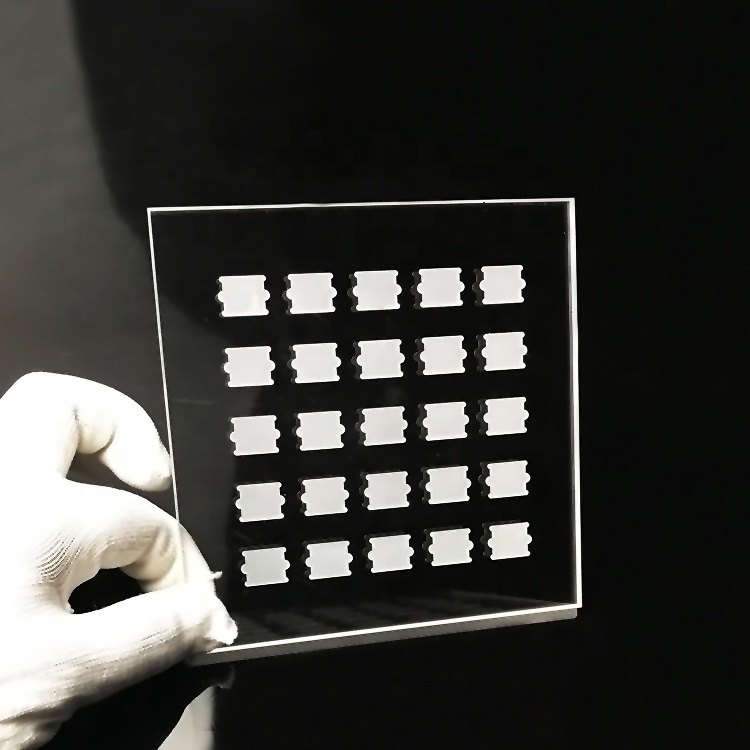
Circular Fused Quartz Glass XRD Sample Holder
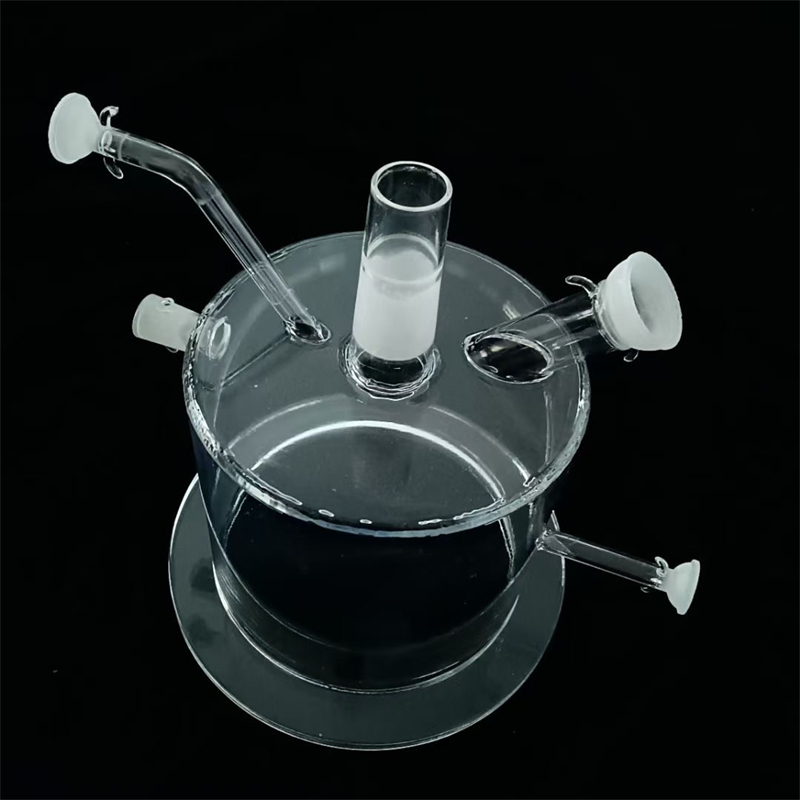
High-Pressure Clear Quartz Glass Tube

Custom Clear Fused Quartz Plate (1100°C)

UV Grade Transparent Quartz Disc & Window
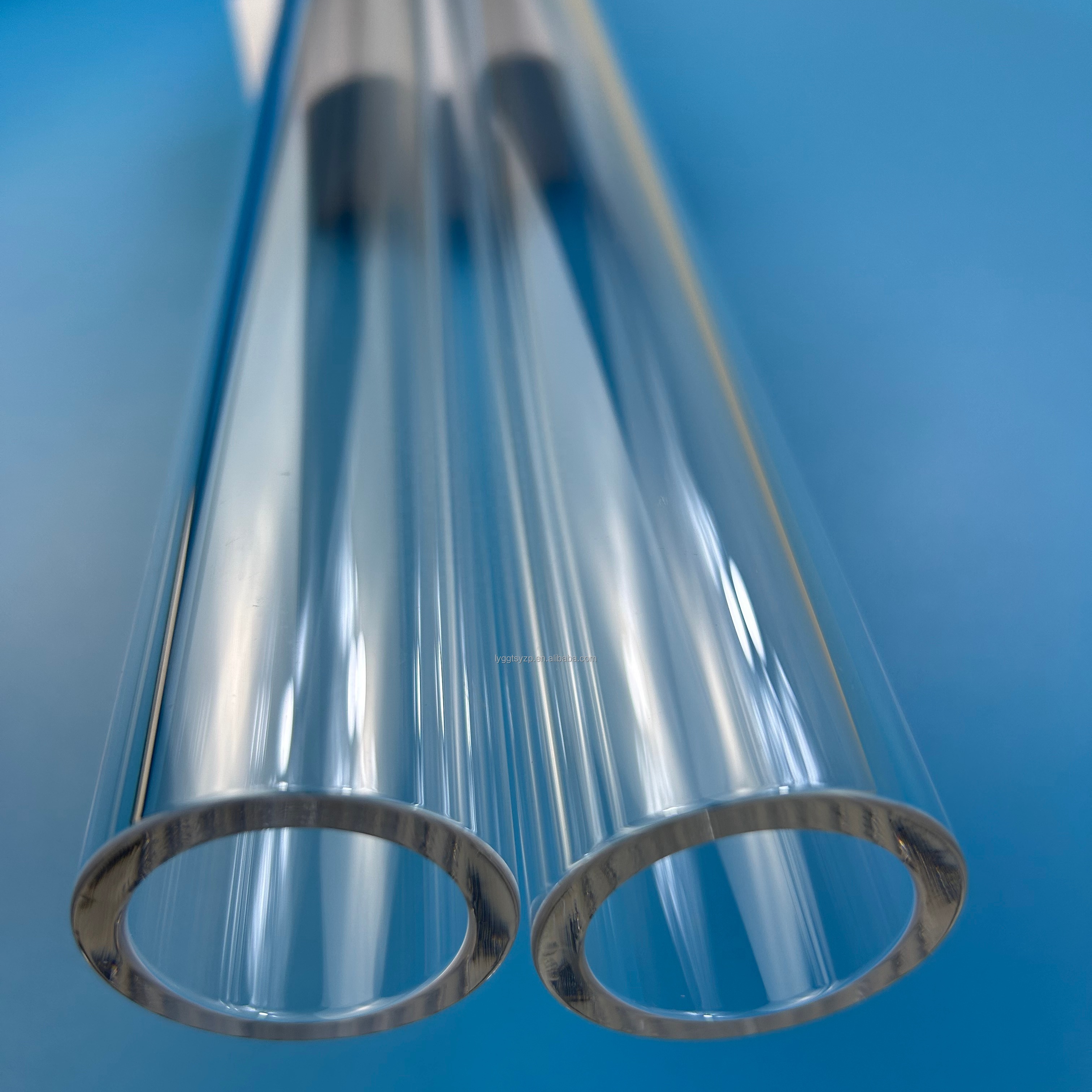
Semiconductor Furnace Quartz Twin Tube
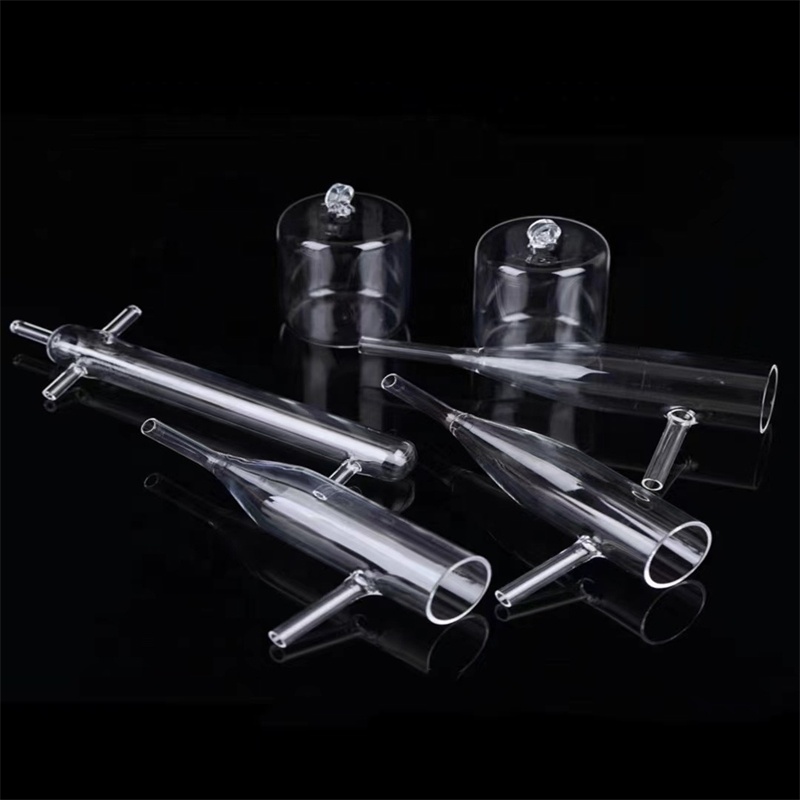
CVD Furnace Vacuum Twin Quartz Tube
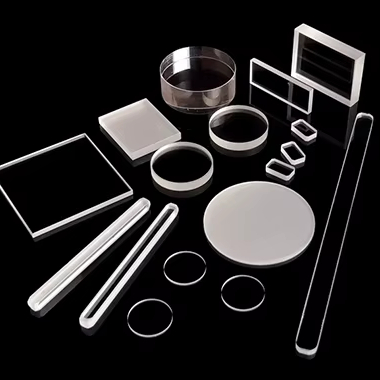
Optical Grade Test Sample Fused Quartz Sheet
Material Intelligence
Fused Silica vs. Fused Quartz Engineering Matrix
Selecting optimal optical grades for automated test equipment (ATE), plasma etching chambers, and high-energy laser optics.
| Grade Designation | Transmission Bandwidth | OH Content (PPM) | Primary Local Application (George Town / Penang) | Thermal Softening Point |
|---|---|---|---|---|
| JGS1 (Synthetic Silica) | 185 nm – 2500 nm (Deep UV) | ≤ 1200 PPM | Semiconductor UV Lithography, Laser Alignment Windows, ATE Optics | 1680 °C |
| JGS2 (Fused Quartz) | 220 nm – 2500 nm (UV-VIS) | ≤ 30 PPM | Furnace Diffusion Chambers, Plasma Etch Windows, Viewing Ports | 1683 °C |
| JGS3 (Infrared Grade) | 260 nm – 3500 nm (Near-to-Mid IR) | ≤ 5 PPM (Water-Free) | Infrared Thermal Sensors, Pyrometry Windows, Rapid Thermal Processing (RTP) | 1685 °C |
Ecosystem Integration
Precision Quartz Deployment in George Town & Penang
As the 'Silicon Valley of the East', George Town and the wider Penang manufacturing corridor demand fused silica components that perform reliably in microelectronics, OSAT packaging, and photonics lines.
OSAT & Advanced Packaging
Precision carrier discs, wafer boats, and laser pedestals utilized across Bayan Lepas back-end assembly hubs for consistent thermal expansion during wafer-level bonding and 2.5D/3D chiplet integration.
Automated Test Equipment (ATE)
Optically planar JGS1 windows and XRD quartz sample holders integrated into automated optical inspection (AOI) instruments manufactured in George Town to eliminate refractive distortion during high-speed wafer testing.
High-Temperature Thermal Processing
Custom twin-bore quartz tubes and CVD furnace liners engineered to withstand thermal cycling up to 1100°C within solar cell passivation lines and thin-film epitaxy systems situated in Batu Kawan and Seberang Perai.
Whitepaper Excerpt: Managing Thermal Expansion Mismatches in Penang Packaging Hubs
In advanced semiconductor packaging, dimensional accuracy is heavily influenced by the Coefficient of Thermal Expansion (CTE). Standard borosilicate glasses fail at temperatures above 500°C and possess a thermal expansion coefficient exceeding 3.3 × 10⁻⁶ /°C, creating mechanical stresses in automated bonding setups. By contrast, our specialized high-purity fused silica exhibits an ultra-low CTE of 5.5 × 10⁻⁷ /°C across the 20°C to 1000°C range. This single-order-of-magnitude reduction prevents optical misalignment and wafer warpage during continuous high-temperature vacuum baking cycles. For George Town precision engineers, integrating cold-machined synthetic quartz substrates ensures predictable co-planarity, minimal micro-fissuring, and extended preventative maintenance cycles.
Market Dynamics
Penang Industrial Trajectory & Fused Silica Demand
Analyzing shifts across Northern Corridor Economic Region (NCER) production facilities transitioning toward sub-7nm node packaging, wide-bandgap semiconductors, and cleanroom automation.
Shift Toward Compound Semiconductors (SiC & GaN)
With power electronics manufacturers expanding around George Town, diffusion and epitaxy temperatures routinely exceed 1200°C. This drives demand away from conventional quartz toward hydroxyl-free, high-viscosity synthetic fused silica tubes that resist devitrification under fluorine plasma exposure.
Automation in Semiconductor Tool Fab
Local equipment builders in Penang require stricter geometric tolerances (±0.02 mm) on slotted quartz boats and robotic wafer transfer end-effectors. CNC grinding and laser-machined edge chamfers are replacing manual torch-working to avoid mechanical hang-ups during automated transfer.
Rigorous Contamination & Trace-Metal Audits
Penang supply chain managers are enforcing stricter limits on trace alkali metals (Fe, Na, K < 0.1 PPM). Contaminant migration into active wafer channels ruins electrical properties, making ICP-MS verified high-purity synthetic quartz an essential standard across cleanrooms.
Manufacturing Depth
Integrated Factory Advantages from Donghai to Penang
Direct OEM/ODM production backed by complete raw material sourcing, certified laser finishing, and an export model tailored to Tier-1 engineering procurement.
Donghai Direct Origin
Positioned at China's crystal hub, guaranteeing access to high-grade crystalline feedstock (SiO₂ ≥ 99.99%) without intermediate distribution costs.
Advanced Laser Finishing
State-of-the-art laser drilling, micro-grooving, and non-contact cutting prevent micro-fractures, maintaining true edge integrity along tight radii.
Drawings-to-Spec Support
Acceptance of native CAD formats (.STEP, .DWG, .DXF, PDF) with engineering-led DFM (Design for Manufacturability) reviews returned in ≤ 2 hours.
Zero-Breakage Export Packaging
Shock-absorbing tailored EPE foam, multi-layer vacuum bagging, and reinforced plywood crates engineered for secure air freight direct to Penang International Airport (PEN).
Procurement Clarity
George Town Fused Silica Procurement FAQ
Direct technical answers addressing customs classification, thermal specifications, and OEM fabrication turnaround times.
How are lead times and shipping managed for cleanrooms in Bayan Lepas?
We operate express air consolidation routes reaching Penang International Airport (PEN) within 3 to 5 business days post-fabrication. For standard parts, prototype dispatches occur within 7 working days. Heavy sea-freight containers for furnace tubes transit through Port Klang or Butterworth with cleanroom-ready export crates.
What documentation accompanies high-purity fused quartz shipments?
Every delivery includes a comprehensive Certificate of Analysis (COA) specifying trace impurity concentrations (ICP-MS test results), dimensional CMM inspection reports, and spectrophotometric transmission curves for optical windows (JGS1, JGS2, JGS3 grades).
Can you provide customized laser slotting on ultra-thin quartz plates?
Yes. Utilizing pulsed UV and picosecond laser machining stations, we achieve slot widths down to 0.15 mm ± 0.01 mm on quartz substrates as thin as 0.3 mm, ensuring smooth, chip-free edge walls (≤ 15 μm roughness) suitable for automated optical sensors.
How does thermal shock resistance compare with borosilicate 3.3?
Fused quartz features a coefficient of thermal expansion roughly five times lower than borosilicate glass. A red-hot fused quartz tube heated to 1100°C can be immersed directly into cold water without cracking, making it the required standard for high-temperature semiconductor processing.
Request an Engineering Review & Quotation
Send your dimensional drawings (.STEP, .DWG, .PDF) or custom specifications. Our technical engineering desk will review manufacturability, verify tolerances, and provide a competitive factory quotation within 2 hours.