Precision Quartz Tanks, Reaction Vessels & Processing Components
Manufactured from ultra-pure SiO₂ (≥ 99.99%) in Donghai, delivered straight to industrial clusters across Yangon, Mingaladon, and Thilawa SEZ.


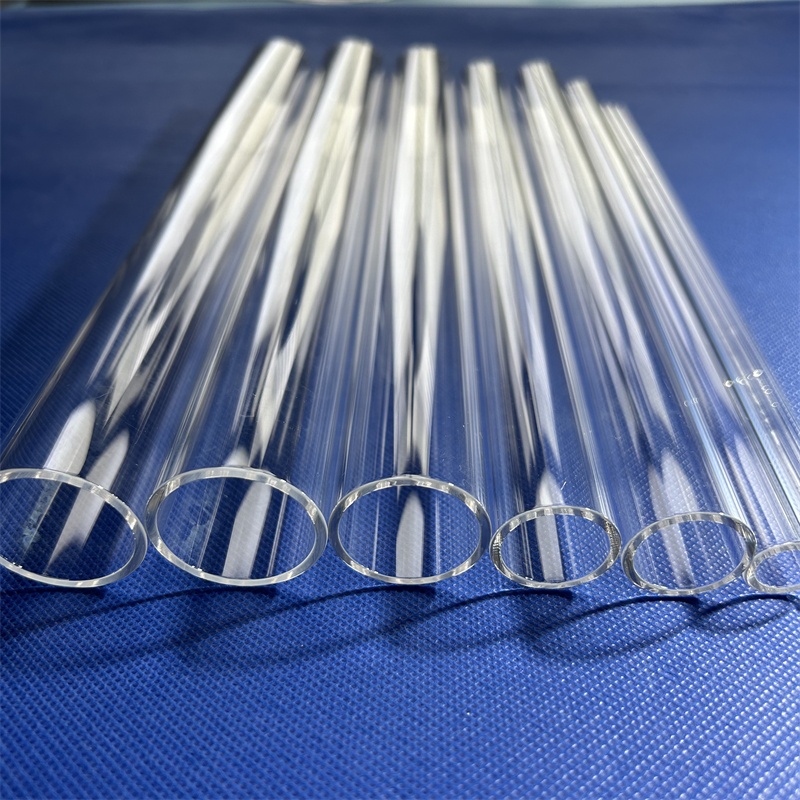
1. The Strategic Mandate for Fused Quartz Cleaning Tanks in the Yangon Industrial Ecosystem
As Myanmar accelerates the modernization of its light manufacturing, solar array maintenance, precision optical assembly, and metallurgical research facilities, contamination-free processing has become the cornerstone of high-yield production. Central to wet-chemical etching, wafer stripping, circuit board desmearing, and precision metal degreasing is the quartz cleaning tank. In the operational microclimates of Yangon—ranging from the high-tech incubators in Hlaing Township to heavy production corridors across Mingaladon and the Thilawa Special Economic Zone (SEZ)—equipment reliability under severe thermal swings and corrosive atmospheres is non-negotiable.
Unlike borosilicate glass, polypropylene, or standard fluoropolymer tanks (such as PTFE or PFA), high-purity fused quartz (SiO₂ ≥ 99.99%) exhibits near-zero thermal expansion (5.5 × 10⁻⁷ /°C) and absolute chemical inertia against aggressive mineral acids, including boiling hydrochloric acid (HCl), concentrated nitric acid (HNO₃), sulfuric acid (H₂SO₄), and aqua regia. In wet etching, RCA cleaning protocols, and hot-acid batch baths, mechanical integrity and chemical passivity prevent metallic leaching. Standard stainless steels or fluoroplastics risk trace-element leaching—such as sodium, iron, or organic fluorinated compounds—into ultra-pure deionized (DI) water or acid solutions, catastrophic for semiconductor yields, solar cell performance, and forensic laboratory assay accuracy.
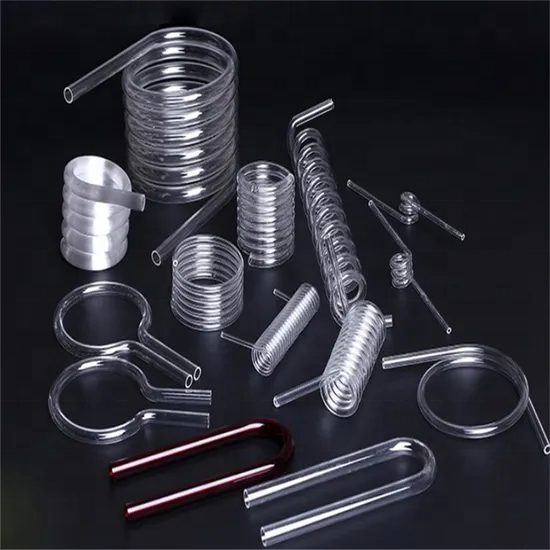
Zunex Quartz Products Co., Ltd., leveraging decades of specialized engineering from Donghai County, Jiangsu—the premier crystal manufacturing hub of China—delivers turnkey wet processing quartz tanks, U-bent quartz heating coils, and bubbler assemblies explicitly optimized for Yangon's electrical grid variances, humidity, and chemical supply chains.
Extreme Thermal Shock Resilience
Fused silica can withstand rapid thermal shifts up to 1100°C continuously, and immediate quenching from 1000°C directly into ambient-temperature liquid without structural micro-cracking or catastrophic fatigue.
Zero Leaching & Pure SiO₂
Our raw synthetic and optical quartz stock guarantees trace-metal impurities (Fe, Cu, Ni) below parts-per-billion (ppb) thresholds, safeguarding sensitive acid chemistries (Piranha, SPM, SC1, SC2) against bath poisoning.
Seamless Flame Welding & Annealing
Tanks and custom wet baths feature precision-chamfered, fire-polished joint seams stress-relieved inside dedicated electric annealing furnaces at 1215°C to eliminate residual crystalline stress zones.
2. Localized Industrial Applications Across Greater Yangon and Myanmar
The operational scope of quartz cleaning and etching tanks in Myanmar spans multiple evolving industry sectors, each requiring tailored dimensional tolerances, heating element configurations, and ultrasonic dampening setups:
1. Photovoltaic (PV) Wafer Cleaning & Module Refurbishment: As solar mini-grid installations expand across Myanmar's rural electrification initiatives, Yangon has emerged as the central logistics and refurbishment nexus for PV modules, inverters, and silicon cells. Fused quartz cleaning tanks are vital for hydrofluoric/nitric acid (HF/HNO₃) texturizing baths and potassium hydroxide (KOH) sawtooth etching stations. Fused quartz stands out as the solitary material offering optical transparency for bath monitoring alongside complete resistance to chemical degreasing solutions operating at 80°C to 120°C.
2. Electronics Assembly, PCB Rework, and Semiconductor SMT Lines: Situated within the Thilawa SEZ, international contract manufacturers deploy quartz wet benches to strip stubborn flux residue, wash printed circuit boards after wave soldering, and strip surface oxides using heated isopropyl alcohol (IPA) and acid strippers. Quartz tanks eliminate static charge accumulation hazards and prevent ionic trace contamination across micro-pitch ball-grid array (BGA) components.
3. Precious Metal Refining, Gemological Laboratories, and Mining Assay: Yangon serves as the historic center of Myanmar's gemstone trade and precious mineral processing. Analytical institutions and private refineries utilize fused quartz digestion tanks and acid cleaning baths to treat ruby, sapphire, and gold ores with boiling aqua regia (HNO₃ + 3HCl). Standard borosilicate glass clouds, etches, and fails under continuous boiling acid assault; fused quartz tanks preserve optical clarity, zero sample contamination, and uninterrupted operational lifespans exceeding five years.
4. Pharmaceutical, Medical Device Sterilization, and Water Analysis: In biomedical formulation hubs along the Insein and Hlaing River industrial corridors, quartz ultrasound cleaning chambers are used to sterilize surgical instruments, endoscopic optics, and microfluidic sensors with ozone gas and high-intensity ultraviolet (UV-C) light. JGS1 grade optical quartz exhibits deep UV transmission exceeding 90% down to 185 nm, facilitating concurrent chemical cleaning and photochemical degradation of bio-contaminants.
| Material Parameter / Property | Synthetic Fused Silica (JGS1) | Optical Fused Quartz (JGS2) | Commercial Borosilicate 3.3 | Fluoropolymer (PTFE / PFA) |
|---|---|---|---|---|
| SiO₂ Purity Level | ≥ 99.999% | ≥ 99.99% | ~ 80-81% | 0% (Fluorocarbon Polymer) |
| Max Continuous Temperature | 1150 °C | 1100 °C | 450 °C | 260 °C |
| Thermal Shock Tolerance (ΔT) | 1100 °C to 20 °C (No shock) | 1000 °C to 20 °C (No shock) | ~ 150 °C | Moderate (Prone to creep) |
| Chemical Resistance (Mineral Acids) | Total (Except HF, H₃PO₄ >300°C) | Total (Except HF, H₃PO₄ >300°C) | Moderate (Acid attack over time) | High (Permeable to organics) |
| UV Transmission (185-254 nm) | > 90% Transmittance | ~ 75-85% Transmittance | 0% (Opaque below 300 nm) | Opaque (Optical blindness) |
| Dimensional Rigidity under Load | Rigid (E = 72 GPa) | Rigid (E = 72 GPa) | Rigid (E = 64 GPa) | Flexible / Creep Deformations |
3. Emerging Trends in the Yangon & Regional Southeast Asian Quartz Equipment Market
Procurement dynamics within Yangon’s technical manufacturing landscape have shifted rapidly over the past thirty-six months, steered by supply chain regionalization, rising energy costs, and stringent quality control protocols:
Shift Toward Megasonic Integration: Traditional static soaking baths are being phased out across Yangon cleanrooms in favor of automated megasonic quartz cleaning tanks. Megasonic transducers (operating between 800 kHz and 2 MHz) bonded directly to the quartz tank bottom generate uniform cavitation fields that dislodge sub-micron particulate matter without damaging delicate microstructures. This requires high dimensional uniformity in base quartz plates (thickness tolerance ±0.05 mm) to maximize acoustic transmission efficiency without standing-wave localized fracturing.
Integrated Circulation and Direct Flame Heating Jackets: Factory operators in Yangon seek to reduce chemical replacement expenditure by implementing recirculating filtered quartz baths equipped with internal quartz overflow weirs, quartz fluid spray headers, and high-efficiency twin-tube quartz infrared heating immersion sets. By maintaining chemical bath temperatures directly via quartz immersion tubes rather than external hotplates, system energy consumption decreases by up to 35%—a vital performance gain given Yangon's industrial power rate updates.
Demand for Fast-Track Custom Engineering over Standard Stock: Because cleanroom dimensions and wet bench cutouts vary wildly between legacy industrial sites in Mingaladon and contemporary modular cleanrooms in Thilawa, procurement teams no longer rely on rigid catalog dimensions. B2B purchasers require direct-to-drawing OEM customization—including custom flanged ports, barbed quartz hose connectors, slotted wafer carrier rails, and thermocouple wells. Zunex Quartz bridges this engineering gap with complete DWG/STEP CAD model verification within 2 hours of inquiry submission.
Why Regional Cleanrooms & Plants Rely on Zunex Quartz
Direct manufacturer capabilities engineered to eliminate procurement friction, customs delays, and operational downtime in Myanmar.
Custom Processing to Drawing
Full CAD/CAM translation from PDF, DWG, DXF, or 3D STEP files. We machine complex internal baffles, fluidic splitters, overflow channels, and laser-drilled spargers to tolerances within ±0.05 mm.
Rapid Technical Response (≤ 2 Hours)
Our engineering support desk maintains a verified 100% response rate on global B2B trade platforms, delivering design-for-manufacturability reviews, material grading advice, and formal quotes in two hours or less.
Air & Maritime Safe Export Packing
Fragile quartz tanks are packed with multi-layered shock-absorbing EVA foam inserts, vacuum inner seals, and custom fumigated plywood crates engineered to withstand rough transit via Yangon Port (MITT) or Yangon International Airport cargo channels.
4. Comprehensive Technical FAQ: Procuring Quartz Cleaning Tanks in Yangon
Below are authoritative solutions to technical, metallurgical, and logistical challenges most frequently raised by plant engineers, procurement directors, and laboratory supervisors in Myanmar: