Precision Quartz Optical Components for Bucharest & Ilfov Cluster
Explore our export-ready quartz portfolio fabricated from ultra-pure SiO₂ (≥ 99.99%). Optimized for ultra-low thermal expansion, high optical transmission (185 nm – 3500 nm), and high laser damage threshold.
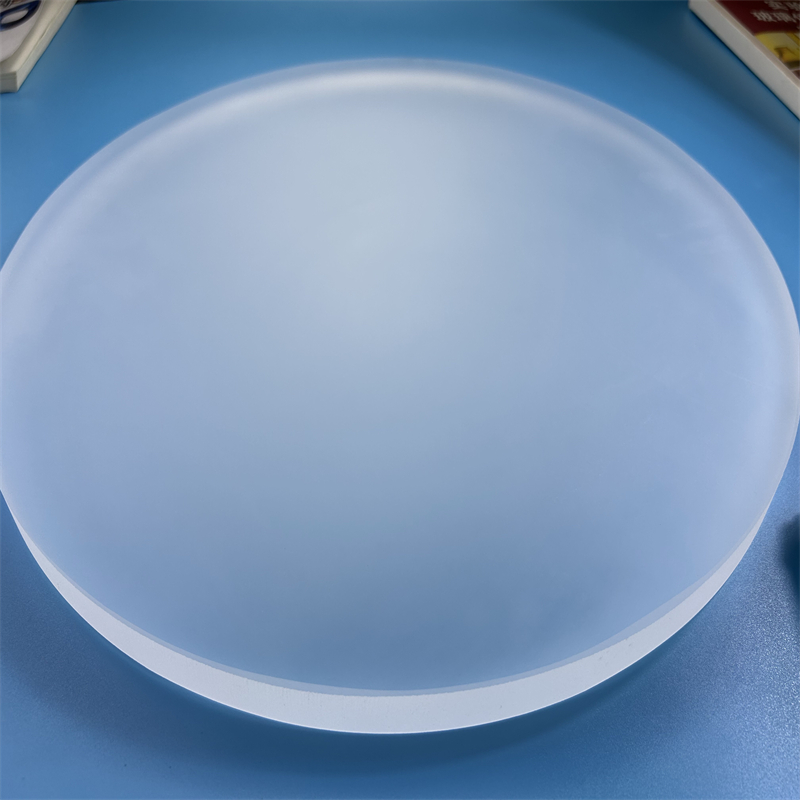
High Temperature Resistance Frosted Quartz Disc/Plate
Semiconductor applications, precision welding, CNC cutting, and custom sizing in high-purity fused quartz capable of sustained 1100°C exposure.
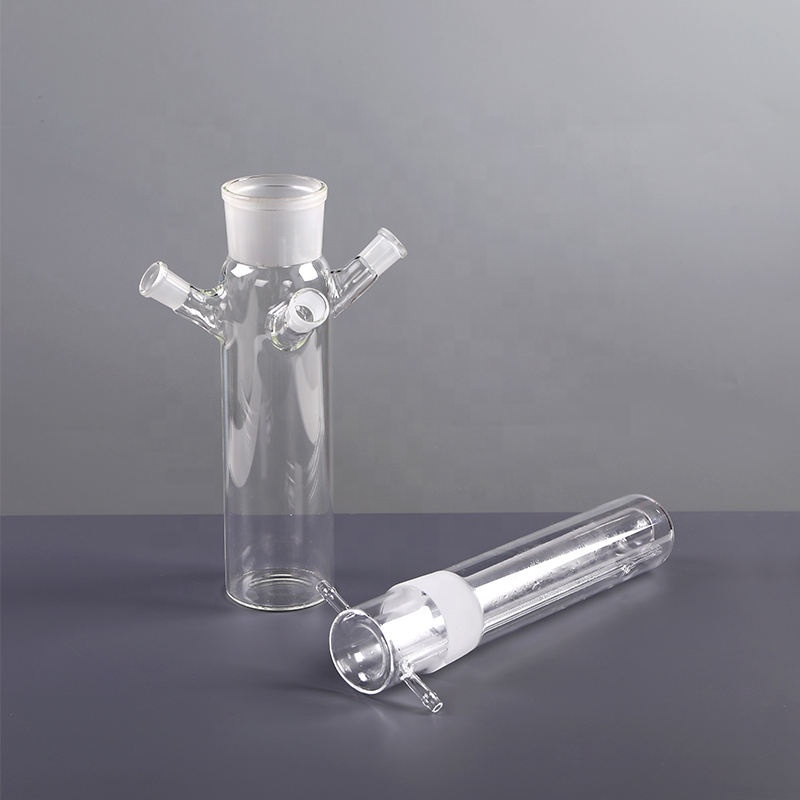
Customized High-Purity Quartz Glass Reactor Container
Precision bending, custom moulding, and internal illumination welding designed for photocatalytic degradation and severe photochemical stress.
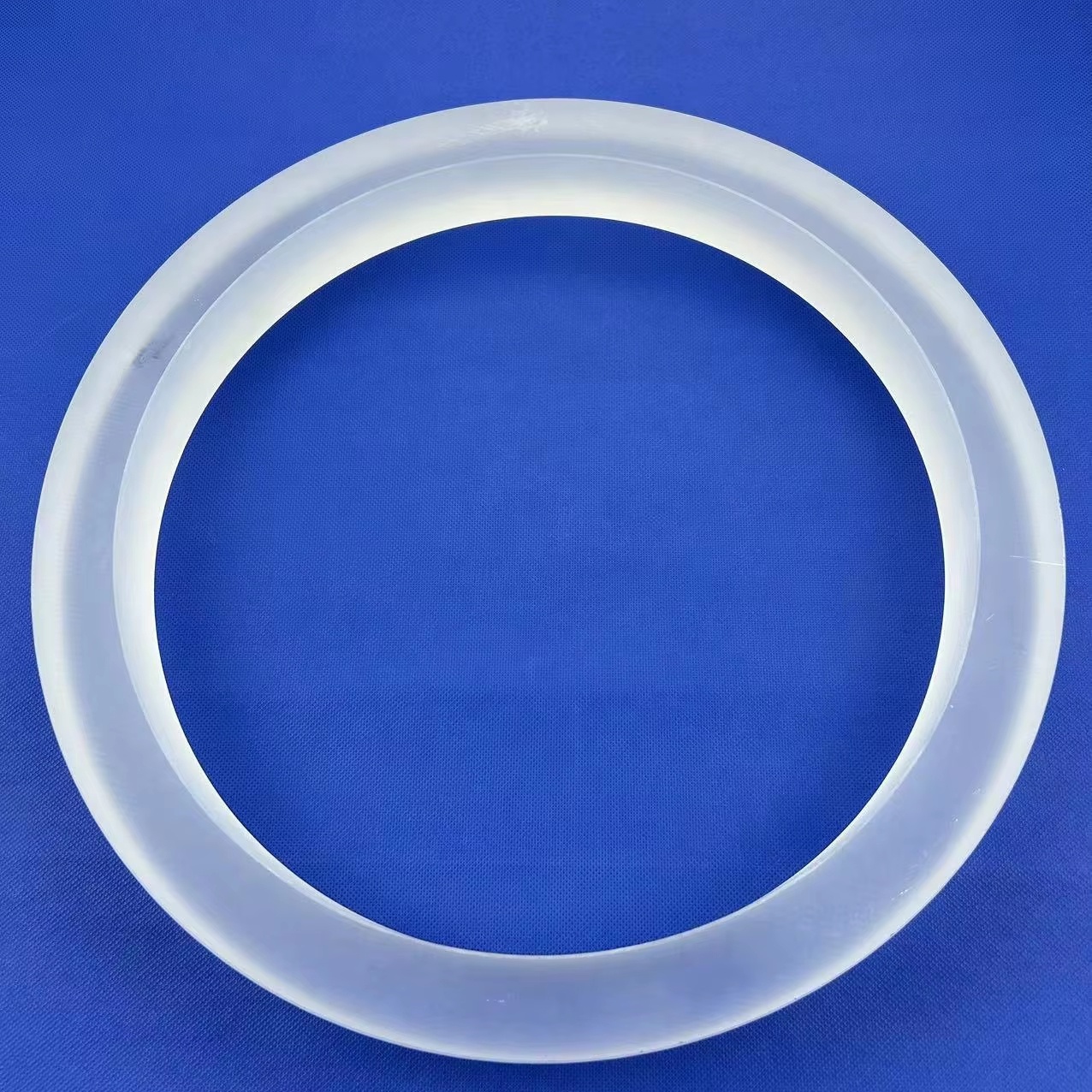
Custom Coated 99.99% Pure Quartz Rings
Built for semiconductor CVD and high-power optics. High-pressure moulding, fine edge fire-polishing, and tight-tolerance CNC cylindrical machining.
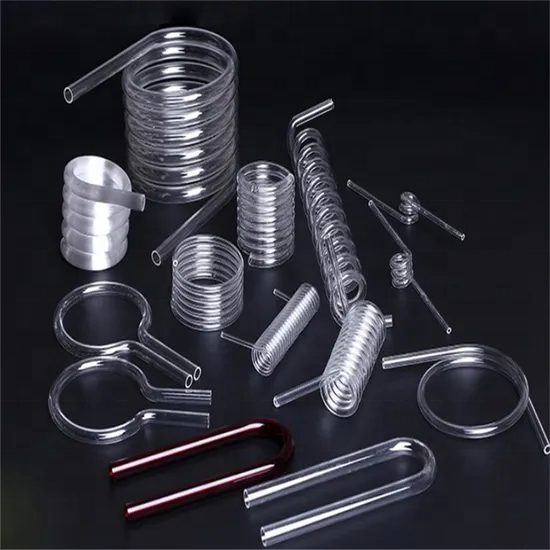
Custom Different Sizes U-Bent Quartz Spiral Tube
Comprehensive moulding, flame-welding, laser-cutting, and bending services for specialized fluid dynamics, heat exchanges, and light pipes.
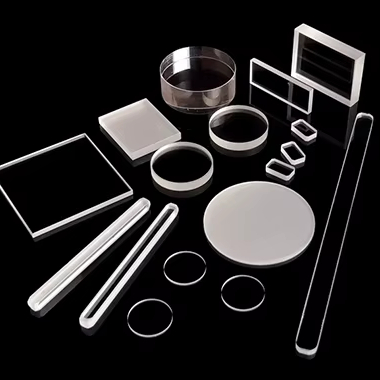
Custom Optical Grade Fused Transparent Quartz Sheet
Laser diagnostic windows and optical test sample sheets featuring double-side optical polishing, chamfering, and high laser damage thresholds.
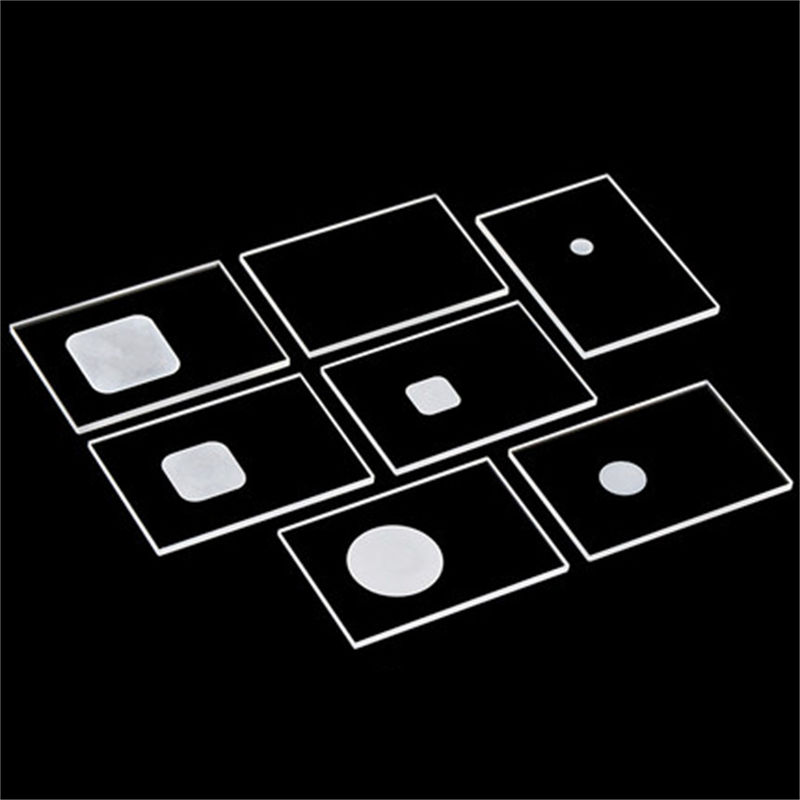
High Temperature Quartz Sheet for XRD Sample Tanks
Precision chip slotted carriers, XRD zero-background sample plates, laser micro-slotted holders, tested to sustain 1100°C continuous operation.
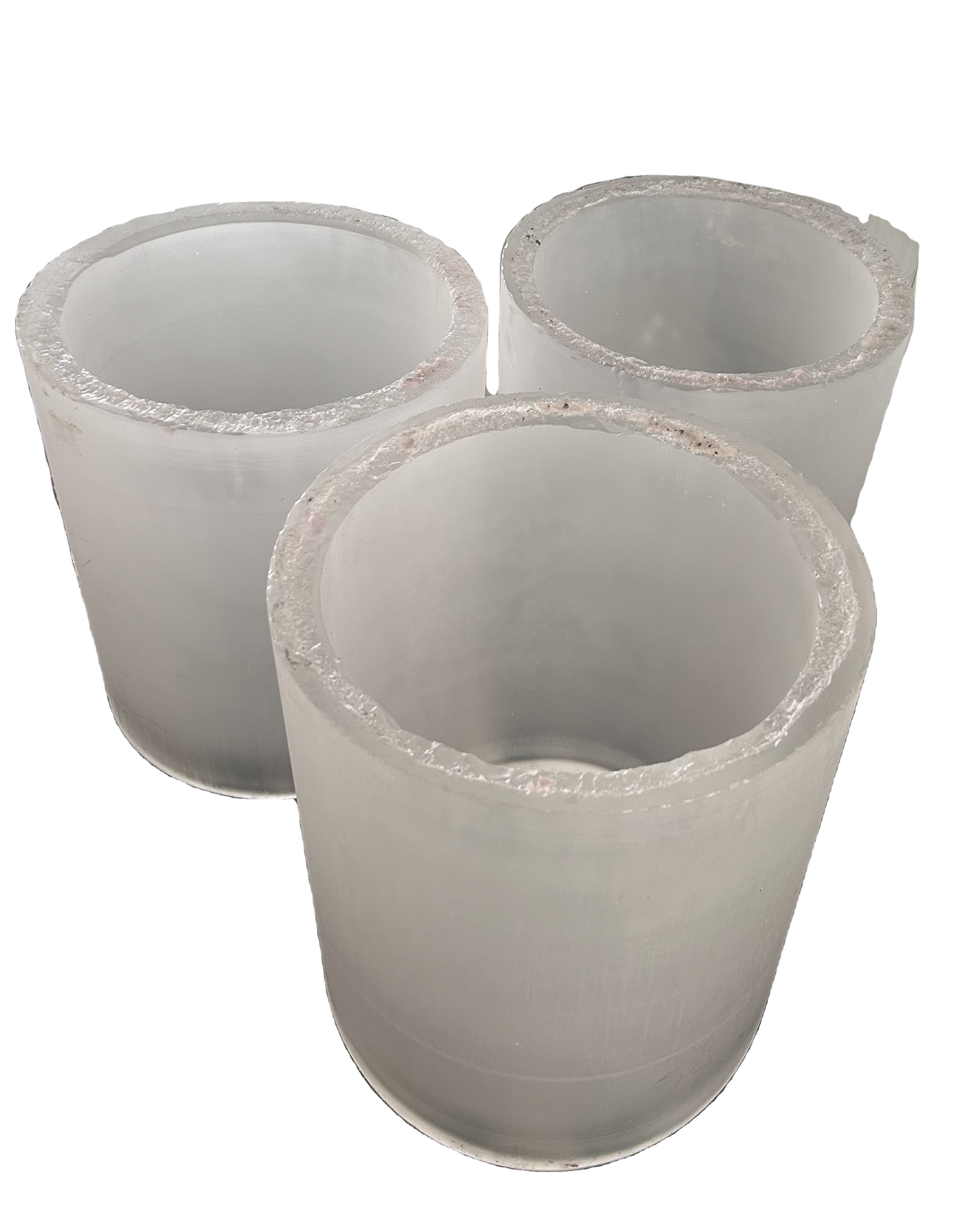
Open Ended Fused Quartz Frosted Glass Cylinder Ingot
Large diameter fused quartz cylinder preforms for drawing optical rods, optical light pipes, laser cavity reflectors, and furnace process tubes.

High Temperature Transparent UV Quartz Glass Disc
Deep-UV transparency, surface quality 20/10 Scratch-Dig, precision ground cylindrical rod ends, and customized optical viewport assemblies.
Fused Silica & Quartz Optical Rod Technology: A Guide for Romanian Engineers
In high-power laser physics, spectroscopy, and harsh-environment sensing, selecting the correct optical rod geometry and grade of silicon dioxide (SiO₂) is critical to preventing thermal blooming, wave-front distortion, and photochemical degradation.
JGS1 Synthetic Fused Silica
Synthesized via chemical vapor deposition of pure silicon tetrachloride (SiCl₄). Free of internal bubbles and inclusions (Bubble Class 0). Excellent transmission from 185 nm to 2500 nm, making it the benchmark for excimer lasers (193 nm, 248 nm) and high-peak-power beam lines across the Măgurele laser platform.
JGS2 Optical Fused Quartz
Manufactured by high-temperature electric fusion of natural quartz crystal feedstock. Offers superior optical transmission across 220 nm to 2500 nm with excellent mechanical toughness. Frequently deployed in industrial sight rods, light guides, pyrometry light pipes, and UV sterilization fixtures in Bucharest commercial plants.
JGS3 Low-OH Infrared Quartz
Refined via vacuum electrofusion to suppress hydroxyl (OH⁻) concentrations below 5 ppm. Eliminates the deep 2.73 µm absorption band, extending effective transmission to 3500 nm. Preferred for IR spectrometers, CO₂ laser monitoring, and thermal processing sensors across Romania's aerospace and automotive suppliers.
| Physical / Optical Parameter | JGS1 (Deep UV Synthetic) | JGS2 (Optical Fused Quartz) | JGS3 (Low-OH Infrared) | Test Standard / Verification |
|---|---|---|---|---|
| Transmission Spectrum | 185 nm – 2500 nm | 220 nm – 2500 nm | 260 nm – 3500 nm | PerkinElmer Lambda 1050+ UV/VIS/NIR |
| Hydroxyl (OH⁻) Content | ≤ 1200 ppm (standard) or < 10 ppm | ≤ 150 – 200 ppm | ≤ 5 ppm (Dry Grade) | FTIR Spectrometry (at 2.73 µm) |
| Refractive Index (nd, 589.3 nm) | 1.45846 | 1.45840 | 1.45845 | Precision V-Block Refractometer |
| Thermal Expansion (0–300°C) | 5.4 × 10⁻⁷ / K | 5.5 × 10⁻⁷ / K | 5.5 × 10⁻⁷ / K | DIN 51045 Dilatometry |
| Softening Point / Annealing | 1730 °C / 1180 °C | 1683 °C / 1215 °C | 1690 °C / 1220 °C | ASTM C338 Standard |
| Laser Damage Threshold (LDT) | > 25 J/cm² (1064nm, 10ns, 20Hz) | > 12 J/cm² (1064nm, 10ns) | > 18 J/cm² (1064nm, 10ns) | ISO 21254-2 S-on-1 Protocol |
| Bubble / Inclusion Class | Class 0 (Zero bubble/striae) | Class 1 – 2 | Class 1 – 2 | DIN 3140 / ISO 10110-3 |
Precision Fabrication: From Raw Ingot to Micron-Toleranced Optical Rods
Zunex Quartz combines CNC cold diamond tooling with high-precision oxy-hydrogen flame fire-polishing to produce cylindrical, hexagonal, and tapered quartz rods. Our Donghai manufacturing line handles diameters from Ø0.5 mm up to Ø150 mm with total length capabilities up to 2500 mm.
End-Face Polishing & Flatness: Optical end faces are processed to λ/4 or λ/10 surface accuracy at 632.8 nm, with surface roughness Ra < 0.5 nm via chemical-mechanical polishing (CMP). This prevents wavefront aberration in TIR (Total Internal Reflection) light homogenizing rods.
Custom Edge Laser Finishing: We offer proprietary CO₂ laser chamfering, laser micro-hole drilling (≥ Ø0.1 mm), laser slotting, and calibrated optical taper transitions (±0.01 mm angle precision) for fiber coupling in Bucharest medical and industrial laser systems.
Standard Manufacturing Tolerances
- Outer Diameter (Ø) Tolerance: ± 0.01 mm to ± 0.05 mm
- Length (L) Tolerance: ± 0.05 mm to ± 0.2 mm
- End Face Parallelism: < 30 arc seconds (≤ 0.008 mm)
- Perpendicularity (Cylinder/End): ± 0.02 mm
- Surface Quality (Scratch-Dig): 10/5, 20/10, or 40/20 (MIL-PRF-13830B)
- AR Coatings Available: UV (248/355nm), VIS (532nm), NIR (1064nm)
Quartz Optical Rod Applications Across Bucharest's Tech Hubs
From the national physics laboratories at Măgurele to high-tech industrial parks along the Dimitrie Pompeiu and Pipera corridors, specialized quartz optical rods serve critical roles across Romania's capital.
Măgurele High-Intensity Laser Physics (ELI-NP)
The Extreme Light Infrastructure - Nuclear Physics (ELI-NP) and the National Institute for Laser, Plasma & Radiation Physics (INFLPR) in Măgurele require optical components that resist ultra-short, high-energy petawatt pulses. Synthetic JGS1 rods serve as beam diagnostics light guides, calibration references, and vacuum chamber viewport guides where zero fluorescence and ultra-low solarization are mandatory.
Automotive Sensor Optics & LiDAR Prototyping
Bucharest's automotive engineering cluster (including Tier-1 R&D centers in Pipera, Băneasa, and West Gate) leverages precision cylindrical quartz rods for testing near-infrared (905 nm and 1550 nm) LiDAR receivers, headlamp light pipes, and high-temperature ambient light sensor packaging operating continuously under engine-bay thermal swings.
Medical Laser Fibers & Phototherapy Devices
Medical equipment manufacturers in the Bucharest metropolitan area utilize tapered quartz rods and fire-polished cylindrical light guides for surgical fiber couplers, dental curing guns, and dermatological UV-A/UV-B therapy devices. The non-toxic, bio-inert nature of pure SiO₂ enables direct sterilization via autoclave up to 134°C.
Chemical Analysis & Spectrophotometry
Laboratories at the University of Bucharest (Facultatea de Fizică & Chimie) and analytical centers in Otopeni rely on JGS1 and JGS3 quartz rods as ATR (Attenuated Total Reflection) internal reflection elements, flow-cell illumination probes, and flame spectrometry light pipes exposed to aggressive acids (except hydrofluoric).
Industrial UV Curing & Semiconductor Lithography
Electronics contract manufacturing facilities in Ilfov County implement homogenizing square quartz rods to mix high-intensity UV LED arrays (365 nm / 385 nm / 405 nm), achieving > 95% spatial irradiance uniformity across adhesive bonding and PCB solder mask exposure belts.
Aerospace & Defense Optical Windows
Romanian aerospace institutions and defense contractors utilize custom ground quartz rods as high-pressure viewport optical links, pyrometric light guides inside turbine test cells, and missile guidance seeker window preforms designed to resist extreme aerodynamic heating up to 1100°C.
Emerging Photonics Trends in Romania: Why Quartz Rod Sourcing Is Evolving
The Romanian photonics landscape is experiencing a structural shift driven by EU research grants, high-tech foreign direct investment, and supply chain reshoring.
1. Acceleration of the Măgurele Science Park (MSP)
Following the operational milestones of the ELI-NP 10 PW laser systems, the Romanian government and Ilfov County Council continue to expand the Măgurele Science Park. This research ecosystem is transitioning from basic fundamental physics toward applied laser engineering, nuclear medicine, and space materials testing. Consequently, local engineering teams require prototype-to-batch sourcing of tight-tolerance JGS1 optical rods with verified Laser Induced Damage Thresholds (LIDT).
2. Transition to Solid-State UV-C Disinfection and Sensors
With strict EU environmental rules phasing out mercury lamps, industrial and wastewater facilities in the Bucharest-Ilfov municipal district are upgrading to high-power UV-C LED arrays (255–280 nm). Because standard borosilicate glass rapidly solarizes and blocks UV-C, synthetic quartz light rods have become the standard solution for delivering high-intensity germicidal radiation into confined fluid conduits without attenuation.
3. Direct Customization Sourcing vs. Expensive European Distributors
Traditionally, Romanian optical labs bought standard off-the-shelf optical rods through Western European optical catalog middlemen at a 300% to 500% price premium, often facing 8-to-16 week delivery lead times for custom dimensions. The modern procurement trend among Bucharest R&D procurement managers is partnering directly with specialized OEM manufacturers like Zunex Quartz in Donghai, securing custom drawings, rapid 2-hour engineering turnarounds, and express air delivery via Otopeni (OTP) within days.
4. Stringent Surface Roughness and Total Internal Reflection Standards
As optical sensor sizes shrink in automotive LiDAR and biomedical probes, light guide throughput relies on Total Internal Reflection (TIR). Micro-scratches on rod cylinder surfaces cause significant scattering loss. Demand is shifting to fire-polished or super-polished cylindrical surfaces with sub-nanometer roughness (Ra < 0.5 nm), ensuring internal reflection efficiencies exceed 99.8% per reflection.
Integrated Quartz Manufacturing & Global Export Reliability
Headquartered in Donghai County — the world's primary silicon processing epicenter — Zunex Quartz Products Co., Ltd. combines raw material advantage with micron-precision machining and verified international B2B fulfillment.
Donghai Raw Material Hub
Direct access to highest grade quartz feedstock. Chemical purity ≥ 99.99% SiO₂, ultra-low trace iron (< 0.2 ppm), and certified optical homogeneity across all ingot sizes.
≤ 2-Hour Rapid Quotation
Our in-house optical engineering staff reviews CAD drawings, STEP files, and material specs immediately, maintaining a 100% verified response rate on international inquiries.
Custom Laser Machining
Specialized CO₂ laser drilling, micro-grooving, precise slotting, and flame fire-polishing. Tolerances held down to ±0.01 mm with zero micro-fracturing along cut edges.
Safe Shock-Proof Shipping
Every optical rod is wrapped in dust-free lint-free protective film, high-density custom EPE foam nests, vacuum-sealed, and cased in multi-layer export-grade wooden crates.
Frequently Asked Questions: Purchasing Quartz Optical Rods in Bucharest
Detailed answers addressing Romanian customs compliance, material grade verification, delivery timelines, and handling procedures.
Ready to Engineer Your Custom Quartz Optical Rods?
Send your drawings, CAD models, or target specifications to our engineering team. We provide complete manufacturability feedback, optical transmission curves, and formal quotes in 2 hours or less.