Featured Quartz Process Solutions for Swiss Industrial Buyers
Directly manufactured in Donghai and calibrated to stringent DIN/ISO tolerances. Our process tubes withstand continuous thermal environments up to 1100°C (1300°C peak), delivering high chemical inertness and minimal thermal expansion (CTE 5.5 × 10⁻⁷/°C) for Swiss high-vacuum and cleanroom facilities.
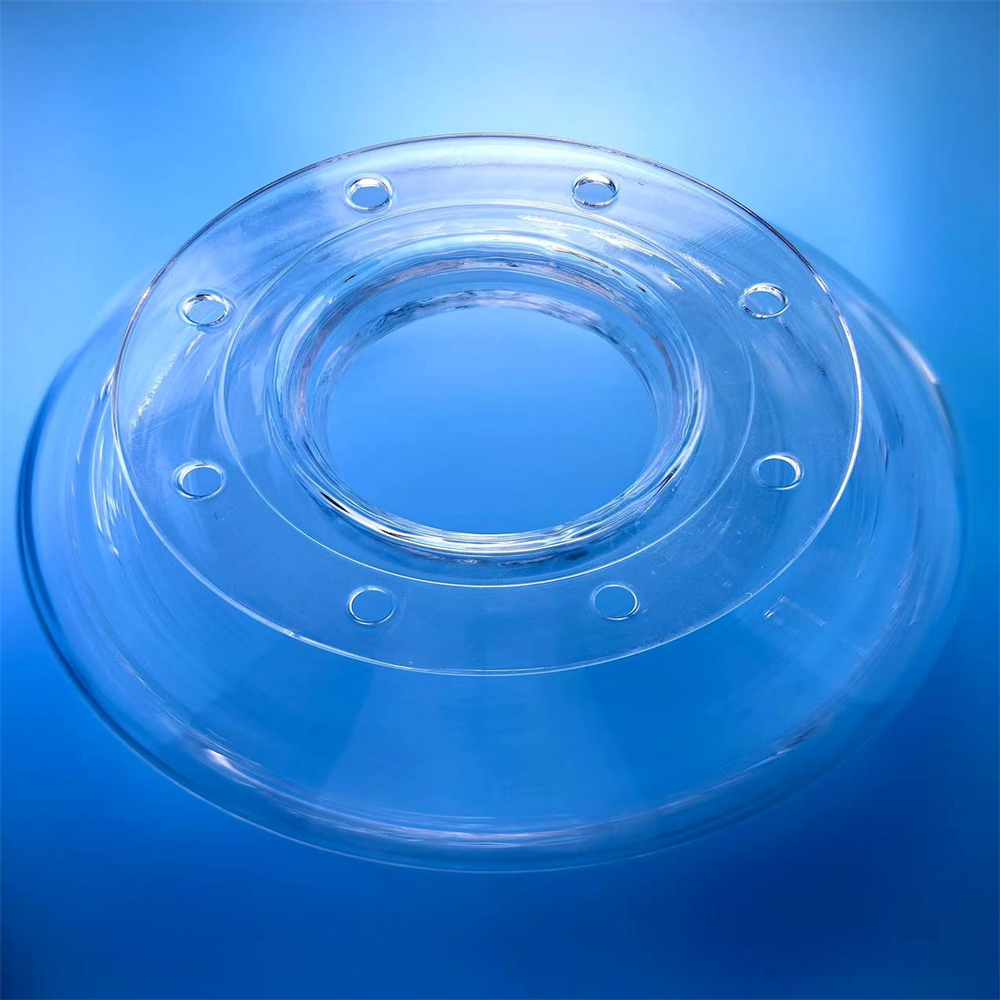 Semiconductor
Customize Size Thickness Twin Tube Clear High Purity Flange Quartz Tube Fused Silica Polished Flange Ring Bending Welding
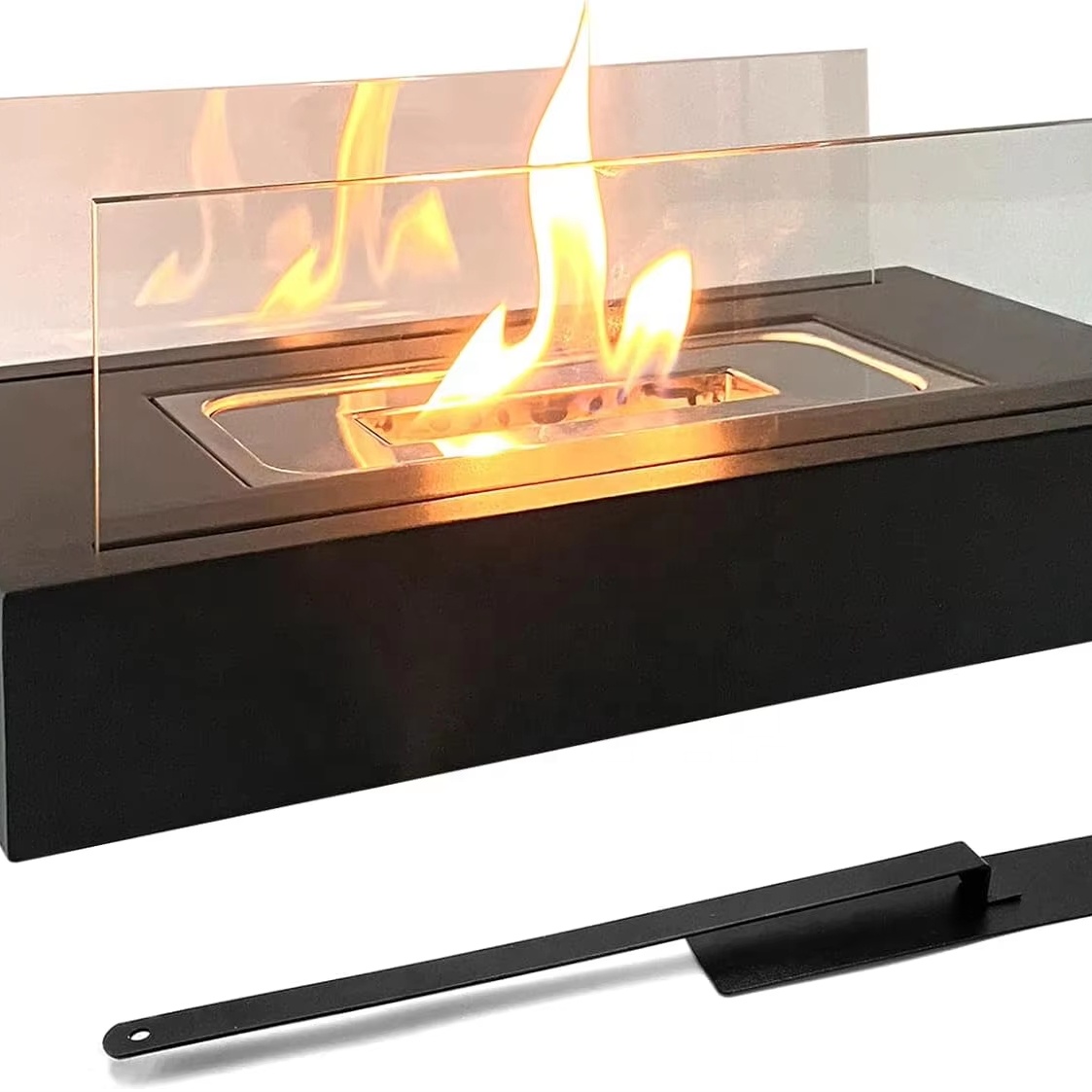 Optical Grade
Factory Customization Outdoor Camping Portable High Temperature Clear Transparent High Precision Optical Grade Quartz Glass
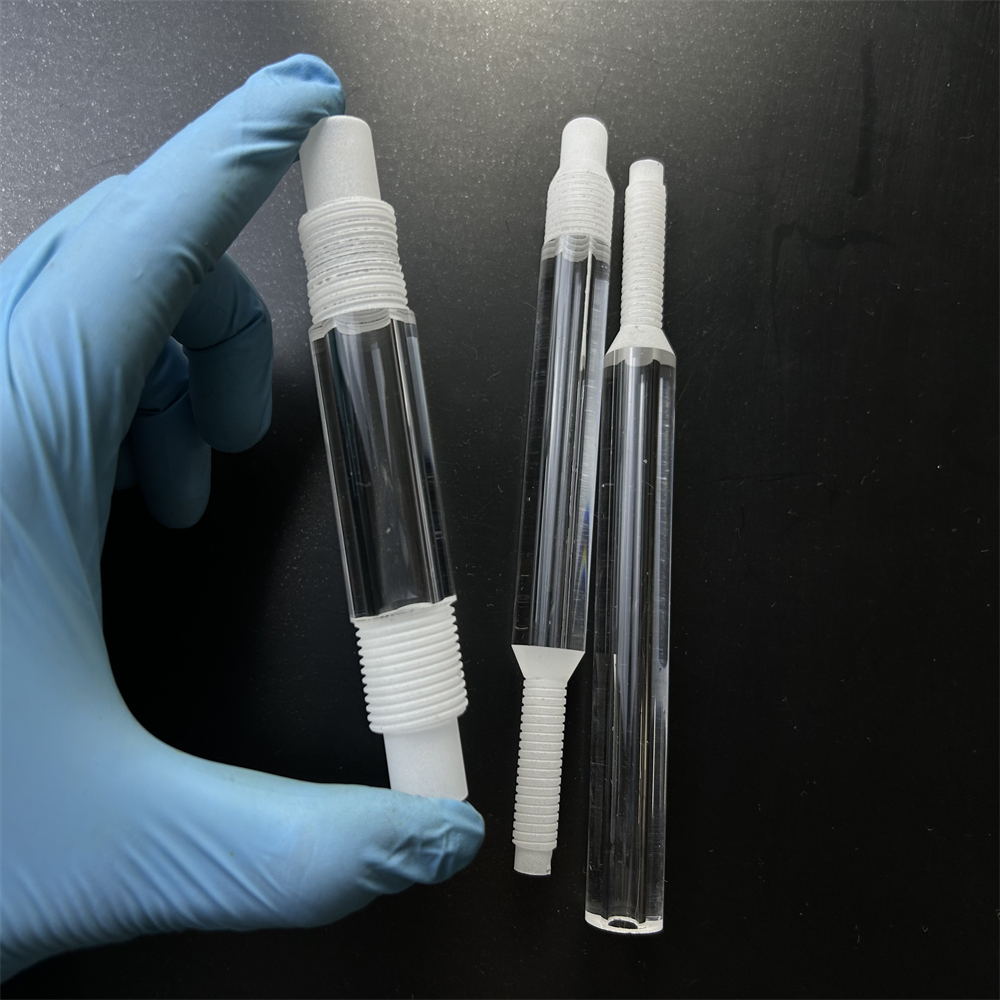 UV Transmission
Customized High Purity Threaded Transparent UV Quartz Glass Tube with Bending Welding Cutting Moulding Services High Pressure
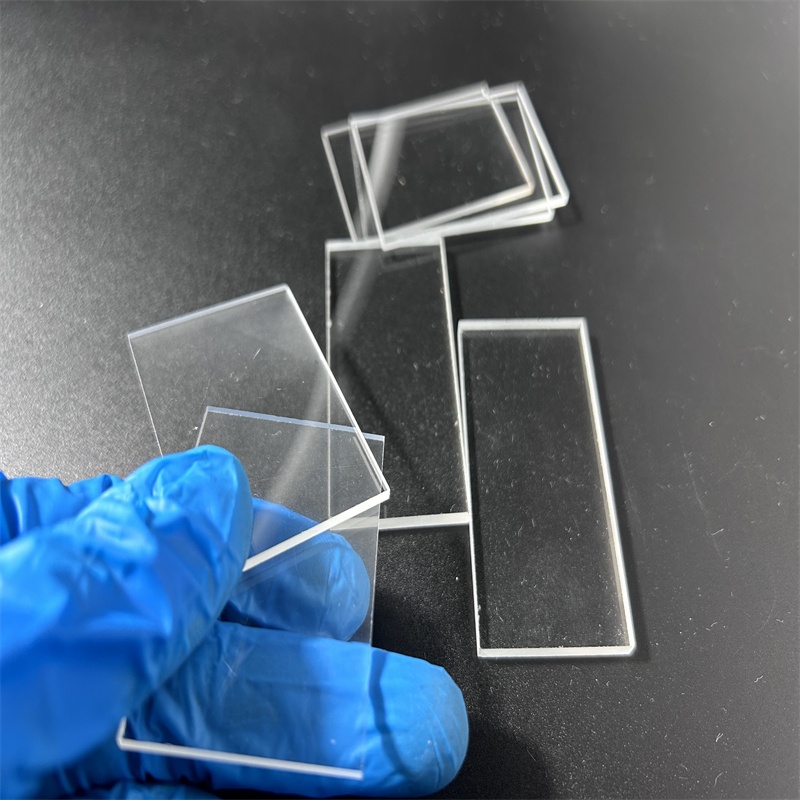 Optics / Viewport
Customized High Temperature Transparent Fused Quartz Glass Sheet Welding Cutting Services Clear Plate Custom Sizes Optics Grade
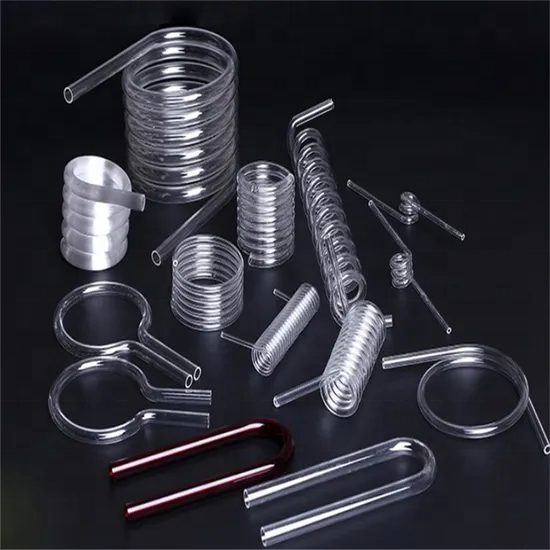 Custom Forming
Custom Different Sizes U-Bent Quartz Glass Spiral Tube with Moulding Cutting Bending and Welding Services
 Lab & Analytics
Chemisorption BET Test High Pressure 99.99% Pure Ozone Free Clear Quartz Glass Twin Tube Bending Welding Services Quantachrome
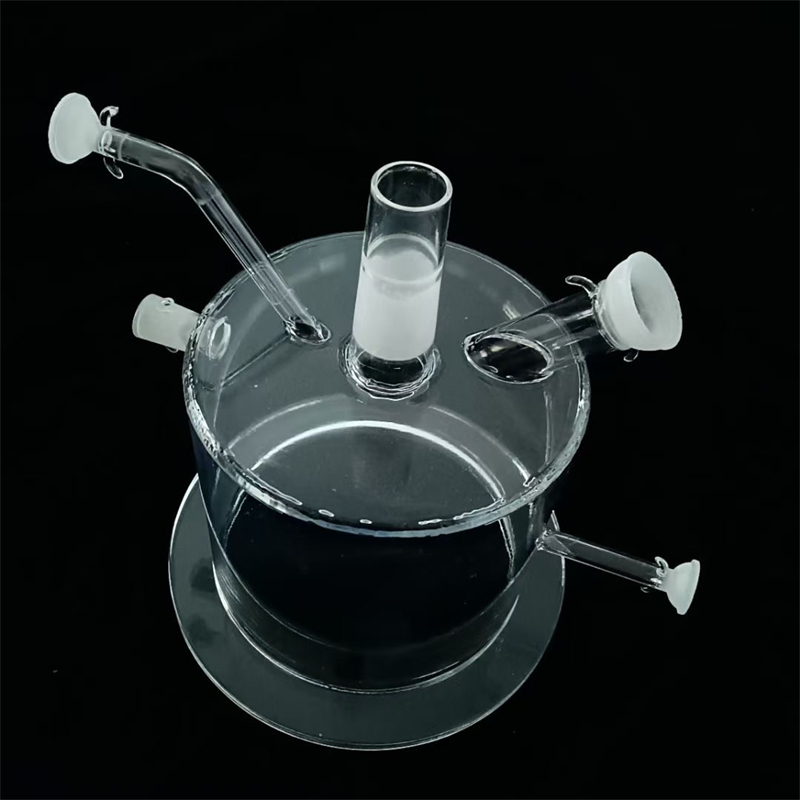 High Pressure
Customized High Pressure Clear Quartz Glass Tube Bending/Welding/Cutting 99.99% Pure Quartz Ozone Free Polished Surface
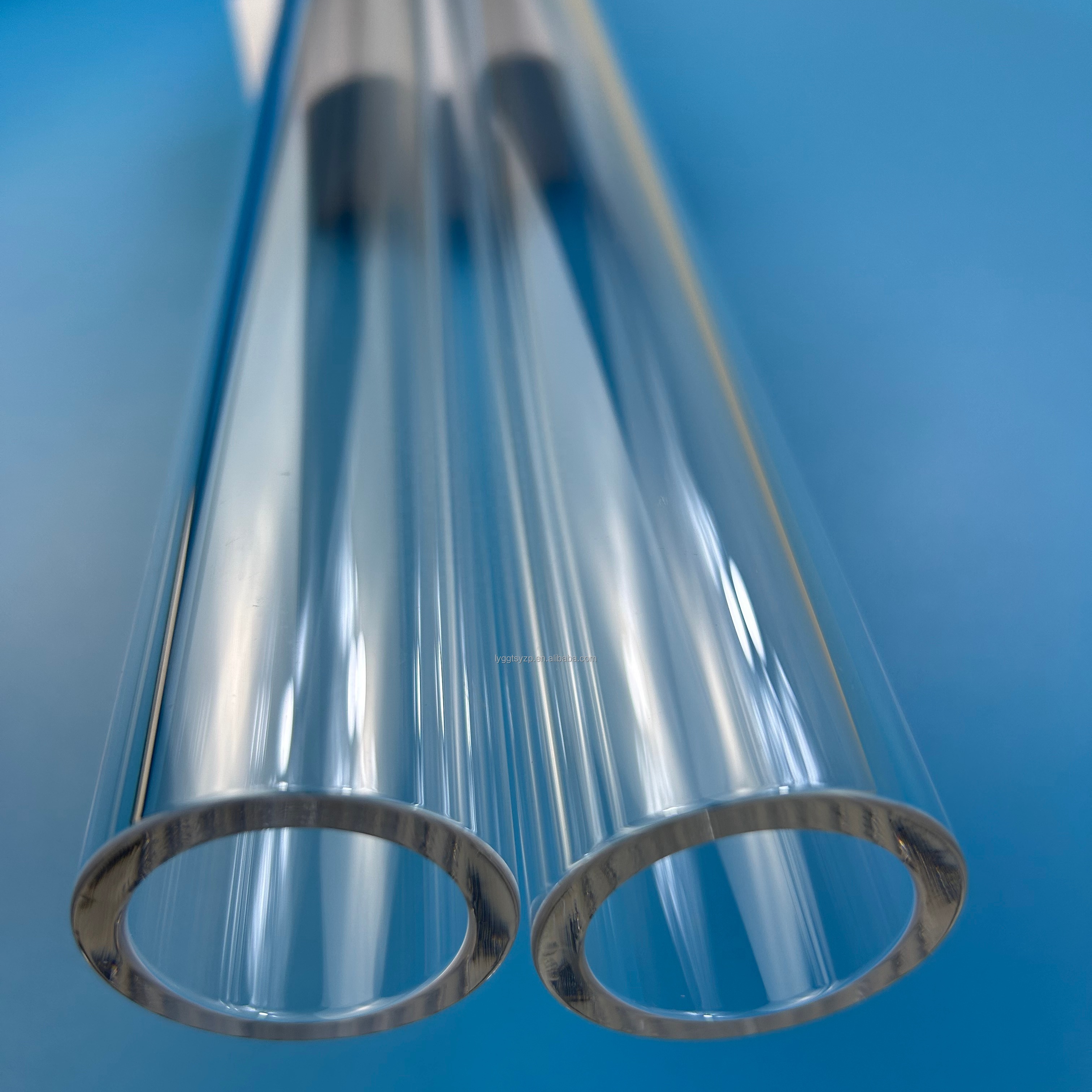 Furnace / IR Heater
Polished Clear Quartz Twin Tube Ozone Free Heater Chemical Lab Equipment Semiconductor Furnace Tubes Welding Moulding Bending
Fused Silica Processing Thermodynamics for Extreme Environments
In modern semiconductor fabrication, advanced photonics, and chemical vapor deposition (CVD), the mechanical and thermal integrity of quartz process tubes governs production yield, uptime, and wafer contamination thresholds.
Thermodynamic Resilience and Devitrification Kinetics
Fused quartz glass fabricated by Zunex utilizes natural ultra-pure rock crystal originating from the geologic heart of Donghai County, or synthetic silicon tetrachloride precursor feedstock for deep-ultraviolet (DUV) applications. The amorphous state of pure silica (SiO₂) exhibits an extremely low linear coefficient of thermal expansion (α = 5.5 × 10⁻⁷ /°C between 20°C and 320°C). This characteristic allows a heated tube at 1150°C to be plunged directly into ice-cold water without micro-fracturing or catastrophic failure. However, sustained operation in Swiss thermal processing furnaces near 1150°C to 1250°C induces risk of devitrification—the phase transformation from metastable amorphous glass into crystalline cristobalite. Cristobalite undergoes a volumetric phase inversion (β to α) around 220°C to 270°C accompanied by a 5% volume contraction, triggering surface crazing and loss of structural containment. To prevent premature devitrification, Zunex applies meticulous chemical leaching to reduce alkali metals (sodium, potassium, lithium) below 0.8 ppm, effectively retarding cristobalite nucleation sites and quadrupling continuous campaign lifetimes.
| Physical / Chemical Property | Test Standard (DIN / ASTM) | Fused Quartz (Electric / Flame) | Synthetic Fused Silica (JGS1) |
|---|---|---|---|
| Purity Level (SiO₂ Mass Fraction) | ICP-OES / GD-MS | ≥ 99.99% (Trace Fe < 0.2 ppm) | ≥ 99.9999% (Sub-ppb impurities) |
| Hydroxyl Group Content (OH⁻) | FTIR Spectrometry | < 5 ppm to 30 ppm (Dry / Gas-fused) | ~ 800 – 1200 ppm (Wet synthetic) |
| Continuous Operating Temperature | DIN 52324 | 1100 °C | 1150 °C – 1200 °C |
| Softening Point / Annealing Point | ASTM C338 / C336 | 1683 °C / 1215 °C | 1730 °C / 1250 °C |
| Coefficient of Thermal Expansion (CTE) | Dilatometry (20–300°C) | 5.5 × 10⁻⁷ K⁻¹ | 5.2 × 10⁻⁷ K⁻¹ |
| Dielectric Strength (20°C, 1 MHz) | IEC 60243-1 | 25 – 40 kV/mm | 35 – 50 kV/mm |
| Spectral Cut-off (Transmittance > 80%) | UV-Vis-NIR Spectrophotometer | 260 nm – 3500 nm (JGS2 / JGS3) | 185 nm – 2500 nm (Deep UV DUV) |
Localized Applications Across the Swiss High-Tech Corridor
Switzerland's industrial ecosystem is synonymous with zero-defect tolerances, micro-mechanical mastery, and pharmaceutical rigor. Our quartz process tubes are customized to meet the distinct engineering protocols of Swiss industrial cantons.
Semiconductors & Microtechnology (CSEM & EPFL Park)
The micro-engineering clusters in Neuchâtel, Vaud, and Zurich rely on LPCVD, PECVD, and wet oxidation furnaces for specialized MEMS, sensors, and III-V photonic integrated circuits (PICs). Zunex manufactures closed-end furnace quartz liners, multi-zone cantilever reaction tubes, and diffusion tubes equipped with ground taper joints (NS 29/32, NS 45/40) or ISO-KF/CF vacuum flanges, guaranteeing helium leak rates lower than 1 × 10⁻⁹ mbar·l/s.
Horology & Micro-Optics (Jura Arc & Biel/Bienne)
High-end watch manufacture across the Jura region demands diamond-like carbon (DLC) coating, atomic layer deposition (ALD), and PVD metallization of sapphire watch crystals and silicon escapements. We engineer heavy-wall quartz process chambers and twin heating tubes that maintain isothermal zones within ±0.5°C across 1000 mm lengths, preventing surface clouding and irregular thin-film deposition on miniature luxury components.
Pharma & Specialty Chemical Synthesis (Basel-Stadt & Valais)
Global life-science conglomerates and API custom manufacturers along the Rhine demand total hydrolytic and acid resistance (DIN 12111 Class 1, ISO 695 Class A1). Our twin-tube quartz flow reactors, BET chemisorption test cells, and photochemical immersion wells are impervious to boiling aqua regia, hydrochloric acid, and halogens, precluding heavy metal ion elution into sensitive biochemical synthesis loops.
Nuclear & High-Energy Particle Physics (CERN, Geneva)
Research facilities in the canton of Geneva require dielectric target tubes, plasma containment shells, and vacuum viewing ports compatible with ultra-high vacuum (UHV). Zunex provides synthetic fused silica components with ultra-low magnetic susceptibility, precise geometric concentricity (< 0.05 mm), and minimal degassing behavior under secondary electron bombardment.
Photovoltaic & Cleantech R&D (Inselspital / Bern & Neuchâtel)
Swiss development of heterojunction (HJT) and perovskite-silicon tandem solar cells requires continuous phosphine (PH₃) and boron trichloride (BCl₃) diffusion. We provide high-purity quartz process tubes with customized outer diameters up to 450 mm, equipped with fire-polished flanged end caps and quartz baffle disks that eliminate particle shedding in automated cassette loaders.
Analytical Metrology & Materials Characterization (Empa, Dübendorf)
Leading federal laboratories for materials science require combustion analyzer tubes, differential scanning calorimetry (DSC) ampoules, and X-ray diffraction (XRD) zero-background sample stages. Our precision-ground fused silica components ensure thermal baseline stability up to 1300°C without volumetric sample contamination.
Evolving Sourcing Trends in the Swiss Manufacturing Arena
Swiss procurement managers are moving away from intermediaries and legacy European stockists towards direct manufacturing partnerships offering full traceability, engineering co-design, and rapid laser micro-finishing.
1. Sub-ppb Impurity Control for Next-Gen Wafers
With Swiss microfabrication cleanrooms shifting to advanced compound semiconductor architectures (GaN-on-Si, SiC power electronics for electric transport), even trace metallic contamination can cause gate-dielectric breakdown. Sourcing requirements now mandate raw batch analysis via Inductively Coupled Plasma Mass Spectrometry (ICP-MS), ensuring total iron (Fe), copper (Cu), and nickel (Ni) levels remain below 0.1 ppm within inner process tube reaction boundaries.
2. Transition to Laser Finishing over Mechanical Grinding
Traditional diamond drilling of quartz tubes introduces micro-fissures and subsurface mechanical tensile stress, triggering catastrophic thermal fractures during rapid temperature cycling. Swiss engineers increasingly specify non-contact femtosecond or CO₂ laser drilling, slotting, and edge ablation, which eliminates edge chipping, reduces notch stress concentrations, and improves cycle lifespans by up to 300% in thermal shock conditions.
3. Supply Chain Resilience & Direct Factory Auditing
Geopolitical realignments have forced Swiss manufacturers to eliminate redundant tier-3 distributors. By dealing directly with a verified producer headquartered in Donghai—the world's quartz processing hub—Swiss companies secure cost reductions between 30% and 55% while accessing direct engineering revisions, tailored CAD-to-bench prototyping, and predictable batch lead times.
4. Decarbonization and Circular Economy Compliance
Swiss environmental covenants (Federal Act on the Reduction of CO₂ Emissions) place stringent scrutiny on supply-chain lifecycle footprints. The extended longevity of Zunex thick-walled quartz tubes, coupled with our capability to rework damaged flanges and fire-polish devitrified process tubes, directly aligns with the circular asset recovery objectives of Swiss technical boards.
Why Swiss Procurement Teams Choose Zunex Quartz
Combining natural raw mineral abundance with precision CNC cold processing and state-of-the-art laser machining, we bridge the gap between competitive factory pricing and uncompromising Swiss standards.
Geographic Hub Purity
Located in Donghai County, China's quartz capital, we possess primary access to superior silica veins, ensuring continuous raw material consistency, minimal bubble inclusions (Class 0/1 per DIN 58927), and exceptional optical clarity.
Advanced Laser Machining
Equipped with 5-axis CNC laser cutting, micro-hole drilling (Ø ≥ 0.2 mm), threading, and complex slotted profiling. We execute bespoke CAD geometries with structural tolerances down to ±0.02 mm.
Rigorous Metrology & QA
Every batch undergoes spectrophotometric transmission verification, 3D coordinate measuring machine (CMM) dimensional checks, polariscopic strain analysis, and ultra-high vacuum helium leak rate qualification before dispatch.
≤ 2h Engineering Turnaround
Our verified 100% response rate guarantees an initial engineering review within two hours. We directly interpret customer PDF, DWG, DXF, or STEP models to confirm manufacturability and deliver DDP Swiss quotes promptly.
Frequently Asked Questions by Swiss Buyers
Clear answers regarding customs clearance, material inspection certificates, shipping times to Zurich/Geneva/Basel, and custom cleanroom preparation.
How do you handle Swiss Federal Customs (BAZG) customs clearance and import duties? +
Can Zunex provide EN 10204 3.1 Inspection Certificates and batch traceability? +
What is the standard lead time for custom quartz process tubes delivered to Switzerland? +
How do you prevent transit micro-fractures and breakage during international shipping? +
What is the difference between JGS1, JGS2, and JGS3 quartz, and which should Swiss researchers select? +
- JGS1 (Synthetic Fused Silica): Bubble-free, high purity in DUV (185–2500 nm), hydroxyl content ~800–1200 ppm. Ideal for excimer laser systems, deep-UV photolithography, and projection viewports.
- JGS2 (Optical Fused Quartz): Smelted from high-grade natural crystal, transmitting across UV-Visible (220–2500 nm) with OH⁻ content around 30–150 ppm. Excellent for semiconductor diffusion tubes, solar thermal liners, and sight glasses.
- JGS3 (Infrared Grade Fused Silica): Low-hydroxyl quartz (OH⁻ < 5 ppm) with broad infrared transmission up to 3500 nm without the 2.73 μm water absorption band. Specified for infrared heating chambers, twin-tube emitters, and thermal analytical equipment.
Can you accommodate small prototype batches for university R&D (e.g., ETH Zurich, EPFL)? +
What cleanroom packaging and surface cleanliness standards do you offer? +
Request an Engineering Quotation for Switzerland
Send us your technical drawings (PDF, DWG, DXF, or STEP) specifying dimensions, operating temperatures, tolerances, and target quantities. Our application engineers will complete manufacturability validation and submit a formal quotation within 2 hours.