Precision Quartz Pipes, Containers & Components
Engineered to exact micron tolerances from synthetic silica and natural rock crystal, serving advanced test facilities, chemical laboratories, and semiconductor fabrications across the Stuttgart metropolitan region.


Engineering Fused Silica Solutions for the Stuttgart Industrial Corridor
A comprehensive metallurgical, optical, and thermal analysis for Baden-Württemberg's advanced engineering ecosystem.
The greater Stuttgart metropolitan area—spanning Böblingen, Sindelfingen, Ludwigsburg, and Esslingen—stands as Europe’s premier hub for automotive innovation, precision photonics, optical metrology, and semiconductor fabrication equipment. Operating in this territory requires materials capable of enduring thermal shock, chemical corrosion, and intense electromagnetic radiation. Industrial operations cannot tolerate downtime triggered by micro-fissures or trace devitrification in process vessels.
As premier suppliers and exporters of fused quartz glass pipes, tubes, reaction flasks, and custom quartz apparatus, Zunex Quartz Products Co., Ltd. bridges pristine mineral processing from Donghai County—the crystal manufacturing capital of China—directly with precision machine builders and research consortia across Southwestern Germany. Fused quartz ($SiO_2 > 99.99\%$) represents an irreplaceable engineering ceramic where standard borosilicate 3.3 glassware fails catastrophically under extreme thermal, dielectric, and structural loads.
Material Fundamentals: Fused Natural Quartz vs. Synthetic Fused Silica
Understanding the distinction between electric-fused natural quartz, oxy-hydrogen flame-fused quartz, and synthetic chemical vapor deposition (CVD) fused silica is crucial for procurement engineers in Stuttgart. Natural fused quartz is refined from high-purity crystalline pegmatite quartz, retaining exceptional structural rigidity, low softening points ($1683^\circ\text{C}$), and outstanding chemical inertness against all acids except hydrofluoric ($HF$) and concentrated phosphoric acid ($H_3PO_4$) at elevated temperatures. Synthetic fused silica (such as JGS1), synthesized from volatile silicon tetrachloride ($SiCl_4$), eliminates aluminum and alkali impurities, offering optical transmission extending deep into the ultraviolet continuum down to 185 nm.
| Physical / Chemical Property | Natural Clear Fused Quartz (JGS2) | Synthetic Fused Silica (JGS1) | Infrared Fused Quartz (JGS3 / Low-OH) |
|---|---|---|---|
| Purity ($SiO_2$) | ≥ 99.99% | ≥ 99.9999% | ≥ 99.99% |
| Hydroxyl ($OH^-$ Content) | 120 – 180 ppm | Up to 800 – 1000 ppm | ≤ 5 ppm |
| Continuous Operating Temp | 1100 °C | 1100 °C | 1150 °C |
| Short-Term Softening Point | 1683 °C | 1600 – 1650 °C | 1710 °C |
| Coefficient of Thermal Expansion (CTE) | $5.5 \times 10^{-7} \text{ K}^{-1}$ | $5.1 \times 10^{-7} \text{ K}^{-1}$ | $5.4 \times 10^{-7} \text{ K}^{-1}$ |
| Transmission Window | 220 nm – 2500 nm | 185 nm – 2500 nm (Deep DUV) | 260 nm – 3500 nm (No Water Absorption Dip) |
| Dielectric Strength ($20^\circ\text{C}$) | 25 – 40 kV/mm | > 40 kV/mm | 35 – 45 kV/mm |
High-Performance Quartz Applications in Baden-Württemberg
Tailored quartz pipe systems directly aligned with the technical demands of Stuttgart’s tier-one automotive plants, semiconductor cleanrooms, and academic laboratories.
Automotive Sensor & Catalyst R&D
Installed inside rigorous exhaust-gas simulation benches and engine test cells throughout Untertürkheim and Weissach. Our BET sorption tubes and twin-tube quartz reactors withstand rapid exhaust-gas cycling from $20^\circ\text{C}$ to $1050^\circ\text{C}$ without thermal devitrification or catalytic contamination.
Lithography & Semiconductor Tooling
Serving the supply chain supporting Oberkochen and Reutlingen microelectronics. Precision-slotted quartz wafer boats, bell jars, and plasma etch chambers manufactured under ISO clean conditions, maintaining heavy metal trace elements ($Fe, Cu, Ni$) strictly beneath the sub-ppm threshold.
Photochemical Degradation & Synthesis
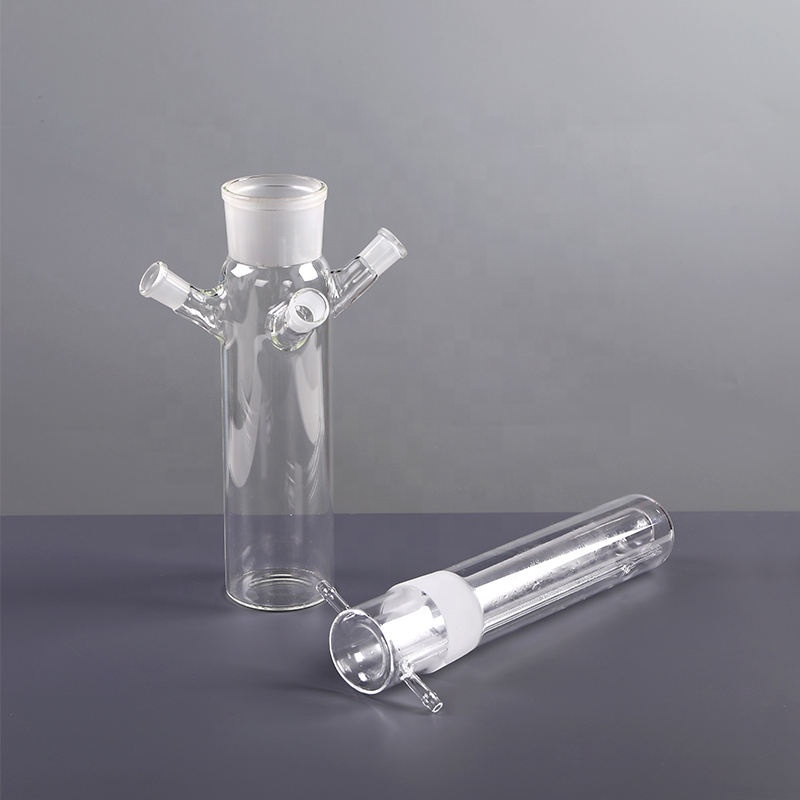
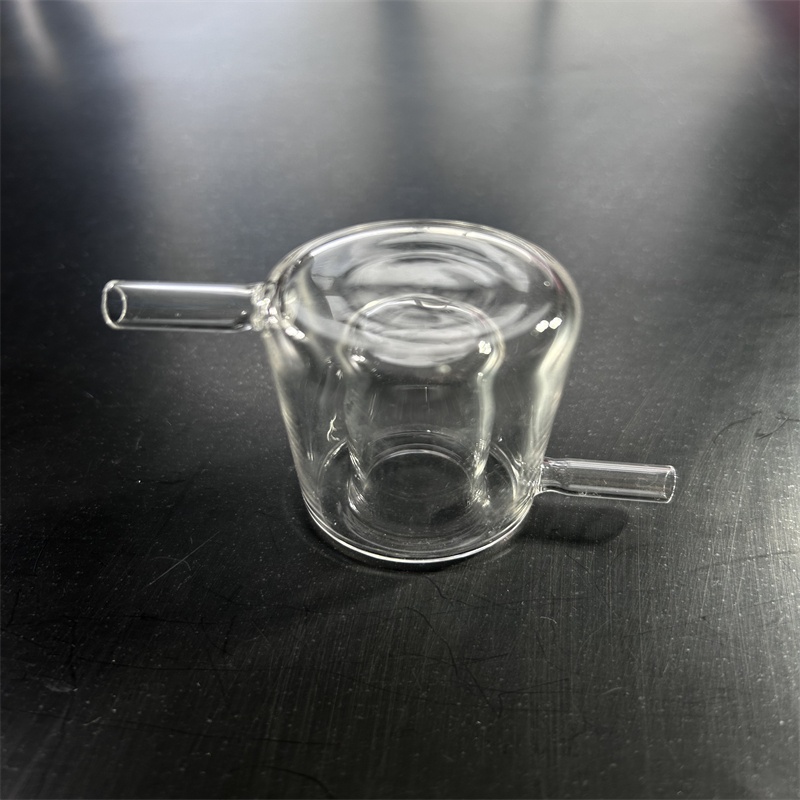
Integrated by institutional laboratories including the University of Stuttgart and Max Planck Institutes. Custom water-cooled immersion reactors with internal UV illumination jackets engineered specifically for high photochemical quantum yields and ozone-free photochemical decomposition.
Electric Vehicle Battery Thermal Testing
Providing transparent, ultra-high-pressure burst tubes and viewports to battery validation centers in the Neckar Valley. Researchers visually analyze solid-state electrolyte thermal runaway events and dendrite growth under controlled vacuum and inert shielding atmospheres.
Industrial Infrared Radiant Heaters
Twin-tube clear quartz profiles housing tungsten and FeCrAl filament spirals. Employed by specialized plastics thermoforming and powder-coating drying plants across Baden-Württemberg for uniform directional heat transfer with minimal energy dissipation.
XRD Sample Tank & Powder Metrology
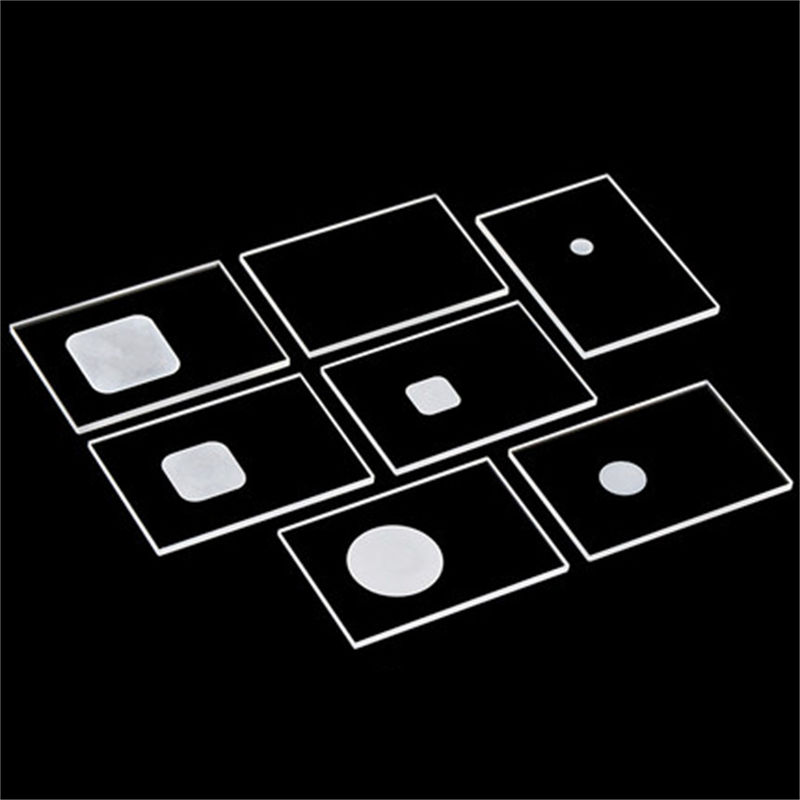
Zero-background fused quartz substrates ground down to 0.1 mm planarity. Enables clean diffraction angles without diffuse scattering amorphous halos during X-ray diffraction analysis of novel structural lightweight composites and sintered alloys.
Emerging Trends Driving Quartz Tube Consumption in Stuttgart
A strategic overview of industrial transition in Southwest Germany and its reliance on high-purity quartz manufacturing.
The industrial landscape in Stuttgart is navigating three profound transformations: the transition toward clean hydrogen fuel-cell mobility, the proliferation of extreme ultraviolet (EUV) optical manufacturing, and stricter European chemical regulations under REACH and RoHS directives. Each trend directly elevates quartz pipe performance requirements:
1. Green Hydrogen Electrolysis & Fuel Cell Stack Sintering
As major automotive OEMs and component suppliers across the Stuttgart-Metropole pivot toward proton exchange membrane (PEM) and solid oxide fuel cells (SOFC), sintering temperatures routinely surpass $1000^\circ\text{C}$ in reducing atmospheres containing pure dry hydrogen. Conventional ceramic muffle tubes often leach trace alumina or iron oxides into the catalyst matrix. Non-porous, gas-tight fused quartz tubes provide an absolute barrier, ensuring zero gas cross-contamination and preserving catalytic platinum-ruthenium loadings.
2. Additive Manufacturing & Laser Powder Bed Fusion (PBF-LB) Monitoring
Stuttgart's prominent machine-tool sector specializes in selective laser melting (SLM) for aerospace and medical implants. Process chambers require optical quartz observation cylinders and laser entry windows capable of handling multi-kilowatt fiber lasers (1070 nm wavelength) without thermal lensing or wavefront distortion. Low-absorption fused quartz with minimal internal bubble content (ISO 10110 Class 0/10) is mandatory.
3. Direct-from-Source Procurement Architecture
Escalating domestic operational overheads in Germany have led procurement directors to re-evaluate their supply chains. Rather than sourcing through multi-tiered intermediaries who add significant markup and extended lead times, engineering departments increasingly establish direct technical relationships with Chinese source factories in Donghai County. Zunex provides rapid digital RFQ turnaround, ISO-certified material documentation, and streamlined air-freight logistics directly into Stuttgart Airport (STR) or Frankfurt cargo facilities.
Why Stuttgart Procurement Leaders Partner with Zunex Quartz
Originating from Donghai County, China's Silicon & Crystal Hub, we combine deep raw-material integration with sophisticated CNC cold-working and hydrogen flame glassblowing.
Laser Micro-Finishing & Drilling
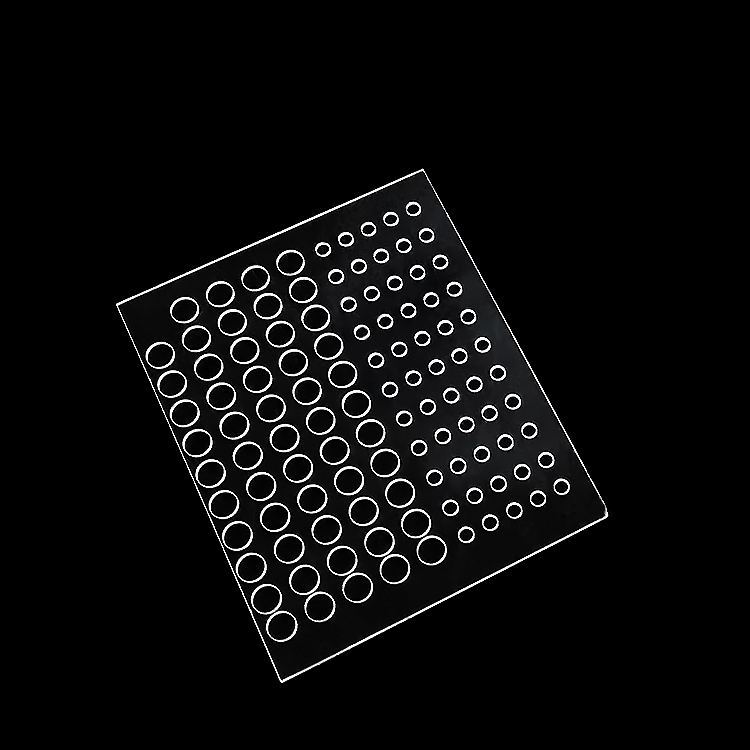
Our workshop operates high-precision picosecond and $CO_2$ laser cutting machinery capable of drilling micro-holes (down to $\varnothing 0.3\text{ mm}$), spiral grooves, and slotted carriers without micro-cracking or subsurface chipping.
Fabrication Direct to CAD (STEP/DWG)
German engineering demands exact adherence to DIN EN ISO 2768-m tolerances. Every RFQ submitted with STEP, IGES, or DXF blueprints is reviewed for manufacturability by our senior glass artisans within 2 business hours.
Zero-Breakage Export Packaging
Quartz tubes are packed using customized high-density shock-absorbing EPE foam liners, vacuum-sealed polyethylene moisture wraps, and reinforced fumigated export wooden crates with tip-and-tell shock indicators.
Frequently Asked Questions by Stuttgart Buyers
Essential answers regarding customs clearance, European standards compliance, tolerances, and batch logistics.
What are the standard delivery lead times from your factory to the Stuttgart industrial area?
Do your quartz products comply with European Union RoHS, REACH, and DIN standards?
Can you manufacture quartz tubes based on custom CAD models (STEP/IGES/DWG)?
How do you guarantee that fragile quartz glass pipes arrive intact in Germany?
What are the devitrification thresholds for your quartz pipes when run at sustained temperatures?
What Incoterms and customs clearance support do you offer for German enterprises?
Ready to Engineer Your Custom Quartz Glass Solution?
Send your dimensional drawings, required material grade (JGS1 / JGS2 / JGS3), and quantity. Our technical team will review your specifications and supply a comprehensive quotation within 2 hours.