Featured Quartz Optical Rods & Precision Components
Engineered for extreme thermal shock resistance, ultra-low trace-metal contamination, and maximum luminous conductance across industrial, laboratory, and scientific frameworks.
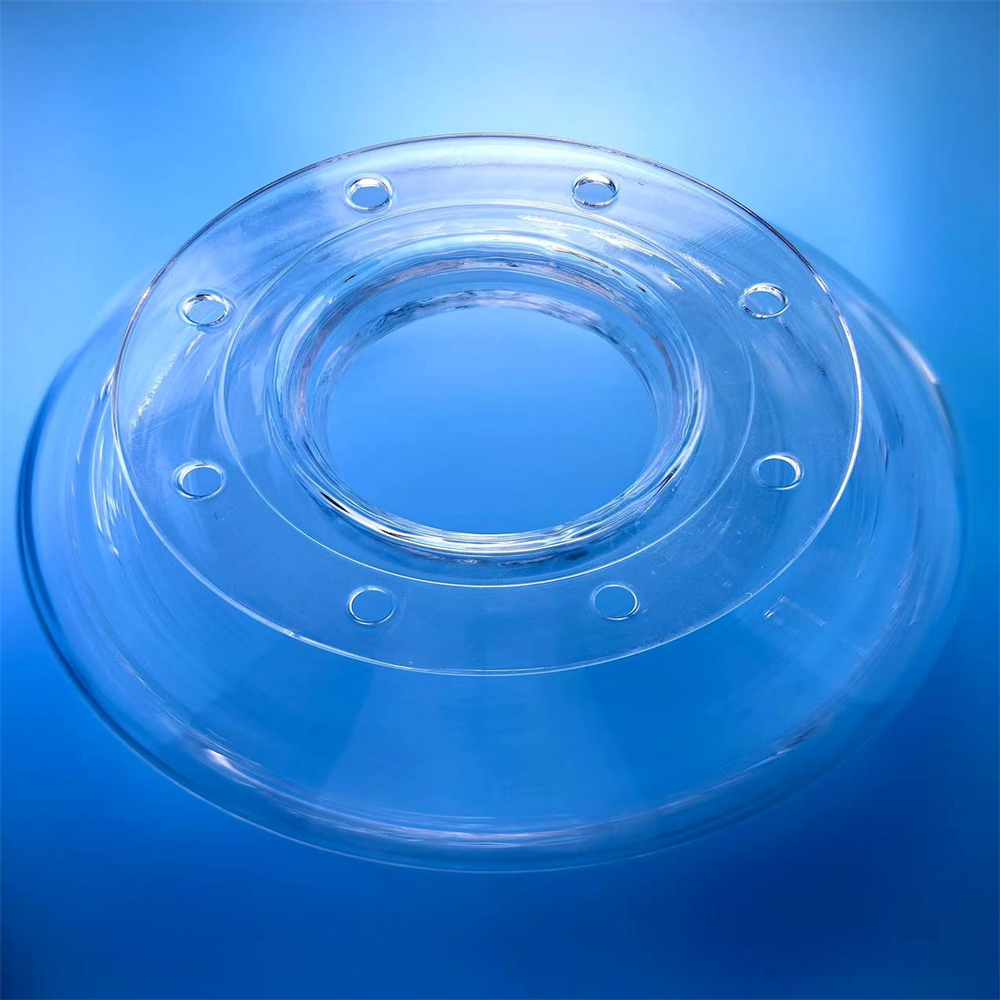
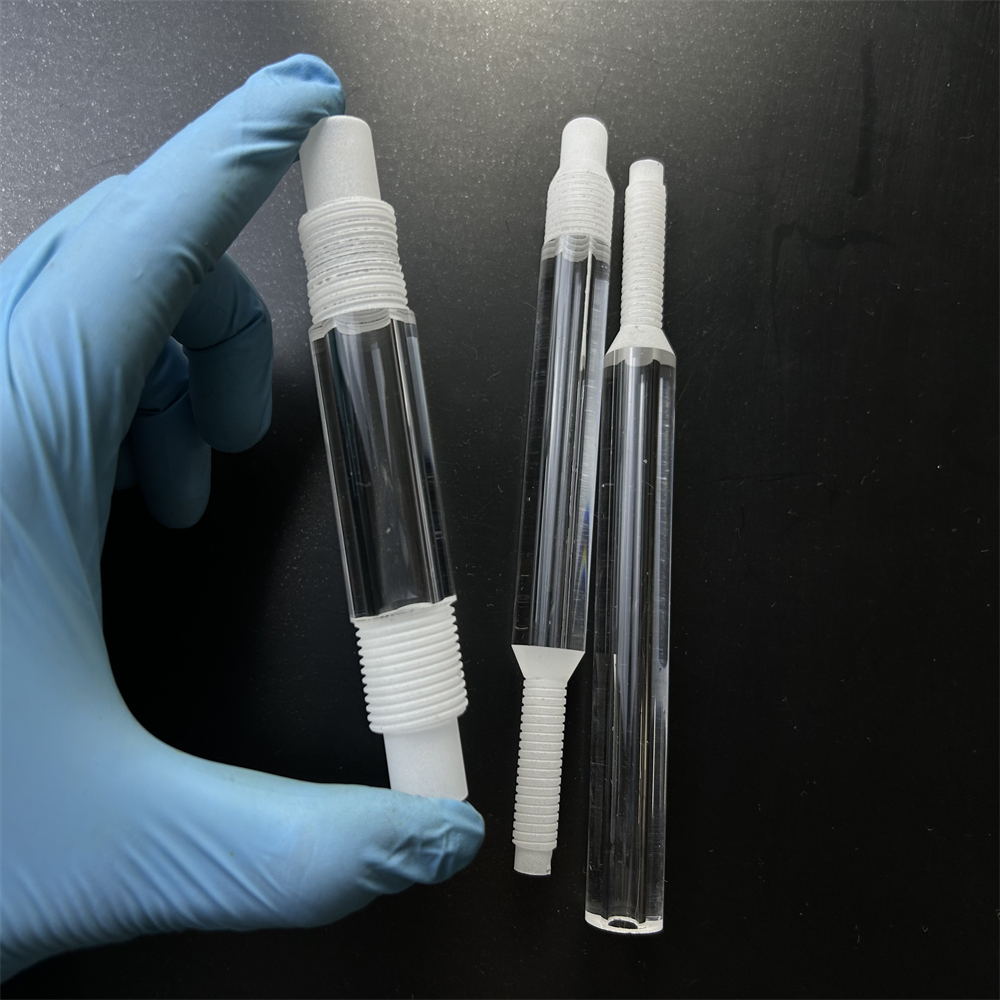
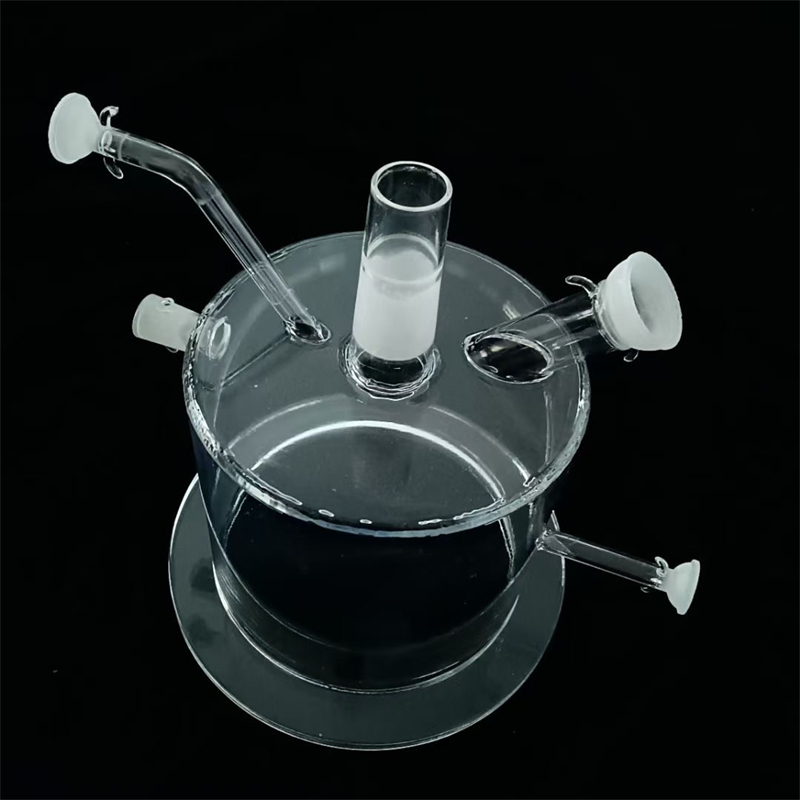

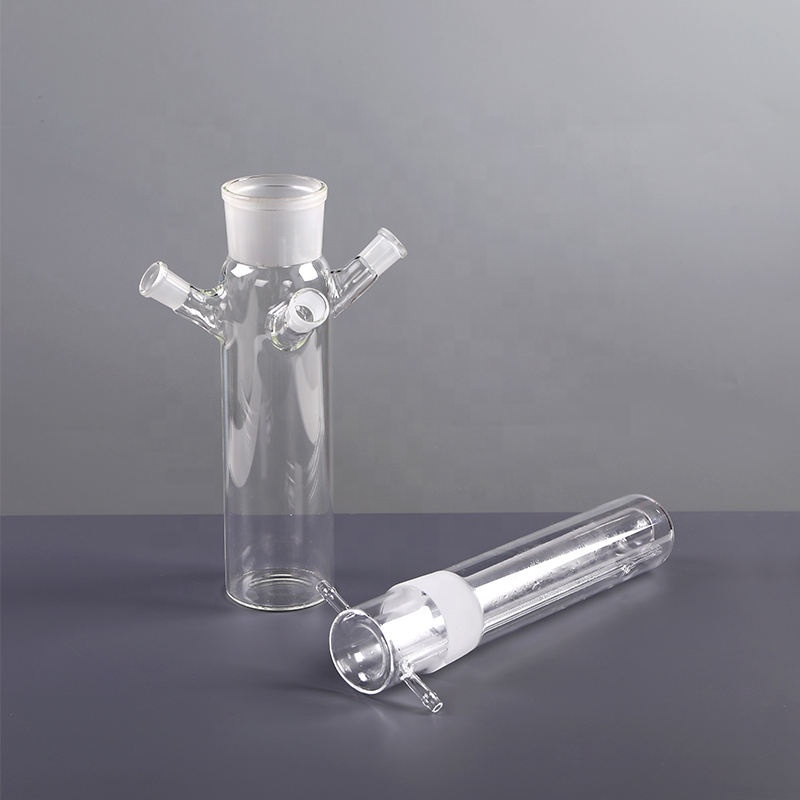
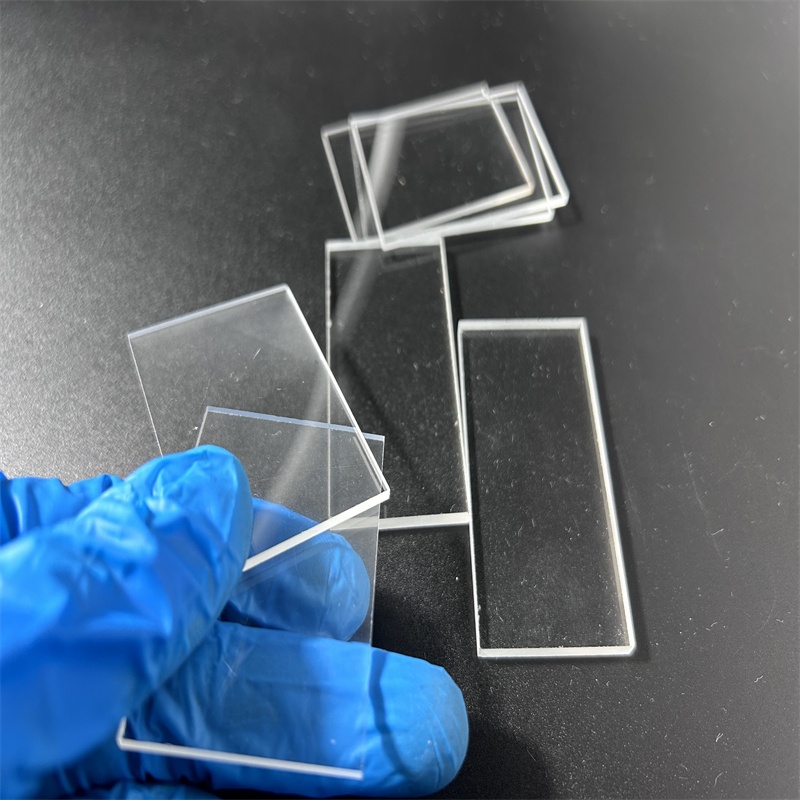
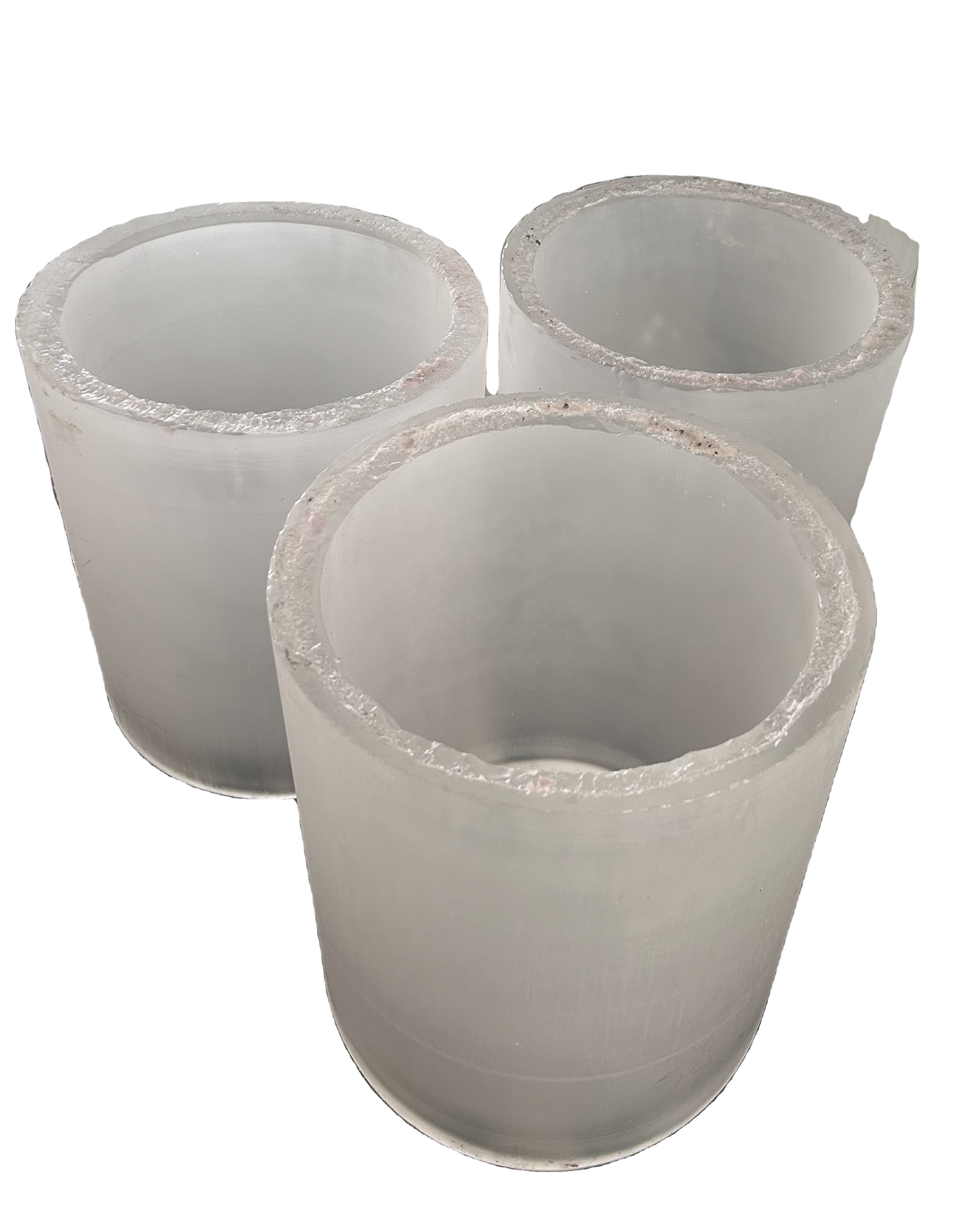
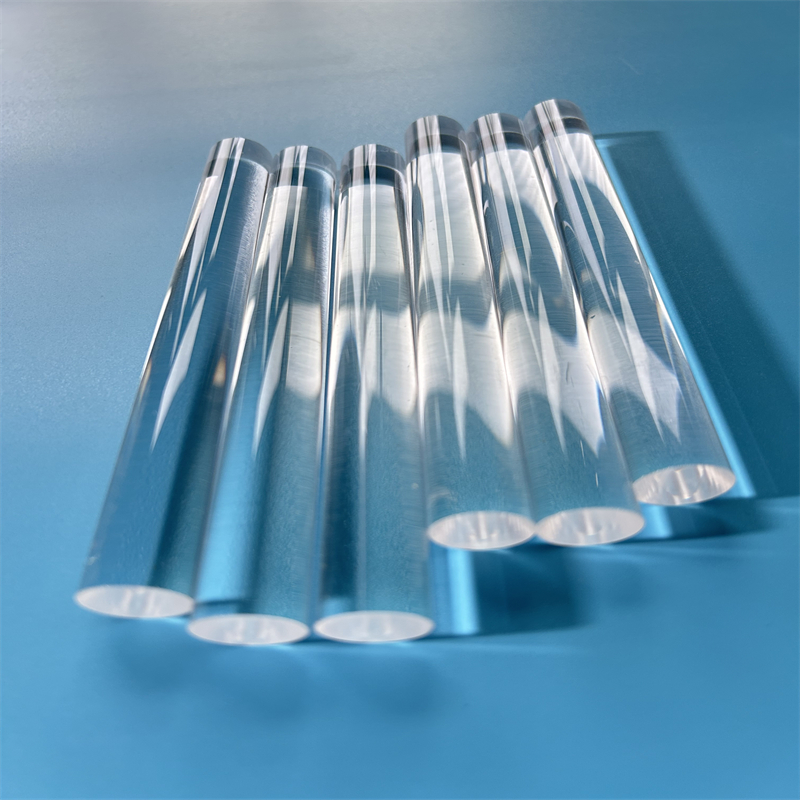
Optical Rod Physics: Refractive Indices & Material Selection
Precision quartz optical rods function as total internal reflection (TIR) light guides, homogenizers, and thermal viewports. The selection between synthetic and natural fused quartz dictates transmission performance across the electromagnetic spectrum.
JGS1 Synthetic Silica
Synthesized from high-purity silicon tetrachloride (SiCl₄), JGS1 contains virtually no metallic impurities. It exhibits outstanding optical transmittance across the Deep UV (185–2500 nm), free of bubble inclusions, making it essential for UV sterilization rods, laser homogenizing, and medical optical guides.
JGS2 Fused Quartz
Refined from natural high-grade crystal silica under high-temperature vacuum gas smelting. JGS2 covers 220–2500 nm transmission, representing the most balanced cost-to-performance configuration for furnace sight rods, level gauges, high-voltage isolators, and chemical inspection cylinders.
JGS3 Low-OH Infrared Silica
Produced through specialized vacuum electric melting to lower hydroxyl (-OH) radicals below 5 ppm. This effectively eliminates the typical 2.7 μm water absorption peak, permitting seamless infrared conductance from 260 to 3500 nm in pyrometry and high-temperature thermal sensors.
| Physical / Optical Parameter | JGS1 (Far UV Grade) | JGS2 (Standard Optical) | JGS3 (Infrared Grade) | Engineering Significance |
|---|---|---|---|---|
| Spectral Range (≥ 80% Transmission) | 185 nm – 2,500 nm | 220 nm – 2,500 nm | 260 nm – 3,500 nm | Determines excitation wave efficiency |
| Hydroxyl (-OH) Content | ≤ 1,200 ppm | ≤ 150 – 200 ppm | ≤ 5 ppm | Prevents NIR wavelength damping |
| Refractive Index (nd @ 589.3 nm) | 1.4584 | 1.4585 | 1.4586 | Guides total internal reflection (TIR) angles |
| Continuous Working Temperature | 1,100 °C | 1,100 °C | 1,150 °C | Withstands extreme metallurgical heat |
| Thermal Expansion (CTE: 20-300°C) | 5.5 × 10⁻⁷ / °C | 5.5 × 10⁻⁷ / °C | 5.4 × 10⁻⁷ / °C | Near-zero thermal shock expansion |
| Surface Polishing Standard | 40/20 – 20/10 Scratch-Dig | 60/40 Scratch-Dig | 60/40 Scratch-Dig | Minimizes lateral laser scattering loss |
Localized Applications in North Korea's Heavy & Analytical Sectors
In response to expanding metallurgical modernization, centralized scientific research, and high-temperature manufacturing in key industrial complexes such as Hamhung, Nampo, and Pyongyang, high-spec quartz glass performs pivotal operational roles.
Refractory Metallurgy & Smelting Viewports
Facilities situated around the Hungnam and Chollima industrial districts depend on precision quartz optical rods as isolation light conduits. In high-temperature induction smelters, clear fused silica rods allow non-contact optical pyrometers to monitor molten metal temperatures exceeding 1,200 °C safely without thermal distortion or cracking.
National Research Labs & BET Surface Analyzers
For academy research institutions and material engineering departments in Pyongyang, analytical repeatability is vital. Precision twin-tube quartz structures and BET sample reactor rods provide zero chemical reactivity and 99.99% chemical inertia against acidic and corrosive reagents during chemisorption and catalyst characterization.
Photocatalysis & UV Industrial Water Treatment
Municipal infrastructure and chemical plants utilize high-pressure UV transparent quartz reactor assemblies and cylindrical light pipes to achieve maximum photolytic degradation efficiency. The near-100% transmission of 254 nm wavelength rays ensures maximum germicidal efficacy in closed fluid purification channels.
Market Evolution & Sourcing Shifts
Technical specifications are evolving from simple dimensional replacements toward rigorous tolerance metrics, optical end-face laser finishing, and standardized cross-border technical compliance.
CNC Laser Finishing Dominance
Legacy manual flame polishing is increasingly superseded by automated CNC laser edge cutting, micron-level end-face profiling (λ/4 flatness), and precise optical chamfering. This eliminates micro-fissures along the perimeter, preventing structural fracture under severe thermodynamic stress.
Direct Factory Sourcing Models
Procurement agencies are transitioning away from secondary multi-tier trading brokers, partnering directly with primary processing plants in Donghai County, China. Direct factory collaboration ensures full batch-level chemical trace-element certificates and lowers structural procurement overhead by 25–35%.
Rigorous Multi-Layer Packaging Standards
Given cross-border transit logistics along trade corridors connecting Liaoning or Jilin to regional industrial hubs, export protocols now require custom high-density EPE shock absorption foam, moisture-proof vacuum wrapping, and reinforced plywood crates tested against heavy transport vibration.
Zunex Quartz: World-Class Engineering from Donghai
Located in Donghai County, Jiangsu — the world's primary fused quartz processing capital — Zunex combines raw crystalline abundance with computerized machining, strict spectral quality inspection, and dependable export trade operations.
Custom CAD/Drawing OEM
From single experimental prototypes to multi-thousand industrial batches, our production line executes directly against PDF, DWG, and STEP models with dimensional tolerances down to ±0.05 mm.
Full CNC & Flame Machining
Comprehensive deep-processing capabilities include cylindrical centerless grinding, precision diamond wire slicing, double-sided optical polishing, laser drilling, and ultrasonic thread tapping.
100% Quality Verification
Every shipment undergoes stringent inspection: laser polariscope stress analysis, spectrophotometer spectral verification, and micro-bubble detection to ensure uncompromised reliability.
Secure Transit Packaging
Decades of export experience have refined our multi-stage packaging solutions. Custom molds and cushioned barriers guarantee zero-breakage transit to receiving docks and facilities.
Frequently Asked Questions for Regional Buyers
Clear, engineer-backed technical answers addressing material specifications, logistical handling, and dimensional customizability.
What are the key differences between quartz rods made of JGS1, JGS2, and JGS3?
Can optical quartz rods be customized to custom technical drawings and non-standard geometries?
What continuous thermal limits and thermal shock stresses can these rods withstand?
How does your factory ensure fragile quartz rods arrive without transit fractures?
What technical parameters are needed to obtain an accurate quotation?
Request an Engineering Review & Factory Quote
Submit your part specifications, operating conditions, or custom technical drawings. Our optical engineering team evaluates manufacturability, confirms optimal material grades, and delivers a competitive quotation within 2 hours.