Custom Machining • Optical Grade Purity
High-Performance Fused Quartz Solutions
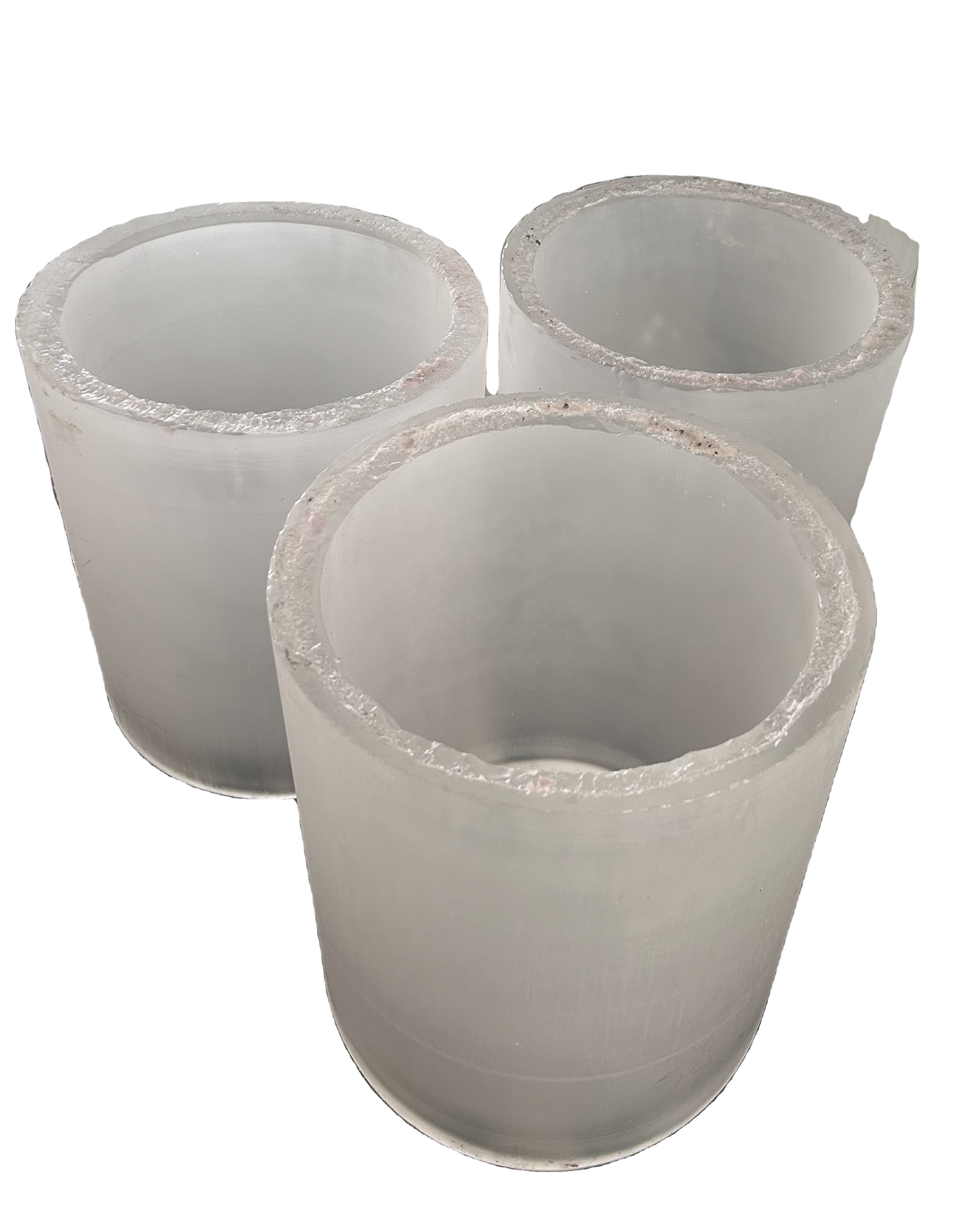
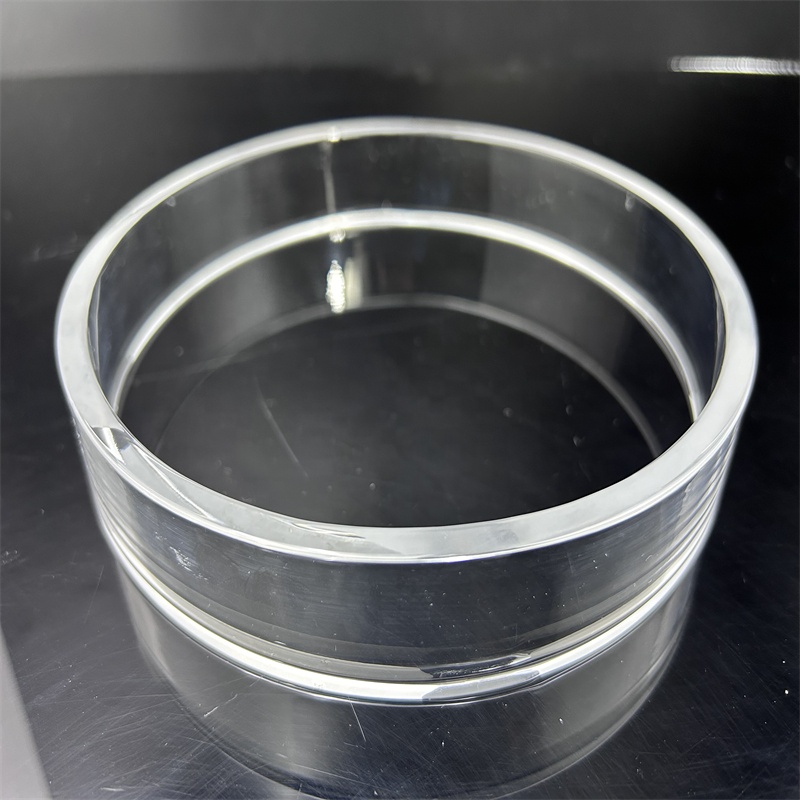
Direct manufacturer export supply for high-temperature diffusion furnaces, chemical vapor deposition (CVD), and photocatalytic degradation vessels engineered precisely to customer drawing.


100%
Verified Response Rate
≤ 2h
Average Technical Reply
43%
Global Repeat-Order Rate
≥ 99.99%
Raw Fused SiO₂ Purity
Engineering Whitepaper • Material Science
Thermomechanical Integrity of Fused Quartz Reactor Tubes
A comprehensive analysis of devitrification resistance, hydroxyl radical (OH-) attenuation, and dimensional tolerances required for Middle Tennessee high-technology operations.
Industrial thermal reactors, atomic layer deposition (ALD) chambers, and chemical vapor deposition (CVD) equipment rely fundamentally on the purity of their process envelopes. In semiconductor wafer synthesis, photovoltaic cell doping, and precision catalysis, fused silica and synthetic quartz glass serve as inert barriers capable of withstanding acute thermal gradients while preventing trace transition metal contamination.
The operational longevity of a quartz reactor tube operating at sustained temperatures between 1050°C and 1250°C is governed by devitrification kinetics. When trace contaminants such as sodium (Na), potassium (K), or calcium (Ca) contaminate the outer or inner tube periphery, they act as nucleation seeds, converting amorphous silica (glass) into crystalline cristobalite. This polymorphic phase change triggers catastrophic micro-cracking upon cooling through 220°C due to the abrupt 5% volume contraction associated with the β-to-α cristobalite inversion. Zunex Quartz employs electric vacuum fusion and hydrogen-oxygen flame re-drawing of natural quartz crystals yielding ionic purity levels in excess of 99.99% SiO₂, keeping alkali concentrations strictly below 1.0 ppm.
| Property Parameter | Test Standard / Condition | Typical Metric Value | Performance Significance |
|---|---|---|---|
| SiO₂ Chemical Purity | ICP-OES / GD-MS Spectrometry | ≥ 99.99% (High Purity Grade) | Eliminates heavy metal migration into wafer substrates |
| Continuous Working Temperature | Isothermal Exposure (Air/Vacuum) | 1100 °C | Maintains structural integrity during long diffusion runs |
| Max Short-Term Temperature | Peak Thermal Ramp (< 2 hrs) | 1300 °C | Withstands transient thermal spike annealing cycles |
| Hydroxyl [OH-] Content | FTIR Infrared Absorption | < 5 ppm to < 20 ppm (Standard) | Prevents tube sagging and increases vacuum stability |
| Thermal Expansion Coeff. (α) | 20 °C to 300 °C Dilatometry | 5.5 × 10⁻⁷ cm/cm °C | Immune to extreme thermal shock and rapid quench cycles |
| Softening Point | Viscosity Reference 10^7.6 dPa·s | approx. 1683 °C | Defines upper mechanical limit under vacuum load |
Nashville & Regional Industrial Integration
Precision Applications Across Middle Tennessee
Serving industrial corridors, clean tech corridors, and academic engineering hubs across Davidson, Williamson, and Rutherford counties.
Next-Gen Battery & EV Materials
Middle Tennessee's surging automotive corridor requires precision tube furnace vessels for solid-state electrolyte sintering, lithium titanate annealing, and conductive carbon-nanotube growth under inert atmospheres.
Photovoltaic & Silicon Research
Supplying flanged quartz process tubes and slotted wafer boats for polycrystalline and perovskite solar cell research within regional clean-energy laboratories and advanced technical institutes.
Biopharma & Photocatalytic Synthesis
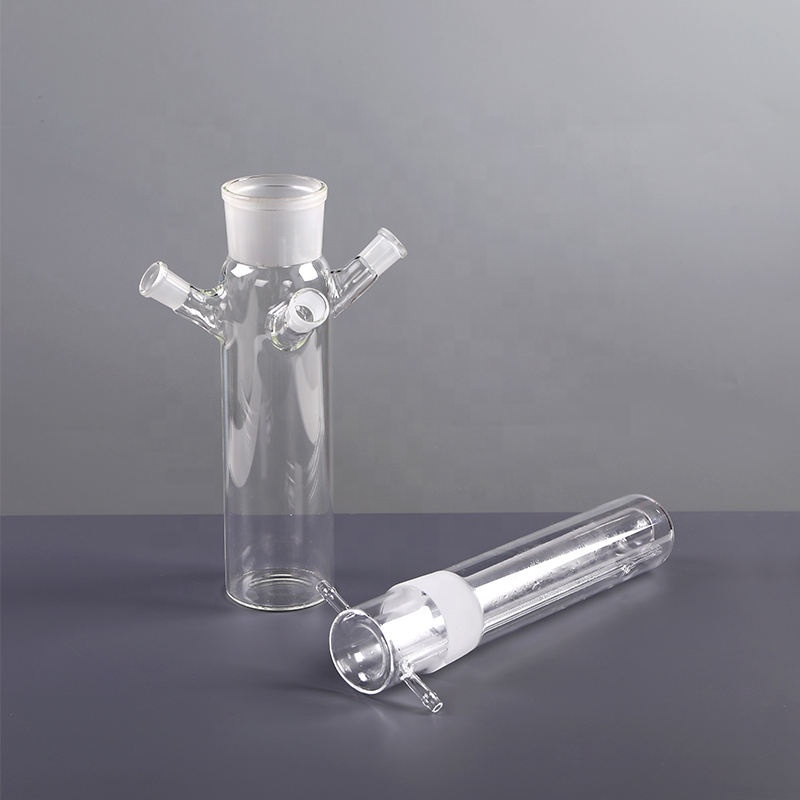
Internal illumination quartz photochemical reactor vessels engineered with deep UV transmission (JGS1) for continuous-flow photochemistry, UV disinfection validation, and synthetic peptide crystallization.
Materials Characterization (XRD/BET)
Precision calibrated quartz sample tubes, combustion boats, and optical cuvettes supporting institutional R&D at Vanderbilt Institute of Nanoscale Science and Engineering (VINSE) and regional tech parks.
Regional Market Trends
Emerging Technology Shifts in Greater Nashville
Strategic macro factors influencing capital equipment procurement and replacement cycles for fused quartz hardware across Tennessee.
The Electric Industrial Corridor Migration
With multi-billion-dollar investments pouring into the Nashville-Clarksville-Spring Hill triangle for battery gigafactories and power electronics assembly, procurement managers face soaring demand for high-integrity refractory process quartz. Tube-furnace uptime has emerged as an operational KPI, prioritizing direct factory partnerships capable of executing tight tolerances (±0.05 mm) on large-bore (OD > 250 mm) quartz tubes.
Onshoring High-Spec Thermal Testing
Middle Tennessee manufacturing operations are actively modernizing internal failure-analysis and quality labs. This shift from third-party testing to in-house rapid thermal processing (RTP) and tube-furnace oxidation demands direct access to rapid custom glasswork: specialized laser-drilled thermocouple ports, welded ISO-KF or ConFlat (CF) metal-to-quartz transitions, and flanged viewports.
Clean Energy & Decarbonization Pressures
Tennessee's expanding hydrogen energy programs and carbon mitigation initiatives utilize quartz reaction chambers for high-temperature methane pyrolysis and catalytic degradation. These systems demand exceptional vacuum hermeticity at continuous temperatures above 1100°C, underscoring the shift away from standard borosilicate glass toward deep-vacuum fused quartz geometries.
Manufacturing Capabilities • Donghai Direct
Why Enterprise Buyers Partner with Zunex Quartz
Combining raw crystal reserves from China's quartz capital with advanced CNC cold processing and hot-forming flame artistry.
Advanced Laser Finishing
Micro-laser drilling, precision groove slotting, and clean edge contouring for semiconductor boats and reactor tube injector ports without micro-cracking.
Custom OEM/ODM to Drawing
Direct review of CAD (STEP, DWG, PDF) files by experienced glass engineers. Rapid sample prototyping and pilot-run validation within 5–7 business days.
Export-Proof Protective Packing
Specialized high-density PE suspended foam packaging, custom multi-layer vacuum sealing, and reinforced fumigated timber crates ensuring zero shipping breakage.
Rigorous Factory QA Control
Interferometric surface roughness verification, spectrophotometer transmission verification (UV-Vis-NIR), and polariscope stress relief testing.
Procurement Guidance
Frequently Asked Purchasing Questions
Addressing freight routes, customs clearance, drawing specs, and thermal durability for engineering buyers in Nashville and the US market.
How do you ship fragile quartz reactor tubes to facilities in Nashville, TN without transit breakage?
We employ an engineered suspension crating system specifically designed for brittle fused quartz glassware. Each tube is wrapped in anti-static film, suspended in form-fitted high-resilience EPE foam blocks that isolate the glass from harmonic road and air vibrations, and packed into reinforced wooden crates with tilt/drop shock indicators. Shipments to Middle Tennessee transit through Nashville International Airport (BNA) air freight or sea freight via East Coast/Gulf ports with door-to-door DDP logistics handling all customs clearance.
Can Zunex fabricate complex quartz reactor tubes with ground flanges, cooling jackets, and gas inlets?
Yes. Custom fabrication to technical drawings is our foundational specialty. Our workshop handles precision lathe tooling, automated flame welding, optical polishing of flat window viewports, water-cooling jacket fusing, and installation of standard ground joints (standard taper, ball joints, or flat O-ring flanges). Simply supply your PDF, STEP, or DWG schematic with specified tolerances.
What is the difference between JGS1, JGS2, and JGS3 quartz when specifying reactor tubes?
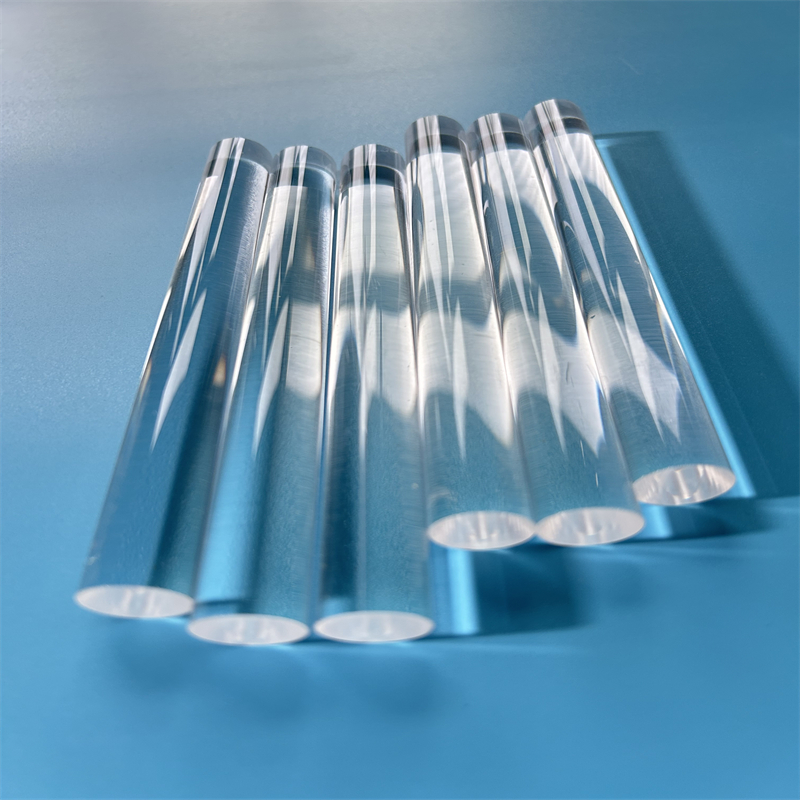
JGS1 is synthetic fused silica with zero bubble inclusions and high transmission in the deep ultraviolet spectrum (185–2500 nm), optimal for photochemical reactors and excimer laser systems. JGS2 is standard fused quartz produced from natural quartz crystals with excellent UV-Visible performance (220–2500 nm), widely specified for tube furnaces, CVD process tubes, and sight glasses. JGS3 is an infrared-grade material with exceptionally low hydroxyl (OH-) content (< 5 ppm), allowing infrared transmission up to 3500 nm and maximum resistance to sagging at sustained 1200°C+ temperatures.
What are your typical dimensional tolerances and minimum order quantities (MOQ)?
For standard reactor tubes, outer diameter (OD) and wall thickness tolerances are typically maintained within ±0.2 mm to ±0.5 mm, with precision CNC ground tubes achieving ±0.05 mm. Because we support prototype university projects and specialized pilot lines alongside production manufacturing, our MOQ starts at just 1 piece for custom prototypes, scaling seamlessly to batch manufacturing runs of thousands.
How does high purity ≥ 99.99% SiO₂ improve CVD and oxidation yields over commercial glass?
Commercial borosilicate glass softens around 500°C and contains high levels of boron, sodium, and aluminum that outgas at elevated temperatures, contaminating semiconductor layers and altering catalytic reaction profiles. High-purity fused quartz (≥ 99.99% SiO₂) remains chemically inert against acids (excluding HF and boiling H₃PO₄), operates up to 1100°C continuously, and prevents unwanted dopant diffusion in advanced microelectronics processing.
Accelerate Your Project with Custom Quartz Solutions
Send your CAD drawing or technical specification directly to our engineering desk. Receive an engineer-reviewed DFM assessment and formal quotation within 2 hours.